


 Research Article
The Effects a Brief Theory-Based Supervised Exercise
Intervention to Improve Physical Skills Scores Has on
Physical Activity Levels of University Administrative
Staff
Received Date: July 29, 2025; Published Date: August 07, 2025
Abstract
Background: Physical inactivity is prevalent among university administrative staff, impacting their health and well-being. This study seeks
to examine the effects of a brief theory-based intervention, underpinned by the Behaviour Change Wheel, Theoretical Domains Framework and
Capability-Opportunity-Motivation-Behaviour (COM-B) model, on physical skills scores and physical activity levels of university administrative staff.
Objectives: To assess whether improving physical skills scores impacts on physical activity levels of inactive university administrative staff.
Methods: A total of 21 participants (Mean age = 38.6 ± 10.2 years; 61.9% female) were recruited and allocated into intervention and control
groups. The participants in the intervention group engaged in weekly badminton sessions, while those in the control group were asked to continue
with their regular routine. Physical activity levels and physical skills scores were accessed at baseline and post-intervention, using the Global
Physical Activity Questionnaire (GPAQ) and Determinants of Physical Activity Questionnaire (DPAQ), respectively. Mixed-methods ANOVAs were
performed using SPSS with physical skills scores and physical activity levels as the dependent variables.
Results: The results indicated that increase in physical skills scores through playing badminton was significantly associated with increase in
physical activity levels. (F1,17 = 9.96, p=0.006, ηp2 =0.369). However, there were no significant association between gender and physical skills
scores (F1,17 = 0.040, p=0.843, ηp2 =0.002), and between gender and physical activity levels (F1,17 = 0.005, p=0.943, ηp2 =0.001).
Conclusion: Increasing physical skills through the engagement in a low intensity sport such as badminton may be used as a university-wide
strategy to increase physical activity levels of inactive university administrative staff. The role of gender should also be considered.
Keywords: Physical activity; Physical skills; Behaviour change wheel; Theoretical domains framework, COM-B model
Abbreviations: BCW: behavior change wheel; COM-B: capability, opportunity, motivation-behavior; DPAQ: Determinant of physical activity questionnaire; GPAQ: global physical activity questionnaire; MET: metabolic equivalent of task; PA: physical activity; PBQ: past behavior questionnaire; TDF: theoretical domains framework.
Introduction
Regular engagement in PA among adults has been shown to play a key role in preventing and managing noncommunicable diseases (NCDs) such as diabetes, arthritis, cardiovascular diseases, and cancer [1] as well as the reduction in anxiety and depression, and improvements in brain health, contributing to overall enhanced well-being [1-3]. In addition, PA provides significant physical and mental health benefits [1,4] and slows cognitive decline [5]. Given these extensive health benefits, transnational public health corporations establish increasing engagement in PA as a global health precedence. The importance of PA is reflected in the World Health Organization’s (WHO) Global Action Plan on Physical Activity 2018–2030, which aims to reduce global levels of physical inactivity by 15% by 2030 [6]. Even with the importance of PA, a previous survey suggested that 64% of the administrative staff in the university where this study was carried out were physically inactive [7] and thus the target population for this research. Therefore, it is crucial to implement coordinated, theory-informed interventions to increase PA engagement amongst these inactive university administrative staff.
In recent years, the Theoretical Domains Framework (TDF) has been used to identify enablers and barriers to exercise and physical activity (PA) in various populations. For instance, Haith-Cooper, et al. [8] applied the TDF to explore PA behaviours among asylum seekers, while Flannery, et al. [9] utilized it to assess the barriers and enablers to PA among overweight women. Although many studies have adopted the Behaviour Change Wheel (BCW), Capability, Opportunity, Motivation-Behaviour (COM-B) model and/or the TDF to examine PA behaviours, most of these investigations have relied on qualitative approaches. Importantly, research within the PA domain among the adult population, especially in the university context, remains limited. To our knowledge, no study has yet utilised the BCW, COM-B model, and/or TDF to develop and implement interventions aimed to increase physical skills as a way to improve physical activity levels, specifically among inactive university administrative staff. This study, therefore, represents the first attempt to do so. These three behaviours change theories that informed the design of this present study have been extensively discussed in the lead author’s previous publications [7].
While no specific studies have been conducted to develop physical skills among inactive university administrative staff, the Centers for Disease Control and Prevention [10] recommended that individuals lacking physical skills participate in structured exercise classes to develop new physical competencies. Additionally, Fennell, et al. [11] compared supervised and unsupervised exercise interventions among university faculty and staff, finding that supervised exercise programmes were more effective at improving fitness and PA levels in previously inactive individuals compared to unsupervised training. This suggests that supervised participation in exercise may be beneficial for helping inactive administrative staff develop their physical skills.
The aim of the study was two-fold. Firstly, we examined the effect of a 4-week theory-informed supervised exercise intervention (playing badminton) to improve physical skills, on university administrative staff’ physical activity levels. Based on the above evidence that improving physical skills through engagement in exercise improves physical activity engagement, we hypothesised that the increase in the physical skills scores of participants in the intervention group would increase their physical activity levels more compared to the control group. Secondly, we investigated if gender differences will have an impact on physical skills scores and physical activity levels across the study groups. Based on the evidence reported consistently, we further hypothesised that in both study groups, the male participants will report higher physical skills scores and physical activity levels compared to the female participants. Since schools, including universities have been widely recognised as fundamental for health promoting campaigns such as physical activity in both students and staff [7,12] we sampled administrative staff and implemented the interventions in a university setting.
Materials and Methods
Participants
This study was approved by the College of Life and Natural Sciences Ethics Committee at the University of Derby, United Kingdom (ETH1819-0099). Each participant provided written informed consent prior to taking part in this study. A total of 21 administrative staff (Mage = 38.6 ± 10.2 years), including eight males (38.1%) and 13 females (61.9%) participated in the study. All the administrative staff were included in the analysis, even if any missing data existed. Participants were screened to ensure they had no underlying disease preventing them from engaging in routine PA before participating in this study. The characteristics of the participants is illustrated in Table 1.
Inclusion and exclusion criteria
The inclusion criteria included PA levels (below 600MET-minute/ week of moderate-intensity of PA) as measured by the Global Physical Activity Questionnaire (GPAQ) [13] and no physical limitations or underlying illnesses that will prevent them from engaging in PA. Anybody who did not meet the mentioned inclusion criteria were excluded from the study. Furthermore, any administrative staff with possible medical contraindications to routine PA, as measured by the Health Screening Questionnaire, was excluded from this study except a clearance is obtained from their GP.
Procedures
This study used a quasi-experimental pretest-posttest design that employed a 4-week brief intervention adapted from the work of Plotnikoff, et al. [14]. The selection of the intervention was guided by the eight-phase approach for developing behaviour change interventions as proposed by Michie, et al. [15]. This approach is grounded in the Behaviour Change Wheel (BCW) and the Capability, Opportunity, Motivation-Behaviour (COM-B) model, and has been extensively discussed in previous studies by the first author [7,12]. We utilized a simple randomization method to allocate participants to one of two groups, i.e., intervention or control group, as shown in Figure 1.
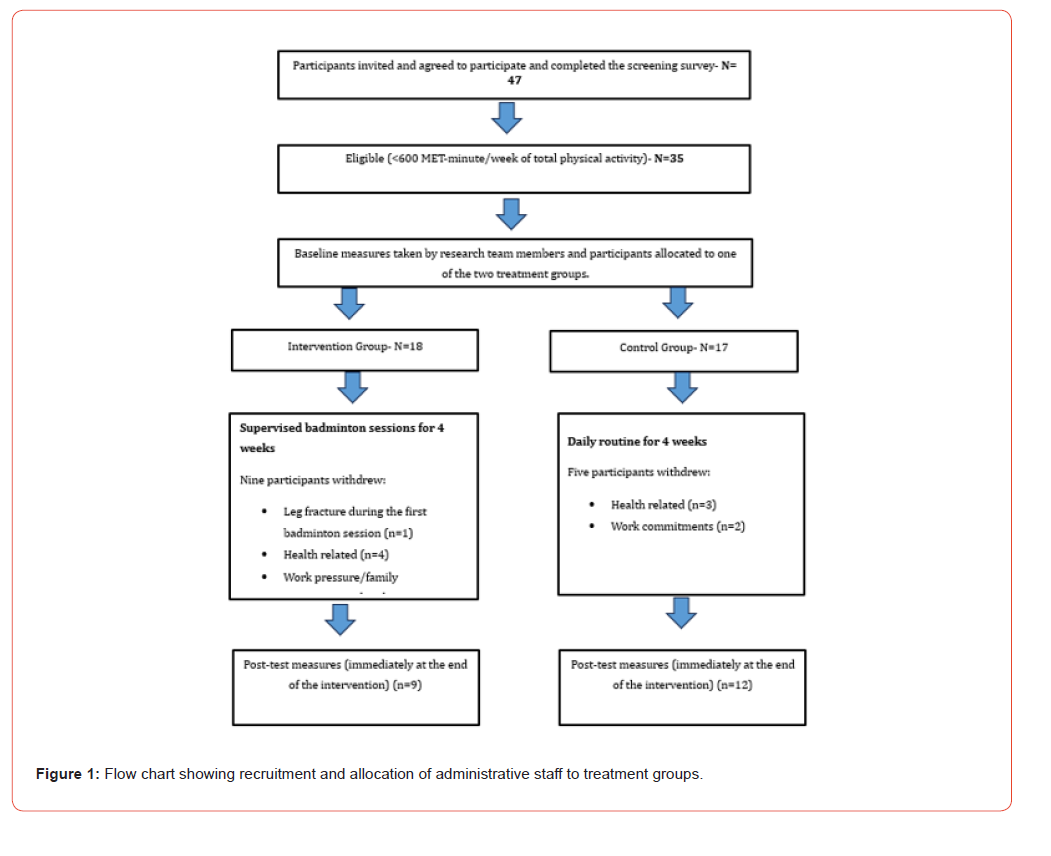
During the study, 14 participants (60% of all recruited administrative staff) dropped out because of health-related issues, work, and family commitments. Since this was a brief four-week intervention and due to time challenges, we continued the intervention with the number of participants we had. Only participants in the intervention group performed a 10-minute warm-up and a 15-minute cool-down at the beginning and end of each session, respectively, in addition to playing badminton for 35 minutes. On the other hand, the participants in the control group were asked to maintain their usual routines. The exercise intervention, i.e., the badminton sessions, was conducted by a qualified instructor (level 2 coach) from the University’s sports center, with the researcher present at all sessions to support participants, mark the attendance register, and administer the Health Screening Questionnaire. Given that none of the participants in the intervention group had prior experience with badminton, the instructor began with the fundamentals, teaching them how to hit the shuttlecock over the net. Each week, the instructor progressively built upon these basic skills, enhancing the participants’ proficiency in the sport. Participants in both groups were required to complete weekly activity logs throughout the intervention period. Weekly emails were sent to both groups: reminders for the intervention group to attend the badminton sessions and messages for the control group to continue their normal activities. This intervention was informed by a study by Fife-Schaw et al. [16], which evaluated the effectiveness of two sport-oriented interventions in increasing PA among inactive adults.
Outcome measures
The following three outcomes were measured in this study:
Physical activity levels
Physical activity was measured with the Global Physical Activity Questionnaire (GPAQ) [13]. The GPAQ is a 16-item scale that assesses PA in three domains i.e.: work, recreational activities, and active transport. The GPAQ was created to combine the strengths of the long and the short versions International Physical Activity Questionnaire (IPAQ) by incorporating diverse domains yet being significantly shorter (16 items) in comparison with the long version of IPAQ (27 items). The GPAQ has been administered in over 100 nations globally, and therefore, its validity has been established in diverse populations [17]. Previous research has indicated that the reliability coefficients of the GPAQ were good, ranging from moderate to significant strength (kappa 0.67-0.73 and Spearman’s rho 0.67-0.81) [18]. This measure has likewise been validated with objective PA instruments, such as accelerometers [19, 20] as well as the most widely used subjective PA measures such as the IPAQ [21]. The GPAQ was administered online, with the paper version available for the participants who preferred this format. The results were expressed as metabolic equivalent (MET-minutes/week of moderate-intensity PA).
Physical skills scores
Physical skills were measured with an adapted version of the physical skills sub-scale of the Determinants of Physical Activity Questionnaire (DPAQ) [22]. The physical skills subscale is a 3-item scale, with each item utilising a 5-point Likert scale, with score ranging from 1 (strongly agree) to 5 (strongly disagree). For instance, items consist of ‘I’ve never really had sports’ skills, so I don’t do PA’ illustrate the skills domain. Although the DPAQ is validated for university staff and students, it was revalidated for this study’s participants since only a subscale was used. Despite previous reports on the DPAQ’s internal consistency (Cronbach’s alpha) [7] it was necessary to verify the internal consistency of the physical skills subscale specifically for this study. This was tested among 20 administrative staff before baseline data collection. The physical skills subscale demonstrated excellent psychometric properties, with a Cronbach’s alpha coefficient of 0.95 (ranging from 0.89 to 0.97). The results were expressed as a scale of 1 to 5, with 5 representing a high physical skills score.
Time spent on physical activity
Time spent in PA weekly was measure using activity logs. At a workshop that was held to launch the study, the participants were given activity logs and trained on how to complete them. They were required to record the type, intensity, day, time and place they engage in PA daily and email the completed activity log to the lead research at the end of each week of the intervention period. The results were expressed as minutes/week.
Statistical analysis
Descriptive statistics were reported as frequencies, percentages, means, and standard deviations. The time participants spent in moderate and vigorous activities per week was calculated using the World Health Organisation guidelines [13] and expressed as MET-minutes/week (metabolic equivalent). All statistical analyses were conducted using IBM SPSS statistical software version 25.0 (Chicago, IL, USA), with a significance level set at 0.05. One-way ANOVAs were performed to compare participants’ socio-demographic characteristics at baseline across the treatment groups, ensuring proper allocation to the two treatment groups. Pre-post differences were analysed using mixed-methods design ANOVA. Effect sizes were reported as partial eta squared (ηp²), following Cohen’s classification: small (0.01), medium (0.06), and large (0.14) [23].
Results
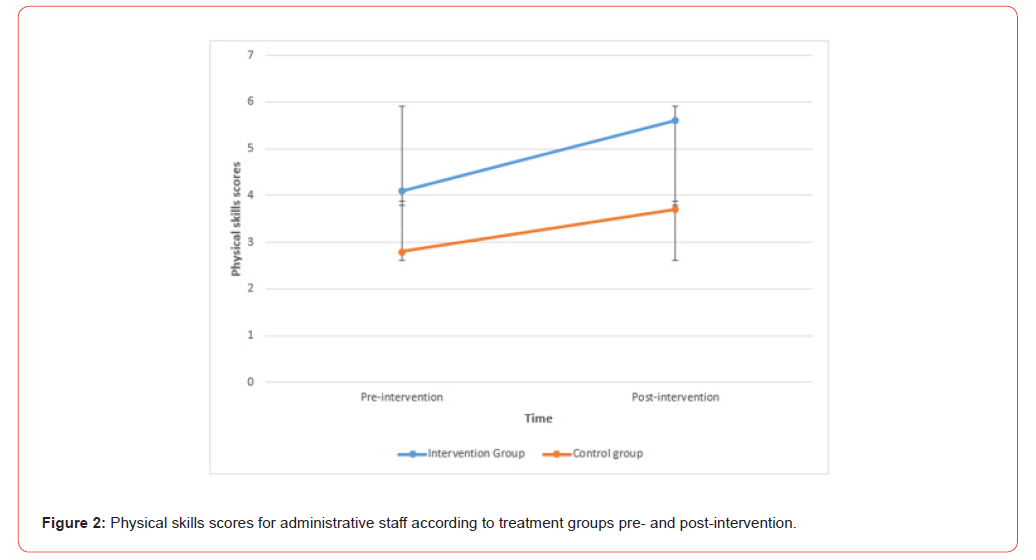
The socio-demographic characteristics of the study participants are illustrated in Table 1, and physical skills scores and physical activity levels pre- and post-intervention are in Table 2. The participants had an average age of 38.6 ± 10.16 years, with females making up nearly two-thirds (61.9%) of the group. Most participants were from the White ethnic group (95.2%), while 4.8% were from the Black/African/Caribbean/Black British ethnic group. There was a significant main effect of Time (F1,17 = 47.54, p=0.001, ηp2 =0.737) and physical skills scores (F1,17 = 11.45, p=0.004, ηp2 =0.403). Significant interactions were found between Time and Treatment Groups (F1,17 = 9.90, p= 0.006, ηp2 =0.368); Physical Skills scores and Treatment Groups (F1,17 = 6.69, p= 0.019, ηp2 =0.282); Time and Physical Skills scores (F1,17 = 11.38, p=0.004, ηp2 =0.401); and Time, Physical Skills scores and Treatment Groups (F1,17 = 6.67, p=0.019, ηp2 =0.282). However, there were no significant interactions between Time and Gender (F1,17 = 0.005, p= 0.943, ηp2 =0.001); Time, Treatment Groups and Gender (F1,17 = 0.175, p= 0.681, ηp2 =0.010); Physical Skills scores and Gender (F1,17 = 0.040, p=0.843, ηp2 =0.002); Physical Skills scores, Treatment Groups and Gender (F1,17 = 0.050, p=0.826, ηp2 =0.003); Time, Physical Skills scores and Gender (F1,17 = 0.040, p=0.844, ηp2 =0.002); and Time, Physical Skills scores, Treatment Groups and Gender (F1,17 = 0.050, p=0.826, ηp2 =0.003), as illustrated in Figure 2.
Table 1: Socio-demographic characteristics of the administrative staff.
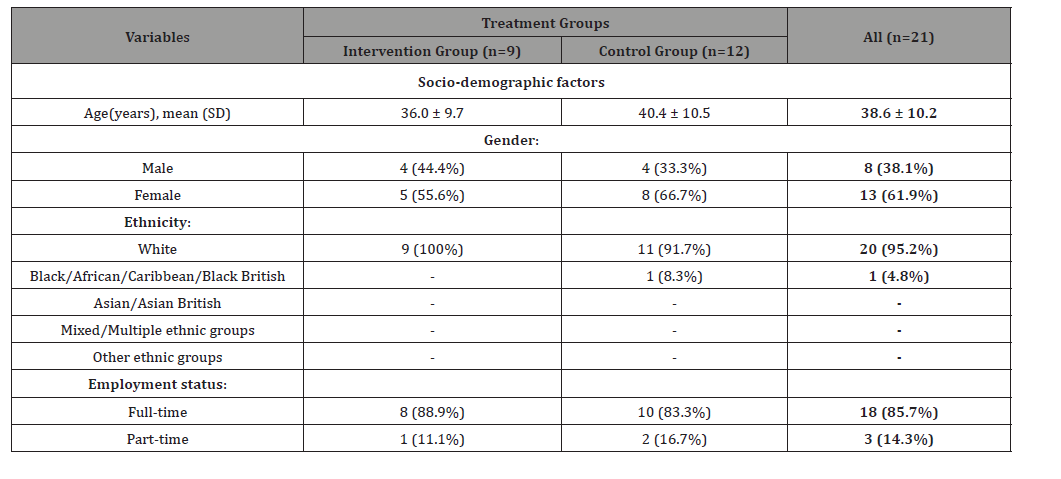
Table 2: Descriptive statistics showing the mean physical skills scores and total physical activity levels for administrative staff.
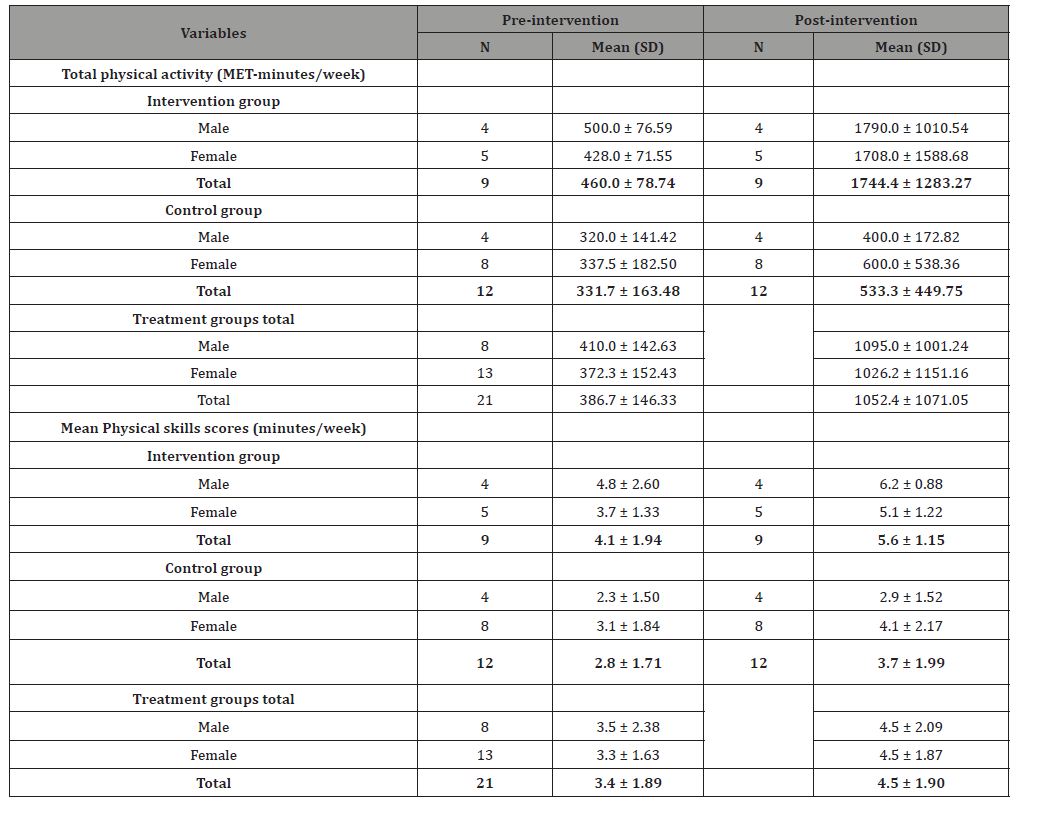
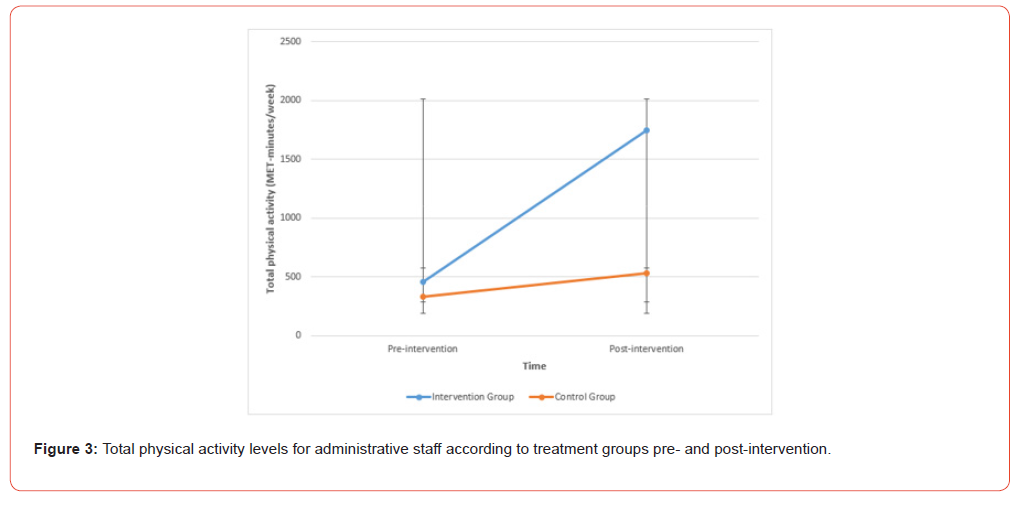
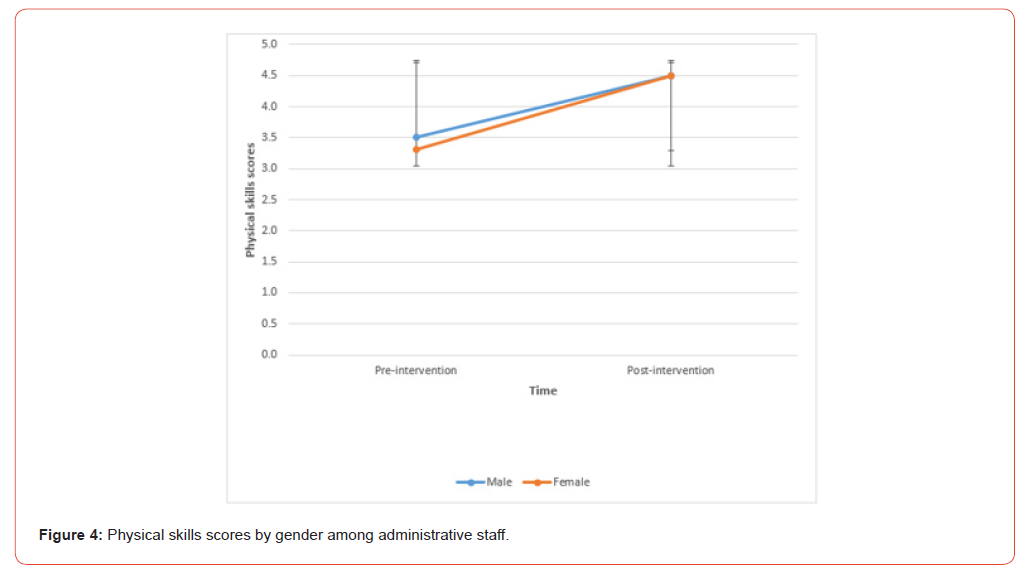
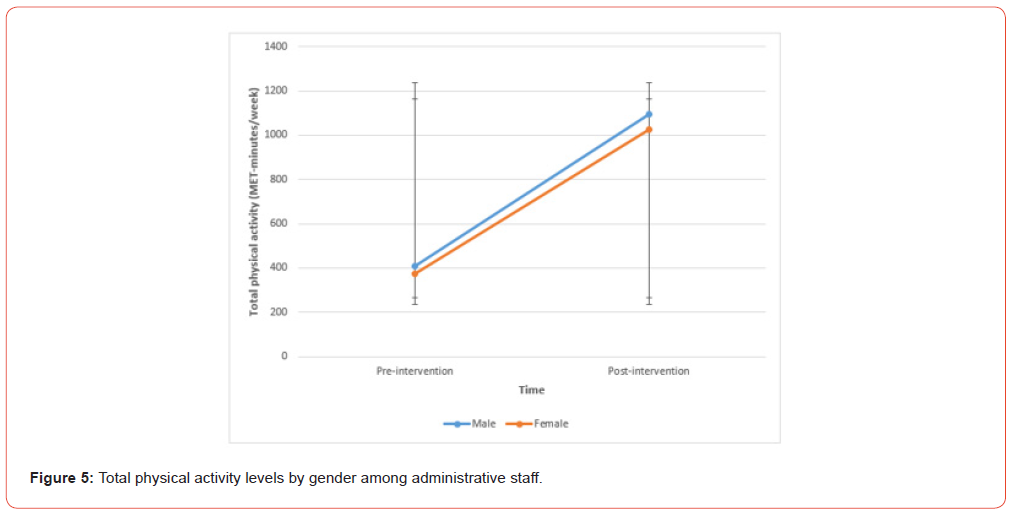
This indicates that while both the intervention and control groups showed an increase in total PA levels over time (i.e., from pre- to post-intervention), the intervention group experienced a greater increase compared to the control group (Figure 3). This suggests that improvements in physical skills lead to higher engagement in PA. However, there were no significant differences in total PA levels over time between male and female participants. The mean physical skills scores and the mean total PA levels were comparable between the male and female participants pre- and post-intervention, as illustrated in figure 4 and figure 5, respectively.
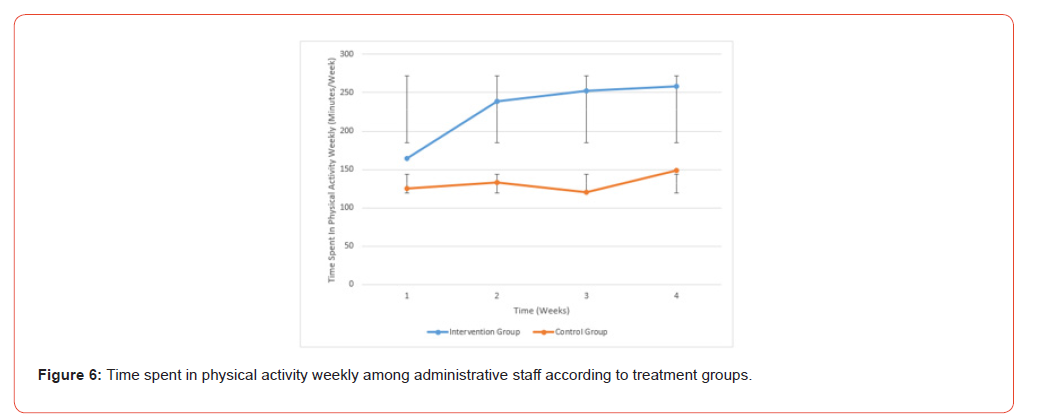
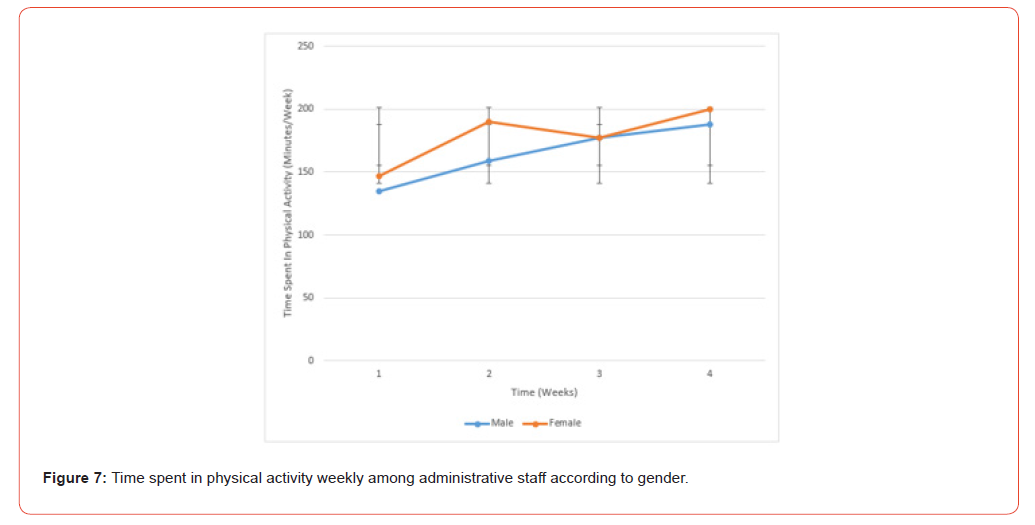
There was a significant main effect of Treatment Groups (F1,17 = 11.11, p=0.004, ηp2 =0.395), but no significant main effect of Gender (F1,17 = 0.58, p=0.457, ηp2 =0.033). There was also no significant interaction between Treatment Groups and Gender (F1,17 = 0.388, p=0.542, ηp2 =0.022). Furthermore, there was a significant main effect of Time (F3,51 = 4.22, p<0.010, ηp2 =0.199). A significant interaction was found between Time and Treatment Groups (F3,51 =3.60, p= 0.020, ηp22 =0.175), as illustrated in Figure 6. Participants in the intervention group spent more time in PA weekly than those in the control group, except during week 1. In the intervention group, time spent in PA weekly increased sharply from week 1 to week 2, followed by a slight increase from week 2 to week 4. In contrast, the control group saw a slight increase from week 1 to week 2, a decline from week 2 to week 3, and then an increase again to week 4 (Figure 7). Conversely, there were no significant interactions between Time and Gender (F3,51 = 0.38 p=0.769, ηp2 =0.022), as shown in Figure 8, nor was there a significant interaction between Time, Treatment Groups and Gender (F3,51 = 0.87 p=0.462, ηp2 =0.049). The follow-up Bonferroni pairwise comparisons test revealed a significant difference in time spent in PA weekly between week 1 and week 4 (p=0.033), but no differences between other weeks (p<0.05). There was also no significant difference between the male and female participants (p=0.46) regarding time spent in PA weekly.
Discussion
To the best of our knowledge, this is the first study conducted in a university setting that utilises the BCW, COM-B, and TDF to test the effect of a brief theory-informed supervised exercise intervention aimed at improving physical skills on university administrative staff’s PA levels. As hypothesised, we found that following the 4-week supervised badminton sessions (one session per week), the physical skills scores and PA levels significantly increased in the intervention group compared to the control group. Contrary to our hypothesis, gender did not play a role in the physical skills scores and PA levels reported by participants in either study group. These findings suggest that low-intensity exercise, such as playing badminton, aimed at improving physical skills, can effectively enhance PA levels of inactive university staff, regardless of their gender.
An important finding of this study is that participants in the intervention group (those who received supervised badminton training) recorded higher physical skills scores, higher PA levels, and spent more time in PA weekly compared to the control group. The effect sizes for the interactions between treatment groups and total PA (ηp² = 0.368); treatment groups and physical skills scores (ηp² = 0.282); physical skills scores and total PA (ηp² = 0.401); treatment groups and time spent in PA weekly (ηp² = 0.175); and treatment group, physical skills, and total PA (ηp² = 0.282) all exceeded Cohen’s benchmark for a large effect (ηp² = 0.14) [23]. This demonstrates that improving physical skills to play badminton, especially for those who are inactive, significantly influences overall PA levels and time spent engaging in PA. It is not surprising that participants with higher physical skills scores reported higher PA levels than those with lower scores, as the COM-B model and TDF, which underpin this study, suggest that improvements in skills (i.e., physical capability) to perform a behaviour increase the likelihood of carrying out that behaviour [15, 24]. In this study, the relationship between skills and PA is viewed as reciprocal. This is probably because it is expected that as motor skills competence increases, PA participation also increases, and vice versa [25].
Although retrieving empirical evidence to support these findings was challenging due to the scarcity of research assessing the association between physical skills and PA engagement, especially among university staff, the Centers for Disease Control and Prevention recommend that individuals lacking the skills to participate in sports or PA should take a class to develop new skills as a way to increase their overall PA levels [26]. Additionally, a previous study evaluating the efficacy of supervisor-led exercise interventions compared to non-supervised exercise among university faculty and staff suggested that supervisor-led exercise sessions for previously inactive individuals were more effective at enhancing fitness and PA than non-supervised exercise [11]. Therefore, these findings reinforce the results of this study, suggesting that supervised sports or PA can help inactive administrative staff develop their physical skills, ultimately increasing the time they spend engaging in PA and their overall PA levels. The present study specifically focused on improving the physical skills of administrative staff through supervised badminton sessions, as it was readily available at the university’s sports centre and provided a consistent method for assessing participants’ PA levels. However, future research could expand to include the entire university staff who are inactive and allow them to engage in any exercise or PA of their choice.
We further investigated if gender would impact physical skills scores and PA levels. We found that even though participants in the intervention group outperformed the control group in physical skills scores, total PA, and time spent in PA weekly post-intervention, no gender-based differences were observed in these variables. This finding is unique, as previous studies have shown that men are more inclined to engage in sports or PA, enhancing their physical skills, total PA, and time spent in PA more than women [27]. This is aligned to a study by Azevedo, et al. [28], which examined the influence of gender on recreational PA among Brazilian adults, demonstrating that regardless of the guidelines used, females remained more inactive than males. Existing evidence suggests that this disparity may be due to women finding exercise or PA less motivating and enjoyable compared to their male counterparts [27,29]. Whilst both men and women are motivated to engage in exercise or PA to improve their overall well-being, gender differences can be observed in the factors that influence their participation [30-32]. For example, men often participate in sports or exercise for enjoyment, social interaction, mastery, competition or to enhance physical performance [33,34], while women are generally more motivated by weight control, improving physical appearance, or countering the effects of ageing [30,33,34].
However, in this study, the intervention effects might have been masked by the relatively low number of male participants (38.1%) compared to female participants (61.9%). On the other hand, aligning with the findings of this study, a cross-sectional study by Oyeyemi, et al. [38] conducted among adults in Northern Nigeria found no significant difference in PA levels between male and female participants. Unlike the gender distribution in this study, where female participants comprised about two-thirds (61.9%) of the total sample, the study by Oyeyemi, et al. [35] had a majority of male participants (57.9%), thus reinforcing the findings of this study. In support of this finding, another study by Lui, Zhang and Xu [36] indicated that there was no significant difference in PA levels between the male and female participants. However, given that these studies were conducted in different settings, among participants with varying socio-economic characteristics, and did not use the same standardised instruments and approaches to assess PA levels, it is possible that these similar results occurred by chance. While this study did not reveal any gender differences in total PA levels and time spent in weekly PA, further research should investigate the impact of gender differences on sports or PA engagement among university staff. Future studies should use a larger sample, ensure equal representation of both genders, employ objective measures, and extend the intervention period.
This study addresses a gap in the literature by providing a brief intervention aimed at enhancing the physical skills of university administrative staff to engage in physical activity. This new evidence can inform the development of effective PA interventions for university staff. Unlike many previous studies, this research was underpinned by overarching theories and models such as the Behaviour Change Wheel (BCW), Theoretical Domains Framework (TDF), and the COM-B behaviour model, which facilitated the identification of factors influencing PA engagement and thus effective targeting of the intervention [37,38]. Another major strength of this study is the high participant retention rate (100%). Despite a high withdrawal rate at baseline (40.0%), the remaining participants stayed committed to the intervention program throughout the study period. The lower number of male participants compared to female participants may have influenced the findings, so caution should be exercised when interpreting and generalising the results. However, this gender distribution reflects the actual gender split at the university where the intervention was conducted. Finally, the sample size in this study may be considered small, which could be seen as a limitation when scaling up the findings for population generalisation. Additionally, the lack of post-intervention follow-up may limit the evidence of the sustained impact of the behaviour change observed during the study period. However, previous studies involving 4-week interventions have also not reported any post-intervention follow-up [39,40]. Therefore, future studies aimed at increasing PA levels of university staff should consider using a larger sample size and conducting post-intervention follow-ups at 6 and 12 months to assess the sustained impact of the intervention.
The findings of this study suggest several practical implications. Notably, the university administrators’ support for this initiative allowed the badminton sessions to be provided at no cost to the administrative staff, utilising the on-campus sports centre. Engagement in the badminton sessions proved to be quite advantageous. Not only did it enhance the participants’ physical skills and increase their PA levels, but it also motivated many to enrol in full gym memberships. Consequently, university campuses, particularly those equipped with sports facilities, could serve as effective venues for promoting participation in low-intensity exercises, like badminton, during breaks or after work hours. University administrators might consider promoting light to moderate intensity exercises among staff, mainly administrative staff, by offering fully paid designated times during working hours or by reducing/subsidising memberships at local gyms and leisure centres, as recommended by the Department for Culture, Media and Sport, HM Revenue & Customs, and the Department for Digital, Culture, Media. Over time, this approach could enhance staff well-being, boost productivity, and decrease absenteeism due to illness.
Conclusion
Encouraging university administrative staff to engage in low-intensity exercises such as badminton can help improve their physical skills with time, regardless of gender. Our findings reinforce physical skills as a strong predictor of physical activity amongst inactive university administrative staff. This study, therefore, corroborates an increasing body of evidence that points to the association between improvement in physical skills and increase in physical activity levels. It is, thus, imperative to encourage physical skills development amongst university administrative staff while considering gender as a university-wide strategy to improve their PA levels.
Acknowledgement
The authors thank all the administrative staff who participated in this study, especially the clerical staff of the Psychology Department at the University of Derby, who provided all the equipment and technical support during the data analysis process.
Conflict of Interest
The authors declare that there are no conflicts of interest regarding the publication of this manuscript. All authors have approved the final version of the manuscript and agree with its submission. The research was conducted independently, and no external funding or influence affected the study’s design, data collection, analysis, or interpretation.
References
- World Health Organisation (2024) Physical activity. Geneva: World Health Organisation.
- Naci H, Ioannidis JPA (2013) Comparative effectiveness of exercise and drug interventions on mortality outcomes: meta epidemiological study. BMJ 347: f557.
- Stensel D, Hardman A, Gill J (2021) Physical Activity and Health: The Evidence Explained. 3rd ed. Routledge.
- Stubbs B, Vancampfort D, Hallgren M, Firth J, Veronese N, et al. (2018) EPA guidance on physical activity as a treatment for severe mental illness: a meta-review of the evidence and Position Statement from the European Psychiatric Association (EPA), supported by the International Organization of Physical Therapists in Mental Health (IOPTMH). European Psychiatry 54: 124–144.
- Hotting K, Order B (2013) Beneficial effects of physical exercise on neuroplasticity and cognition. Neuroscience Biobehavioral Reviews 37(9): 2243–2257.
- World Health Organisation 2018 Global action plan on physical activity 2018–2030: more active people for a healthier world. Geneva: World Health Organisation.
- Ndupu LB, Faghy M, Staples V, Lipka S, Bussell C (2023) Exploring the predictors of physical inactivity in a university setting. BMC Public Health 23: 59.
- Haith-Cooper M, Waskett C, Montague J, Horne M (2018) Exercise and physical activity in asylum seekers in Northern England; Using the theoretical domains framework to identify barriers and facilitators. BMC Public Health 18(1): 1–11.
- Flannery C, McHugh S, Anaba AE, Clifford E, O’Riordan M, et al. (2018) Enablers and barriers to physical activity in overweight and obese pregnant women: An analysis informed by the Theoretical Domains Framework and COM-B model. BMC Pregnancy and Childbirth 18(1): 1–13.
- Centers for Disease Control and Prevention 2024 Overcoming Barriers to Physical Activity.
- Fennell C, Peroutky K, Glickman EL (2016) Effects of Supervised Training Compared to Unsupervised Training on Physical Activity, Muscular Endurance, and Cardiovascular Parameters. MOJ Orthopedics and Rheumatology 5(4): 00184.
- Ndupu LB, Staples V, Lipka S, Faghy M, Bessadet N, et al. (2023) Application of theoretical domains framework to explore the enablers and barriers to physical activity among university staff and students: a qualitative study. BMC Public Health 23: 670.
- World Health Organisation 2012 Global Physical Activity Questionnaire (GPAQ) Analysis Guide. Geneva: World Health Organisation.
- Plotnikoff RC, McCargar LJ, Wilson PM, Loucaides CA (2005) Efficacy of an e-mail intervention for the promotion of physical activity and nutrition behavior in the workplace context. American Journal of Health Promotion 19(6): 422–429.
- Michie S, Atkins L, West R (2014) The behaviour change wheel: A guide to designing interventions. London: Silverback Publishing.
- Fife-Schaw C, de Lusignan S, Wainwright J, Sprake H, Laver S, et al. (2014) Comparing exercise interventions to increase persistence with physical exercise and sporting activity among people with hypertension or high normal blood pressure: Study protocol for a randomised controlled trial. Trials 15(1): 1-9.
- Chu AHY, Ng SHX, Koh D, Müller-Riemenschneider F, Brucki S (2015) Reliability and validity of the self- and interviewer-administered versions of the Global Physical Activity Questionnaire (GPAQ). PLoS ONE 10(9): 1–18.
- Bull FC, Maslin TS, Armstrong T (2009) Global Physical Activity Questionnaire (GPAQ): Nine Country Reliability and Validity Study. Journal of Physical Activity and Health 6(6): 790–804.
- Cleland CL, Hunter RF, Kee F, Cupples ME, Sallis JF, et al. (2014) Validity of the Global Physical Activity Questionnaire (GPAQ) in assessing levels and change in moderate-vigorous physical activity and sedentary behaviour. BMC Public Health 14: 1255–1266.
- Wanner M, Hartmann C, Pestoni G, Martin BW, Siegrist M, et al. (2017) Validation of the Global Physical Activity Questionnaire for self-administration in a European context. BMJ Open Sport & Exercise Medicine 3(1): e000206.
- Hermann SD, Heumann KJ, Der Ananian CA, Ainsworth BE (2013) Validity and Reliability of the Global Physical Activity Questionnaire (GPAQ). Measurement in Physical Education and Exercise Science 17(3): 221-235.
- Taylor N, Lawton R, Conner M (2013) Development and initial validation of the determinants of physical activity questionnaire. International Journal of Behavioural Nutrition & Physical Activity 10(1): 74.
- Cohen J (1988) Statistical Power Analysis for the Behavioural Sciences. New York: Routledge Academic.
- Howlett N, Schulz J, Trivedi D, Troop N, Chater A (2019) A prospective study exploring the construct and predictive validity of the COM-B model for physical activity. Journal of Health Psychology 24(10): 1378–1391.
- Kohl HW, Cook HD (2013) Educating the Student Body: Taking Physical Activity and Physical Education to School. Washington (DC): National Academic Press.
- Centers for Disease Control and Prevention (2017) Overcoming Barriers to Physical Activity.
- Tsai LT, Lo FE, Yang CC, Keller JJ, Lyu SY (2015) Gender differences in recreational sports participation among Taiwanese adults. International Journal of Environmental Research and Public Health 12(1): 829–840.
- Azevedo MR, Araújo CLP, Reichert FF, Siqueira FV, da Silva MC (2007) Gender differences in leisure-time physical activity. International Journal of Public Health 52(1): 8–15.
- Chuang OL (2009) Gender differences in sport participation, sport enjoyment and self-perceptions. Journal of Physical Education and Sport 11: 27–37.
- European Union (2016) Gender Equality and Participation.
- Craft BB, Carroll HA, Lustyk MKB (2016) Gender Differences in Exercise Habits and Quality of Life Reports: Assessing the Moderating Effects of Reasons for Exercise. International Journal of Liberal Arts and Social Science 2(5): 65–67.
- Moreno-Llamas A, Gracia-Mayor J, De la Cruz-Sanchez E (2022) Gender inequality is associated with gender differences and women participation in physical activity. Journal of Public Health 44(4): e519–e526.
- Molanorouzi K, Khoo S, Morris T (2015) Motives for adult participation in physical activity: type of activity, age, and gender. BMC Public Health 15: 66.
- van Uffelen JGZ, Khan A, Burton NW (2017) Gender differences in physical activity motivators and context preferences: a population-based study in people in their sixties. BMC Public Health 17: 624.
- Oyeyemi AL, Oyeyemi AY, Jidda ZA, Babagana F (2013) Prevalence of Physical Activity Among Adults in a Metropolitan Nigerian City: A Cross-Sectional Study. Journal of Epidemiology 23(3): 169–177.
- Liu Y, Zhang H, Xu R (2023) The impact of technology on promoting physical activities and mental health: a gender-based study. BMC Psychology 11(1): 298.
- Chen D, Zhang H, Cui N, Songy F, Tang L, et al. (2022) Development of a behavior change intervention to improve physical activity adherence in individuals with metabolic syndrome Using the behaviour change wheel. BMC Public Health 22(1): 1740.
- Reid H, Smith R, Williamson W, Baldock J, Caterson J, et al. (2022) Use of the behaviour change wheel to improve everyday person-centred conversations on physical activity across healthcare. BMC Public Health 22(1): 1784.
- Prestwich A, Lawton R, Conner M (2003) The use of implementation intentions and the decision balance sheet in promoting exercise behaviour. Psychology & Health 18(6): 707–721.
- Milne S, Orbell S, Sheeran P (2002) Combining motivational and volitional interventions to promote exercise participation: Protection motivation theory and implementation intentions. Br J Health Psychol 7(Pt 2): 163–184.
-

This work is licensed under a Creative Commons Attribution-NonCommercial 4.0 International License.