




 Research Article
Impact of Search-and-Rescue Activities on Migrant Death Rates in the Mediterranean Sea: A Systematic Review
Received Date: May 29, 2026; Published Date: June 23, 2026
Abstract
Background: Increasing migration across this European region has resulted in significant loss of life, raising debates about whether SAR
operations act as a “pull factor” or serve a purely humanitarian role. The aim is to evaluate the effectiveness of SAR operations in reducing mortality
and to explore the broader structural factors influencing migrant deaths and decision.
Objectives: To examine the impact of Search and Rescue (SAR) operations on migrant mortality rates in the Mediterranean Sea.
Methods: A systematic approach to the literature was adopted through a structured search of the academic databases PubMed, ScienceDirect,
and Scopus to identify relevant quantitative studies. Following screening for relevance and alignment with the research aim, twelve studies were
selected for inclusion. Owing to heterogeneity in study designs and reported outcomes, a narrative synthesis approach was employed to analyse
patterns in mortality rates, health outcomes, and migration dynamics.
Results: The findings indicate that SAR operations play a critical lifesaving role by reducing mortality during sea crossings. Rescued migrants
often present with severe physical and psychological health conditions, reflecting the dangers of the journey. Importantly, there was limited evidence
to support the claim that SAR operations act as a primary pull factor. Instead, migrant mortality and movement patterns were more strongly
influenced by structural drivers such as conditions in countries of origin, policy restrictions and the adaptative strategies of smuggling networks.
Conclusion: This study suggests that SAR operations are essential humanitarian interventions that mitigate, rather than contribute to, migrant
mortality. Effective reduction in deaths requires not only strengthened and coordinated SAR efforts but also policy reforms addressing the root
causes of migration and ensuring safe, legal pathways. Enhancing SAR capacity and removing operational barriers are critical to improving migrant
survival and health outcomes in the Mediterranean region.
Keywords: Rescued migrant, Search and rescue operation, Mediterranean Sea, Smuggling route, Migrant health, Central Mediterranean, Migrant mortality.
Abbreviations: CASP: Critical Appraisal Skills Programme; COVID-19: Coronavirus Disease 2019; EU: European Union; HIV: Human Immunodeficiency Virus; IOM: International Organization for Migration; JBI: Joanna Briggs Institute; MSF: Médecins Sans Frontières; NGO: Non- Governmental Organisation; NOS: Newcastle–Ottawa Scale; OHCHR: Office of the United Nations High Commissioner for Human Rights; PICO: Population, Intervention, Comparison, Outcome; PRISMA: Preferred Reporting Items for Systematic Reviews and Meta-Analyses; SAR: Search and Rescue; UNHCR: United Nations High Commissioner for Refugees; WHO: World Health Organization.
Introduction
Search and Rescue (SAR) operations in the Mediterranean involve both state authorities and non-governmental organisations (NGOs). Following gaps in state-led efforts, particularly after Italy ended the Mare Nostrum operation in 2014, NGOs such as Médecins Sans Frontières (MSF) and SOS Méditerranée became central SAR actors [1,2]. Migration from countries affected by conflict, political instability, and economic hardship including Syria, Afghanistan, Bangladesh, Mali, and Sudan has increased over the past decade [3], driving displacement towards Europe via the Central Mediterranean route. These journeys often involve dangerous transit through countries such as Libya [4]. Since 2014, the Mediterranean has remained the world’s deadliest migration corridor, with approximately 34,000 recorded deaths, predominantly due to drowning during unsafe sea crossings [5]. Survivors often present severe physical and psychological health conditions associated with prolonged time at sea, requiring urgent and coordinated healthcare responses [6,5].
Despite the persistent loss of life in the Mediterranean Sea, Search and Rescue (SAR) activities have increasingly been subjected to legal and political restrictions imposed by coastal states and the European Union (EU) [7]. This is illustrated by Italian Law 1/2023, which restricts NGO rescue vessels by assigning distant ports, forcing them to travel unnecessary additional kilometres, and by imposing vessel detentions, as experienced by ships such as the Geo Barents and the Ocean Viking [8]. These measures have had a direct negative impact on the number of rescue operations, significantly reducing the capacity of civil SAR actors to save lives at sea. Beyond their direct effects, these restrictions also generate significant indirect consequences. By reducing operational capacity and increasing the pressure placed on SAR missions, they result in more constrained and time-limited interventions, thereby contributing to heightened vulnerability among migrants and to an underestimation of the true health burden among rescued populations.
The assessment of SAR operations in the Mediterranean Sea is crucial for understanding the role of NGOs in current migration flows. Analysing these efforts can clarify whether SAR activities act as a pull factor, influencing irregular migration, or if they are mainly limited to saving lives and providing healthcare for rescued individuals [9]. Additionally, examining the health risks faced onboard SAR vessels offers a chance to evaluate whether these efforts help reduce the spread of infectious diseases and meet urgent medical needs, which has implications for public health in areas where migrants disembark. This review of empirical evidence could also guide policy decisions, which are often based on assumptions, public opinion, or political interests [10]. By filling these knowledge gaps, this study aims to build a solid, evidencebased understanding of the effectiveness, humanitarian impact, and operational importance of SAR efforts in the Mediterranean migration scene. Therefore, this study aims to synthesise empirical research to determine whether the presence and intensity of SAR missions in the Mediterranean Sea are linked to changes in migrant mortality rates. The research objectives were:
a) to measure the effectiveness of SAR operations in the
Mediterranean in terms of reducing migrant mortality.
b) to identify high-risk periods and locations for migrant
mortality in the Mediterranean and determine priority rescue
and care needs.
c) to assess evidence on the potential “pull factor” of SAR
operations and their influence on migrants crossing the sea.
Material and Methods
Research Question Formulation
Formulating a research question is essential since it supports the scientific method and clarifies the topic [11]. In a systematic review, keywords derived from the research question guide the literature search [12]. In fact, a poorly defined research question can lead to selecting the wrong studies and missing important findings [13]. The PICO framework (Population, Intervention, Comparison, Outcome) was selected for this study since it is particularly well suited to quantitative reviews that emphasise measurable. Thereby supporting evidence that is directly relevant to policymakers and non-governmental organisations (NGOs) [14]. The PICO framework, as shown in Table 1, was used to formulate the research question below:
Table 1: PICO Framework.

To what extent do Search and Rescue (SAR) operations in the Mediterranean, compared with periods or regions with limited, reduced, or no SAR operations, influence migrant mortality and decisions to undertake maritime crossing?
Databases Selection
In the context of systematic review, the use of a combination of bibliographic databases is essential to ensure the comprehensiveness of the search strategy [15]. Relying on a single database is insufficient, as no individual source can cover the full scope. Consequently, additional databases and complementary resources are required to minimise the risk of missing relevant evidence and to reduce potential selections bias [16]. The present study drew upon three major databases: PubMed [17], Scopus [18] and ScienceDirect [19]. Together these databases provided access to a wide range of peer reviewed literature related to Search and Rescue operations, enabling comprehensive and focused searches, while minimising the risk of missing key studies.
Search Strategy
The development of a search strategy is a crucial step in carrying out a systematic literature review. It determines the understanding, transparency and reproducibility of systematic reviews, helps to address the complexity of databases and differences in search syntax across platforms [20]. The research question was translated into key concepts, from which relevant keywords and synonyms were identified, as presented in Table 2. These keywords and their synonyms were then combined using Boolean operators (AND, OR) to develop a search strategy [21] as presented below:
Table 2: Keywords and Synonyms Used.

“migrant” OR “refugees” OR “asylum seeker” OR “rescue operation” AND “Search and rescue” AND “SAR” OR “search and rescue operation” OR “saving migrant” AND “mortality” OR “death” OR “maritime crossing” AND “migrant health” OR “migrant rescued” OR “migrant health status” AND “Mediterranean Sea” OR “Central Mediterranean”.
Eligibility criteria
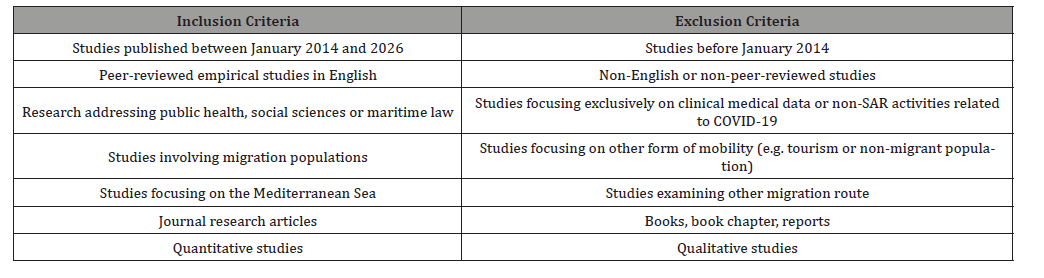
In a systematic review, Inclusion and exclusion criteria are crucial as they ensure only relevant, high-quality studies are selected [22]. Indeed, poorly defined criteria may introduce bias, reduce the overall quality of the review, and compromise its reproducibility [23]. The criteria were developed in line with the research question and aimed to select evidence that was both rigorous and contextually pertinent. As shown in Table 3, the systematic review includes studies published between January 2014 and January 2026, written in English, and focused exclusively on migrant populations in the Mediterranean Sea. Eligible studies address public health issues, social sciences, or maritime law. All studies that did not meet this eligibility criteria were excluded from this review
Table 3: Inclusion and exclusion Criteria.
Data Extraction
Data extraction is a structured methodological process that links primary studies to the final synthesis and requires clearly defined procedures to avoid errors or inconsistencies [24]. All analyses, comparisons, and interpretations rely on extracted data from the included studies [25]. One author extracted data from the included articles utilising a custom-made extraction form, as illustrated in Table 4. The extraction table provides information about the author and year of publication, the study design, sample size, participant age, setting and location, study duration, the measured outcomes and key findings.
Methodological Quality Assessment
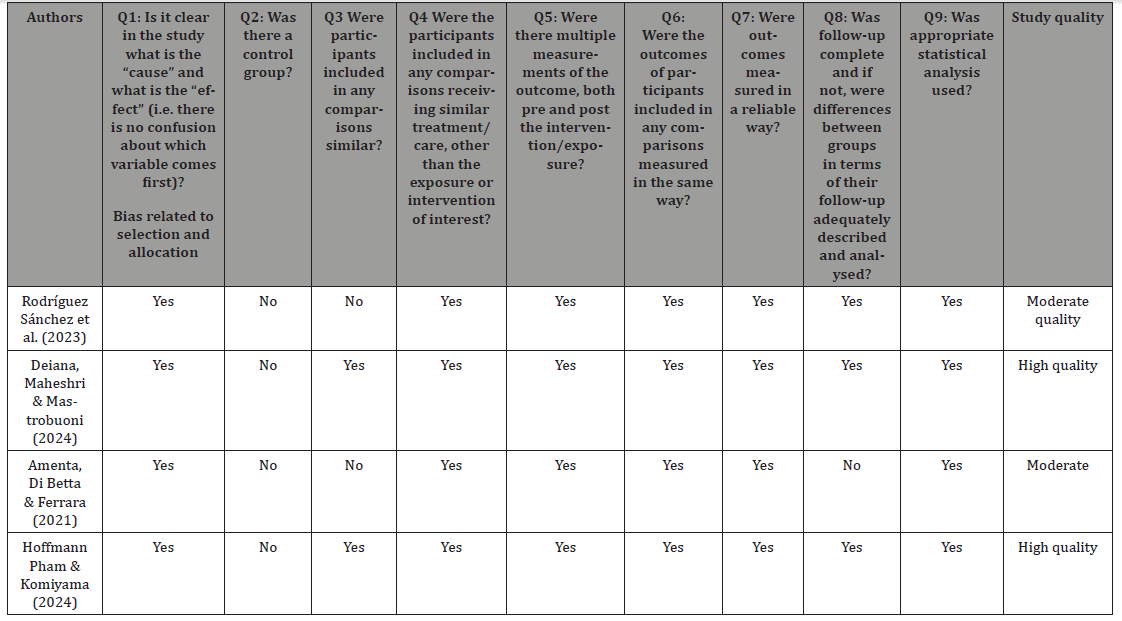
Quality assessment is a critical component of systematic reviews, as it enables accurate interpretation of results and evaluation of the strength of the available evidence. In the absence of rigorous quality assessment, conclusions may be misleading and may fail to reflect the true effects of SAR interventions [26]. A range of methodological quality assessment tools is available; however, the selection of an appropriate tool should be guided by the type of study design. Commonly used instruments include those developed by Cochrane, the Joanna Briggs Institute (JBI) [27], the Critical Appraisal Skills Programme [28] and the Newcastle–Ottawa Scale (NOS) [29]. However, the methodological quality of all included studies was appraised by two authors using the appropriate JBI checklist for different study designs, as show in Tables 5 to 8. The two authors met to resolve any disagreements. For each item on the respective checklists, studies were scored as Yes, No, Unclear, or Not applicable. Total scores were calculated for each study, and methodological quality was categorised as poor quality, moderate quality or high-quality studies. This systematic approach ensured a transparent, rigorous, and reproducible evaluation of methodological quality across all included study designs.
Table 4: Data extraction table showing the characteristics of the included studies
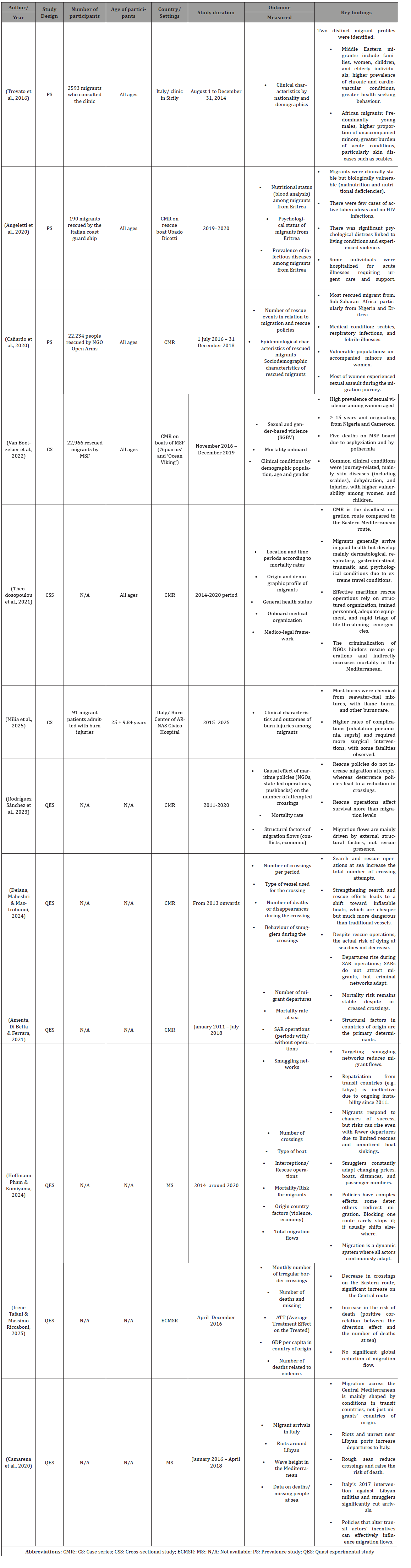
Table 5: Prevalence Studies using the JBI checklist.
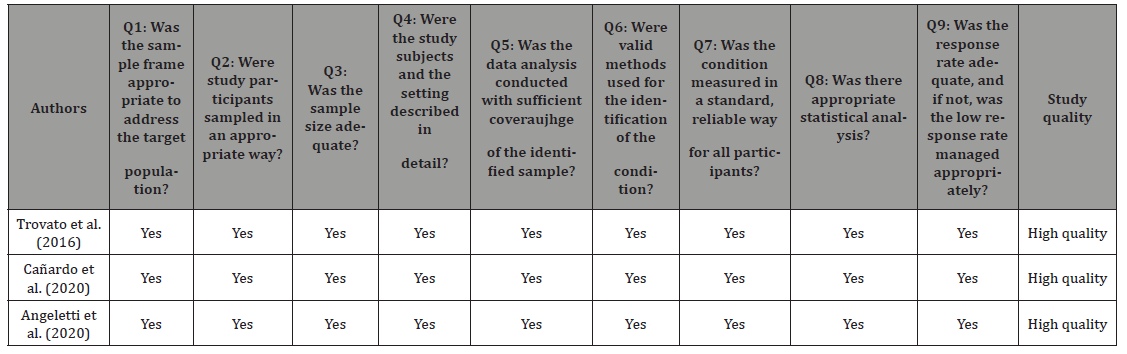
Table 6: Case series Studies using the JBI checklist.
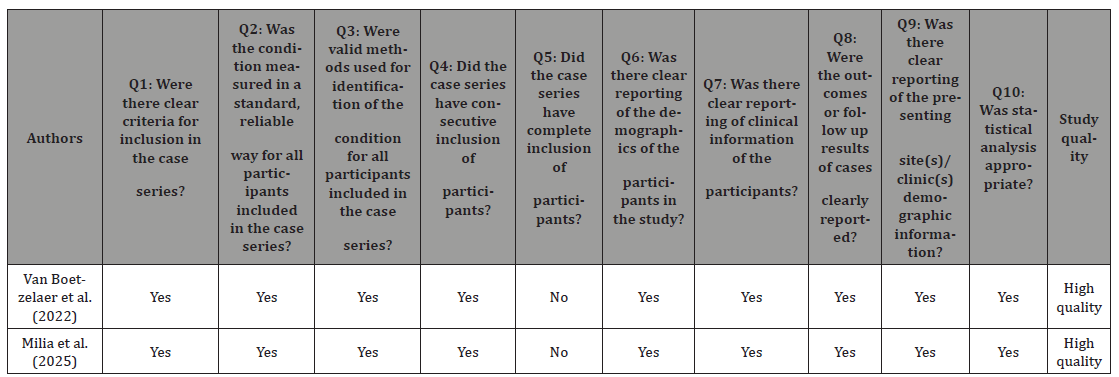
Table 7: Cross-sectional studies using the JBI checklist.
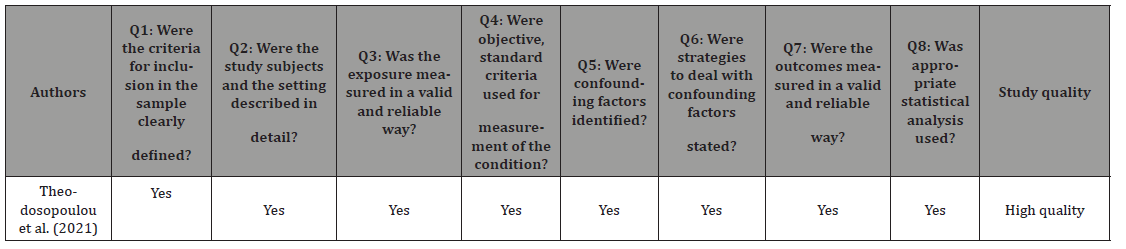
Table 8: Quasi-experimental Studies using JBI checklist.
Data Analysis
Data analysis facilitates the transformation of raw data into meaningful and interpretable information. Furthermore, it enables the organisation and synthesis of information in a structured manner that effectively addresses the research question [30]. A meta-analysis is regarded as the gold standard, as it estimates an overall effect of all the studies under review [31]. However, due to the heterogeneity among the studies included in this review, it was not feasible to conduct a meta-analysis. Consequently, a narrative synthesis was considered more appropriate, as it allows for structured and contextual interpretation of findings.
Ethical consideration
Ethical consideration is fundamental in research to protect human participants [32]. Although systematic reviews do not involve direct interaction with participants, they carry a significant ethical responsibility, as their findings can directly influence health policies and research directions, particularly in sensitive context such as health of migrants at sea, a population considered especially vulnerable. The ethical issues were addressed using the four ethical principles of autonomy, beneficence, non-maleficence, and justice [33]: autonomy through informed consent in included studies [34]; beneficence by contributing to migrant health knowledge [35]; nonmaleficence by carefully reporting findings in such a way as to avoid misinterpretation that could harm employees of NGOs involved in SAR and the migrant population; and justice by including diverse populations [35]. Ethical approval was granted by the Coventry University Ethics Committee (Project Reference No: P191097).
Results
Characteristics of the Included Studies
Twelve studies published between January 2014, and January 2026 were included. Seven focused on the Central Mediterranean route between Libya and Italy, including four conducted onboard SAR vessels operated by the Italian Coast Guard, NGOs, and Médecins Sans Frontières [36-39], and three focused on aggregated data examining departures, crossings, and mortality without individual clinical follow-up [9,40,41]. In addition, two studies were conducted in Italian hospital settings, including a specialised burn care centre for migrants [42,43], while three studies adopted a broader Mediterranean comparative perspective across migration routes [44,45,41]. Out of the 12 studies, six employed quasi-experimental study designs primarily assessing the impact of migration policies and SAR operations on maritime crossings and mortality [9,40,41,44], three used prevalence study design [42,36,37], two used case series study design [38,43] and one used cross-sectional study design [39]. Participant numbers ranged from 91 migrants [43] to 2,593 migrants [42]; however, seven studies based on aggregated data did not report participant numbers [9,39-41,44-46]. The populations across the 12 studies included migrants, refugees, and asylum seekers of all ages, with specific representation of vulnerable groups, such as pregnant women, children under five, unaccompanied minors, persons with disabilities, and older adults. Finally, outcomes measured primarily included clinical and epidemiological indicators, such as infectious and dermatological conditions, nutritional disorders, burns, and psychological distress [36-38,42,43]. Several studies also assessed the effects of migration policies and search and rescue operations on maritime crossings and mortality rates along the Central Mediterranean route [9,39-4, 44,45].
Study selection process
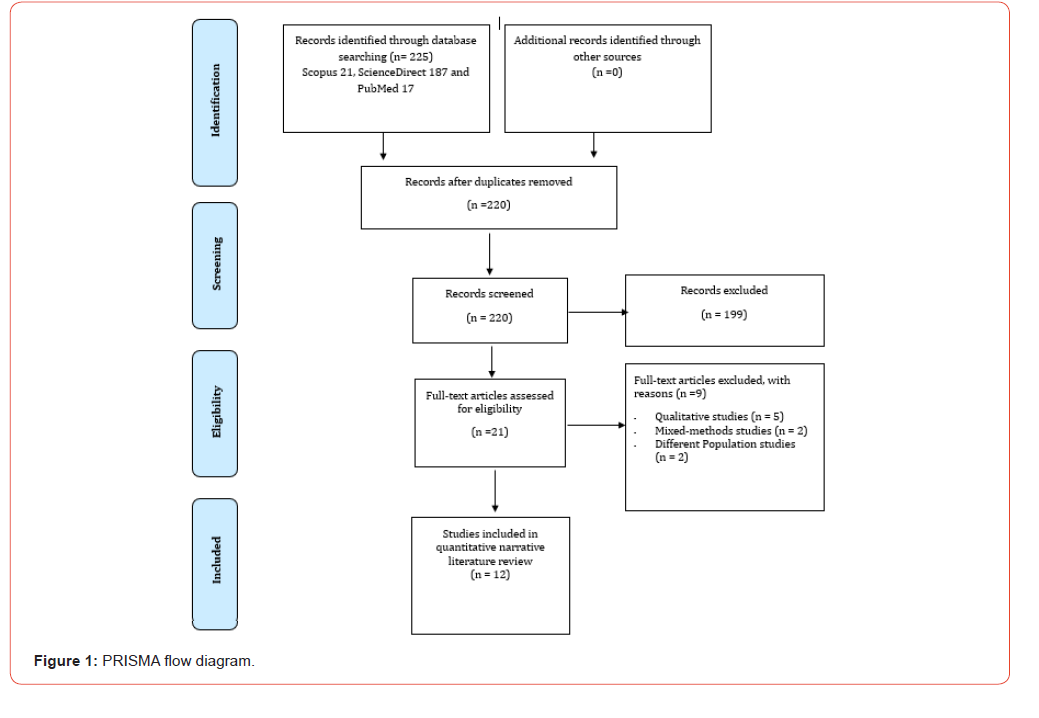
The Preferred Reporting Items for Systematic Reviews and Meta-Analyses (PRISMA) flow diagram was used to depict the screening process and reasons for excluding of some full-text articles as shown in Figure 1. The initial searches across selected databases identified a total of 225 records using pre-established keywords combined with Boolean operators. Following the removal of five duplicate records, the remaining articles were screened based on the study’s inclusion criteria. During the screening process, 199 articles were excluded as they did not meet eligibility requirements or were outside the scope of the review. Of the 21 studies initially identified, nine did not meet the eligibility criteria and were thus excluded, with the remaining 12 articles included in this systematic review. Collectively, the included studies constituted a sufficient and coherent body of evidence to address the research question, meet the study objectives, and offer a comprehensive and complementary understanding of the impact of SAR in the Mediterranean Sea of migrant’s health and decision-making.
Quality assessment results
All prevalence studies included in this review achieved high quality, indicating strong quality, clear reporting, appropriate sampling, valid outcome measurement, and suitable statistical analyses. The cross-sectional study also received the maximum score (8/8), demonstrating clear inclusion criteria and adequate reporting. All the case series studies achieved the highest quality rating (9/9), reflecting clear case definitions, detailed reporting of participant characteristics, valid outcome assessment, and appropriate analytical methods. However, the quality among the quasi-experimental studies ranged from moderate (6–7/9) to high (8/9). These moderate ratings did not indicate weaker methodology but rather reflected the complexity and multifactorial nature of migration contexts. Appraisal items related to control groups, blinding, and comparable conditions were often difficult to apply to policy-based research. Moreover, external contextual factors frequently interacted with migration policies, making it challenging to isolate the effects of a single intervention.
Summary of key findings
The following are the three key findings identified in this systematic literature review:
Health Burdens on Rescued Migrants
A key finding of this review is that the health burdens on rescued migrants along the Central Mediterranean Route are not primarily due to pre-existing illness but are largely attributed to unsafe migration conditions, transit violence, and maritime governance structures. SAR operations are recognised as playing an effective role in addressing acute health needs. All clinical studies indicate that migrants rescued along this route present health problems primarily related to exposures experienced during the journey rather than to imported diseases. The predominant clinical profile includes dermatological conditions such as scabies, reflecting overcrowded conditions aboard vessels, as well as chemical burns resulting from contact between seawater and fuel on inflatable boats. Gastrointestinal infections are associated with poor hygiene conditions on board, while malnutrition and dehydration are reflected in various deficiencies, including vitamin D and protein deficiencies.
Search and Rescue Operations and Migration Dynamics
Another key finding, as suggested by several studies, shows a statistical association between the active presence of Search and Rescue (SAR) operations and an increase in the number of crossing attempts in the short term. This indicates that during periods when SAR assets, whether state-led missions or NGO vessels, operate in proximity to departure zones, recorded departures from North Africa tend to rise compared to periods characterized by limited or no rescue presence. However, SAR operations do not increase total migration but can shift when and where crossings occur, creating short-term fluctuations. Higher crossings during SAR presence usually reflect instability in transit countries, not a humanitarian “pull factor.”
Policy Impacts on Smuggling Routes
Finally, another key finding indicates that smuggling networks play a central role in migrants’ decisions and capacities to cross the Mediterranean, serving as the primary logistical infrastructure for irregular crossings. In the absence of legal pathways, these networks organise transport, select vessels and departure points, coordinate payments, and structure journeys, facilitating migration shaped by structural pressures and constrained by restrictive border regimes. These networks are highly adaptive; the expansion of search and rescue operations often leads smugglers to use less seaworthy and cheaper boats, adjust passenger numbers, reduce fuel, and modify pricing, directly affecting risk levels, mortality, injuries, and vulnerability.
Discussion
Health Burdens on Rescued Migrants
One key finding of this review indicated that individuals rescued at sea had two urgent health profiles, i.e., chronic conditions among families from the Middle East, and acute journey-related injuries among predominantly young men from sub-Saharan Africa. Despite these differences, both reflect harms produced by the migration route and carry a high risk of rapid deterioration without timely care [47]. For example, burn injuries cause progressive tissue damage until irrigated and treated [48], while hypoxia from neardrowning or compression can lead to irreversible neurological damage if oxygenation is not restored [49]. Survivors of sexual and gender-based violence require urgent interventions, including HIV post-exposure prophylaxis within 72 hours and emergency contraception within 120 hours, with effectiveness declining sharply over time [50]. In this context, delays have serious consequences for individuals; it transforms preventable morbidity into permanent harm. When political or administrative delays prolong time at sea, maritime containment priorities may conflict with medical imperatives, effectively shifting SAR vessels into improvised acute care settings without the infrastructure required for evolving emergencies [51]. To reduce the health burden of rescued migrants, States should strengthen and coordinate timely, well-resourced Search and Rescue (SAR) operations that prioritise early intervention, rapid response, and safe disembarkation in line with human rights standards [52].
Search and Rescue Operations and Migration Dynamics
Another key finding of this review presented that SAR has an impact on the number of migrants crossing the sea. The role of Search and Rescue (SAR) operations as a “pull factor” in Mediterranean migration remains contested, yet closer methodological scrutiny reveals that much of the ambiguity arises from heterogeneity in research design rather than substantive contradiction [53]. Studies suggesting behavioural adaptation [54,55] often rely on aggregate departure data or indirect proxies of risk perception, whereas analyses finding no systematic increase in crossings [56,57] employ broader temporal comparisons or incorporate contextual controls. The divergence in findings is therefore less indicative of irreconcilable empirical realities and more reflective of variation in dependent variables (crossing attempts, mortality rates, rescue probability), identification strategies, and assumptions about migrant decision-making [58]. Many studies rely on aggregated data, risking ecological fallacy by inferring individual behaviour from group trends [59], which complicates comparisons and can suggest a causal link between SAR presence and crossings [60]. Framing SAR as an incentive may also obscure structural drivers of migration, such as smuggling economies and broader political and economic factors [61,62,57]. According to reports and articles between 2024 and 2025, migrants in Libya were subjected to systematic human rights violations including arbitrary detention, torture, sexual violence, and forced labour [63-65]. In this context, SAR functions less as a behavioural stimulus and more as a harm-reduction intervention operating within an established transnational mobility system [66]. From a public health perspective, restricting or criminalising SAR is unlikely to address upstream drivers of migration but may increase preventable mortality, trauma exposure, and pressure on emergency health systems [67].
Policy Impacts on Smuggling Routes
Finally, the final key finding of this review highlights the importance of considering smuggling in factors that affects migrants’ health. Smuggling networks appear to be a key infrastructure in the organisation of irregular crossings of the Mediterranean, coordinating transport, vessels, and the logistics of the journey. Their central role largely reflects the lack of accessible and safe legal migration pathways to Europe, which leads many migrants to rely on these networks to reach European territory. As highlighted by the European Parliament research service [68], migrant smuggling often emerges in contexts where legal migration opportunities are limited and border controls are restrictive, creating demand for irregular facilitation. In this context, smuggling networks develop as a response to institutional barriers to mobility and become a central mechanism enabling irregular migration. As discussed in analyses of the EU Action Plan against migrant smuggling and the Protocol against the Smuggling of Migrants by Land, Sea and Air, policy responses largely frame smuggling as a form of transnational organised crime and prioritise prevention, surveillance, and criminal prosecution [69]. While these strategies aim to disrupt smuggling networks, they may also contribute to worsening conditions for migrants. Increased border controls and interceptions can push smugglers to use more dangerous routes, overcrowded or less seaworthy boats, and minimal fuel supplies, thereby heightening the risks of shipwreck, injury, and more death [70]. As a result, migrants often bear the direct consequences of these policies, facing greater physical danger and vulnerability during the journey [71]. Expanding safe and legal migration pathways, alongside adopting less restrictive border policies, would reduce migrants’ reliance on smuggling networks and thereby minimise exposure to dangerous routes and associated health risks [72].
Practical and Policy Implications
To reduce the loss of life and address these findings, several practical and policy measures should be implemented. First, SAR capacities must be strengthened and better coordinated among coastal states, European institutions, and humanitarian actors, through improved data-sharing systems and rapid responses to distress calls [73]. Removing disincentives to rescue, such as penalising those conducting rescues, and establishing regional mechanisms to ensure safe places of disembarkation are also essential. Second, systematic collection and analysis of data on deaths and missing persons at sea should be integrated into SAR strategies to identify high-risk areas and improve resource allocation. Rescue responses must also ensure humane treatment and the early identification of individuals with international protection needs, including refugees, asylum seekers, and victims of trafficking [74]. Third, the European Union should support the presence of state and multilateral SAR capacities near departure zones to compensate for the decline in large-scale state operations [75]. Cooperation with national coast guards, including Libyan authorities, should rely on clear protocols grounded in international maritime law and include safeguards against refoulement. Strengthened coordination among states, NGOs, and international organisations can significantly improve maritime rescue systems and reduce deaths along migratory sea routes [76].
Strengths and Limitations of the Study
A major strength of this study lies in its interdisciplinary perspective, which integrates evidence from public health and maritime law. This provides a more comprehensive understanding of SAR operation, considering both the health needs of recued migrants and political frameworks that shape rescue activities. The review utilised a well-defined protocol, i.e., PRISMA, thereby improving the replicability of this research. The use of stringent inclusion and exclusion criteria reduced the possibility of selective reporting. Firstly, although the research focuses on the Mediterranean region, and particularly contexts involving Italy, only studies published in English were included. This language restriction may have led to the exclusion of relevant research published in Italian or other regional languages. Secondly, migration dynamics are highly fluid and influenced by rapidly changing political and geopolitical conditions. As a result, the findings of this review reflect the evidence available during the study period and may evolve as new policies, migration routes, and SAR practices continue to develop.
Recommendations for Future Research and Practice
Research on maritime migration should adopt longitudinal and mixed methods design that combine quantitative data with qualitative insights from migrants. This would enable a more comprehensive understanding of the decision-making processes and factors influencing attempts to undertake sea crossings [77]. There is also a need to investigate the long-term health outcomes of migrants rescued at sea. Longitudinal studies tracking individuals after disembarkation could clarify the persistence of health conditions associated with the migration journey [78]. It may also be beneficial to examine the availability, accessibility, and effectiveness of legal migration pathways, because limited access to safe and regular routes may push migrants and asylum seekers toward hazardous journeys across the Mediterranean. Finally, research should explore the dynamics of migrant smuggling networks [79]. Greater empirical insight is needed into their organisational structures, recruitment strategies, financial mechanisms, and the routes used to facilitate irregular migration. Understanding how these networks adapt to changing enforcement and migration patterns could provide crucial knowledge on the safety and vulnerability of migrants undertaking maritime journeys [79].
Conclusion
We examined the impact of Search and Rescue (SAR) operations on migrant mortality in the Mediterranean Sea. Synthesising twelve high-quality studies, we found that SAR plays a vital lifesaving role, with rescued migrants often presenting serious physical and mental health conditions, showing SAR reduces mortality rather than causing harm. Mortality variations are not driven by SAR presence alone but by structural factors in countries of origin, smuggling network adaptations, and deterrence-focused policies shaping migration risks. Overall, our study shows that migrant mortality stems not from humanitarian rescue but from fragmented, deterrence-driven governance prioritising border control over human life. It highlights the need for European Union states to strengthen coordinated SAR capacity, remove barriers to civilian rescue, and ensure vessels can meet urgent health needs. Addressing the structural drivers of migration alongside wellresourced, protected SAR operations is essential for an effective public health and humanitarian response. Future research should prioritise longitudinal studies on post-disembarkation health outcomes and evaluations of onboard care models, alongside deeper exploration of migrant decision-making and lived experiences to better inform humane and sustainable policy.
Acknowledgement
The authors thank all the staff of Coventry University who provided an excellent academic environment and access to a wide range of learning resources that supported this study, especially the subject librarian for the Public Health department.
Conflict of interest
The authors declare that there are no conflicts of interest regarding the publication of this manuscript. All authors have approved the final version of the manuscript and agree with its submission. The research was conducted independently, and no external funding or influence affected the study’s design, data collection, analysis, or interpretation.
References
- Cusumano E (2016) Emptying the sea with a spoon? Non-governmental providers of migrants search and rescue in the Mediterranean. Marine Policy 75: 91-98.
- Cusumano E, Pattison J (2018) The non-governmental provision of search and rescue in the Mediterranean and the abdication of state responsibility. Cambridge Review of International Affairs 31(1): 53-75.
- International Organization for Migration (2024) Flow monitoring surveys Europe regional report 2024. IOM.
- United Nations High Commissioner for Refugees (2017) General legal considerations: search-and-rescue operations involving refugees and migrants at sea. UNHCR.
- International Organization for Migration (2026) Missing Migrants Project. IOM.
- Global Health Perspectives (2024) Bridging the gap: The role of search and rescue organisations in medical care and dignity for those rescued at sea. Global Health Perspectives.
- European Parliament (2021) Search and rescue in the Mediterranean. European Parliamentary Research Service.
- Schrezenmeier S (2023) Criminalisation and obstruction of civil SAR activities: The impact of Decree-Law No. 1 of January 2, 2023, and the distant port policy on civil SAR activities in the Central Mediterranean Sea. Uppsala University.
- Rodríguez Sánchez A, Wucherpfennig J, Rischke R, Iacus SM (2023) Search-and-rescue in the Central Mediterranean Route does not induce migration: Predictive modeling to answer causal queries in migration research. Scientific Reports 13(1): 11014.
- Pettrachin A, Hadj Abdou L (2024) Beyond evidence-based policymaking? Exploring knowledge formation and source effects in US migration policymaking. Policy Sciences 57(1): 3-28.
- Willis LD (2023) Formulating the Research Question and Framing the Hypothesis. Respiratory Care 68(8): 1180-1185.
- Hosseini M-S, Jahanshahlou F, Akbarzadeh M-A, Zarei M, Vaez-Gharamaleki Y (2024) Formulating Research Questions for evidence-based Studies. Journal of Medicine, Surgery, and Public Health 2(2): 1-5.
- Covvey JR, McClendon C, Gionfriddo MR (2024) Back to the basics: Guidance for formulating good research questions. Research in Social and Administrative Pharmacy 20(1): 66-69.
- Cumpston MS, McKenzie JE, Thomas J, Brennan SE (2021) The Use of "PICO for Synthesis" and Methods for Synthesis without meta-analysis: Protocol for a Survey of Current Practice in Systematic Reviews of Health Interventions. F1000Research 9(2): 678.
- Bramer WM, Rethlefsen ML, Kleijnen J, Franco OH (2017) Optimal Database Combinations for Literature Searches in Systematic reviews: a Prospective Exploratory Study. Systematic Reviews 6(1): 245.
- Ewald H, Klerings I, Wagner G, Heise TL, Stratil JM, et al. (2022) Searching Two or More Databases Decreased the Risk of Missing Relevant studies: a Metaresearch Study. Journal of Clinical Epidemiology 149(149): 154-164.
- National Library of Medicine (2025) PubMed. National Library of Medicine.
- Scopus (n.d.) Scopus - Preview. Scopus.com.
- Science Direct (n.d.) ScienceDirect.com. Elsevier.
- MacFarlane A, Russell-Rose T, Shokraneh F (2022) Search Strategy Formulation for Systematic Reviews: Issues, Challenges and Opportunities. Intelligent Systems with Applications 15(1).
- EBSCO (n.d.) EBSCO Information Services.
- Shamseer L, Moher D, Clarke M, Ghersi D, Liberati A, et al. (2015) Preferred Reporting Items for Systematic Review and meta-analysis Protocols (PRISMA-P) 2015: Elaboration and Explanation. BMJ 350: g7647.
- Higgins JPT, Thomas J, Chandler J, Cumpston M, Li T, (Eds.) (2019) Cochrane handbook for systematic reviews of interventions (1st edn). Wiley.
- Taylor KS, Mahtani KR, Aronson JK (2021) Summarising good practice guidelines for data extraction for systematic reviews and meta-analysis. BMJ Evidence-Based Medicine 26(3): 88-90.
- Afifi M, Stryhn H, Sanchez J (2023) Data extraction and comparison for complex systematic reviews: A step-by-step guideline and an implementation example using open-source software. Systematic Reviews 12(1): 226.
- Delavari S, Pourahmadi M, Barzkar F (2023) What Quality Assessment Tool Should I Use? A Practical Guide for Systematic Reviews Authors. Iranian Journal of Medical Sciences 48(3): 229-231.
- Joanna Briggs Institute (2020) Critical Appraisal Tools. JBI.
- Critical Appraisal Skills Programme (2024) Critical Appraisal Checklists. CASP
- Wells GA, Shea B, O'Connell D, Peterson J, Welch V, et al. (2025) The Newcastle-Ottawa Scale (NOS) for assessing the quality of nonrandomised studies in meta-analyses. Ottawa Hospital Research Institute.
- Kothari CR (2004) Research Methodology: Methods and Techniques. New Age International.
- Fang X, Zhao N, Zhu Z (2021) Overview of meta-analysis. Ibrain 7(1): 52-56.
- Miteu GD (2024) Ethics in Scientific Research: a Lens into Its Importance, History, and Future. Annals of Medicine and Surgery 86(5): 2395-2398.
- Page M, Tetzlaff J, Moher D (2021) The PRISMA 2020 statement: an updated guideline for reporting systematic reviews. Value in Health 23(10): S312-S313.
- Hammersley M, Traianou A (2012) Autonomy and informed consent. In: Ethics in Qualitative Research: Controversies and Contexts. SAGE Publications Ltd, pp 75-98.
- Varkey B (2021) Principles of clinical ethics and their application to practice. Medical Principles and Practice 30(1): 17-28.
- Angeletti S, Ceccarelli G, Bazzardi R, Fogolari M, Vita S, et al. (2020) Migrants rescued on the Mediterranean Sea route: Nutritional, psychological status and infectious disease control. The Journal of Infection in Developing Countries 14(05): 454-462.
- Cañardo G, Gálvez J, Jiménez J, Serre N, Molina I, et al. (2020) Health status of rescued people by the NGO Open Arms in response to the refugee crisis in the Mediterranean Sea. Conflict and Health 14: 21.
- Van Boetzelaer E, Fotso A, Angelova I, Huisman G, Thorson T, et al. (2022) Health conditions of migrants, refugees and asylum seekers on search and rescue vessels on the central Mediterranean Sea, 2016-2019: a retrospective analysis. BMJ Open 12(1): e053661.
- Theodosopoulou P, Tsiamis C, Pikoulis A, Pikouli A, Aristomenis E, et al. (2021) Rescue medical activities among sea migrants and refugees in the Mediterranean region: lessons to be learned from the 2014-2020 period. International Maritime Health 72(2): 99-109.
- Amenta C, Di Betta P, Ferrara C (2021) The migrant crisis in the Mediterranean Sea: Empirical evidence on policy interventions. Socio-Economic Planning Sciences 78: 101038.
- Katherine Hoffmann P, Komiyama J (2024) Strategic choices of migrants and smugglers in the Central Mediterranean Sea. PLoS ONE 19(4): e0300553.
- Trovato A, Reid A, Takarinda KC, Montaldo C, Decroo T, et al. (2016) Dangerous crossing: Demographic and clinical features of rescued sea migrants seen in 2014 at an outpatient clinic at Augusta Harbor, Italy. Confl Health 10(1): 14.
- Milia WR, Gervasi E, Alessandro G, Rizzo M, Pirrello R (2026) Burn injuries among migrants crossing the mediterranean sea: A 10-year experience from a single center. J Burn Care Res 47(1): 363-369.
- Deiana C, Vikram M, Mastrobuoni G (2024) Migrants at Sea: Unintended Consequences of Search and Rescue Operations. AEJ: Economic Policy 16(2): 335-365.
- Tafani I, Massimo Riccaboni (2025) The impact of the EU-Turkey agreement on the number of lives lost at sea. Humanities and Social Sciences Communications 12.
- Camarena KR, Claudy S, Wang J, Wright AL (2020) Political and environmental risks influence migration and human smuggling across the Mediterranean Sea. PLOS ONE 15(7): e0236646.
- Jiménez-Lasserrotte MDM, Pomares Rodríguez A, García-López DDM, Díaz-Sotero V, Chica-Pérez A, et al. (2026) Maritime Response and Emergency Care for Irregular Migrants: Experiences of Spanish Rescue Professionals. Healthcare 14(1): 123.
- Ahuja RB, Gibran N, Greenhalgh D, Jeng J, Mackie D, et al. (2016) ISBI Practice Guidelines for Burn Care. Burns 42(5): 953-1021.
- American Heart Association (2025) CPR & ECC Guidelines. American Heart Association.
- World Health Organization (2020) Clinical management of rape and intimate partner violence survivors: developing protocols for use in humanitarian settings. World Health Organization.
- Médecins sans frontières (2025) New MSF report denounces violence and obstruction of lifesaving response in the Central Mediterranean. MSF.
- United Nations High Commissioner for Refugees (2024) Distress at sea: a call for a humanitarian and precautionary approach. UNHCR.
- Boland C, Morente D, Sanchez-Montijano E (2024) "Knowledge is confused": Rethinking pull factors in light of asylum and refugee integration policies. International Migration 62(5): 237-253.
- Battiston G (2021) Essays in Migration Economics and Political Economy. PhD Thesis, Bocconi University.
- Cornelius WA (2001) Death at the Border: Efficacy and Unintended Consequences of US Immigration Control Policy. Population and Development Review 27(4): 661-685.
- Cusumano E (2019) Humanitarians at sea: Selective emulation across migrant rescue NGOs in the Mediterranean Sea. Contemporary Security Policy 40(2): 239-262.
- Steinhilper E, Gruijters R (2017) Border Deaths in the Mediterranean: What We Can Learn from the Latest Data. Oxford Law Faculty Blog.
- Crawley H, McMahon S, Jones K, Duvell F, Sigona N (2016) Destination Europe? Understanding the dynamics and drivers of Mediterranean migration in 2015. Coventry University.
- Frost J (2024) The Importance of Data Aggregation in Modern Analytics. Statistics by Jim.
- Wing C, Simon K, Bello-Gomez RA (2018) Designing Difference in Difference Studies: Best Practices for Public Health Policy Research. Annu Rev Public Health 39(1): 453-469.
- Akira Soto Nishimura, Mathias Czaika (2023) Exploring Migration Determinants: a Meta-Analysis of Migration Drivers and Estimates. J Int Migration Integration 25: 621-643.
- Sanchez G (2020) Beyond Militias and Tribes: The Facilitation of Migration in Libya. SSRN Electronic Journal.
- Esposito M, Salerno M, Chisari MG, Sessa F, Rapisarda V, et al. (2024) Analysis of the health conditions of migrants and asylum seekers in reception centers: from scene investigation to the evaluation of signs of torture. Forensic Sci Int 365: 112288.
- United Nations Human Rights (2026) Libya: A pattern of systematic human rights violations and abuses against migrants. OHCHR.
- Van (2025) Abuse and mistreatment of migrant children in Libya's detention centres. Humanium.
- Salvagno M, Jachetti A (2024) Non-governmental organizations involvement on search and rescue operations in the Mediterranean Sea: Friend or foe? Front Public Health 12: 1362214.
- Gordon E, Larsen HK (2021) "Sea of blood": the intended and unintended effects of criminalising humanitarian volunteers assisting migrants in distress at sea. Disasters 46(1): 3-26.
- Bytyqi V, Zogaj A, Veliqi X (2024) Combating Migrant Smuggling by Sea: Analysis of EU Action Plan Against Migrant Smuggling and Standards of Migrant Smuggling Protocol. Transact Maritime Science 13(1).
- Travis A (2017) EU-UK naval mission on people-smuggling led to more deaths, report says. The Guardian.
- Médecins sans Frontières (n.d.) EU Migration Crisis Update - June 2016. MSF.
- Luyten K, Smialowski S (2021) Search and rescue in the Mediterranean: Briefing EU policies - Insights. European Parliament Research Service.
- Office of the United Nations High Commissioner for Human Rights (2021) "Lethal Disregard": Search and rescue and the protection of migrants in the central Mediterranean Sea. OHCHR.
- United Nations High Commissioner for Refugees (2014) Global Initiative on Protection at Sea. UNHCR.
- Vives L, Banos A, Martel C, Hessek ER, Williams K (2025) Maritime SAR Systems in the EU: Convergence and Co-optation into the Anti-Immigration Border. J Borderlands Studies: 40(3): 669-690.
- United Nations High Commissioner for Refugees (2017) General legal considerations: search-and-rescue operations involving refugees and migrants at sea. UNHCR.
- Carling J, Collins F (2018) Aspiration, desire and drivers of migration. J Ethnic Migration Studies 44(6): 909-926.
- Wong EC, Maher AR, Motala A, Ross R, Akinniranye O, et al. (2022) Methods for identifying health research gaps, needs, and priorities: A scoping review. J Gen Intern Med 37(1): 198-205.
- Achilli L (2018) The "Good" Smuggler: The Ethics and Morals of Human Smuggling among Syrians. The Ann American Academy of Political and Social Science 676(1): 77-96.
-

This work is licensed under a Creative Commons Attribution-NonCommercial 4.0 International License.




