




 Research Article
Bioactive Compounds in Dry Fruit Oils: Mechanisms of
Action and Therapeutic Insights
Received Date: July 9, 2025; Published Date: August 07, 2025
Abstract
Dry fruit oils, extracted from nutrient-dense nuts and seeds through cold-pressing, solvent extraction, and supercritical CO₂ methods, represent a rich source of bioactive compounds, including monounsaturated fatty acids (MUFAs), polyunsaturated fatty acids (PUFAs), tocopherols, phytosterols, and polyphenols. This comprehensive review synthesizes current evidence on the therapeutic applications of major dry fruit oils, including almond, walnut, pistachio, hazelnut, cashew, and pine nut oils, examining their nutritional profiles, mechanisms of action, and clinical efficacy across multiple health domains. Cardiovascular benefits constitute the most extensively documented therapeutic effects, with clinical trials demonstrating significant reductions in LDL cholesterol (10-15%), improved HDL levels, and decreased cardiovascular event risk by up to 39.86%. The PREDIMED study provided landmark evidence showing a 30% reduction in major cardiovascular events among participants consuming Mediterranean diets enriched with nuts. Antioxidant properties, primarily mediated by γ-tocopherol and polyphenols, demonstrate superior free radical scavenging capacity, with walnut oil exhibiting the highest antioxidant activity among tested oils. Neurological benefits are particularly pronounced with omega-3-rich oils, especially walnut oil containing alpha-linolenic acid, which enhances cognitive function and memory retention and provides neuroprotection against age-related. Anti-diabetic effects include improved insulin sensitivity, reduced glycemic response, and enhanced adiponectin concentrations. Immunomodulatory properties manifest through NF-κB pathway inhibition, reduced pro-inflammatory cytokines (TNF-α, IL-6), and demonstrate anti-cancer potential against colon and gastric malignancies. Applications extend beyond nutrition therapy to include cosmetic formulations for skin barrier repair, anti-aging treatments, and functional food development. Safety profiles are generally excellent, with recommended dosages ranging from 5 to 20 mL daily for oral consumption. Quality control through proper extraction methods and storage conditions ensures bioactive compound stability and therapeutic efficacy. Future research priorities include standardized dosing protocols, personalized nutrition approaches based on genetic profiling, and long-term clinical trials to establish definitive therapeutic guidelines for integrating dry fruit oils into evidence-based medical practice.
Keywords: Dry fruit oils; Cardiovascular Health; Antioxidants; Neuroprotection; Functional Foods; Phytosterols; Omega-3 fatty Acids
Introduction
When we talk about dried fruits, we mean the concentrated nutrients that nature creates by removing moisture through mechanisms such as sun drying, controlled dehydration, or special processing. Almonds, walnuts, pistachios, cashews, and hazelnuts are among the most well-known foods, which become even stronger when their natural oils are extracted [1-3]. These oils are special not only because they taste great but also because they contain many health-promoting components. Each drop contains tocopherols (the chemical term for vitamin E), phytosterols, polyphenols, and healthy monounsaturated fats that our bodies need. On the other hand, dried fruit oils maintain the nutritional value of their source and help our system absorb fat-soluble vitamins better. The chronicle of nut oils is thousands of years old and is an important part of the medicinal practices of many cultures. Ancient Ayurvedic practitioners discovered that almond oil, called “badam rogan” in old scriptures, was great for nourishing the skin, clearing the mind, and balancing metabolism. Walnut oil, on the other hand, got its name as a heart protector long before it was discovered by contemporary science. Unani medical practitioners used pistachio oil to treat liver problems and inflammation [4-8]. The Mediterranean diet is perhaps most recognized for celebrating the synergy between olive oil and tree nuts. It has been known for millennia that this combination naturally protects against chronic diseases and improves longevity. These old healing systems knew a profound thing: oils can heal both the skin and the inside of the body when eaten.
They can help with everything from digestive problems to changes in the brain that occur with aging. There has been a major shift in the nutrition world toward functional foods, and nut oils have become one of the best nutraceuticals with strong scientific backing. Every year, the evidence is getting stronger that they are good for your health. Their high levels of monounsaturated and polyunsaturated fats naturally help the heart by lowering cholesterol levels and reducing harmful inflammation throughout the body. The polyphenols and vitamin E molecules they contain make them so good at fighting oxidative stress, which causes aging and chronic diseases. Nut oils’ omega-3 fatty acids are especially good for brain health because they help with memory, attention, and overall cognitive function. The metabolic benefits are almost amazing. Almond oil contains lots of phytosterols, which act like natural gatekeepers and limit the cholesterol our intestines take in from food [9,10]. Market analysts say that by 2025, the worldwide functional food sector will be worth a staggering $275 billion, and the share of cold-pressed nut oils will continue to grow. This growth is more than just a trend; this shows that people are changing their thinking about health and nutrition. People have moved beyond eating only healthy foods to eating foods that actively promote health and prevent people from getting sick. Nut oils are a great combination of ancient wisdom and modern nutritional science [11]. They can be used in general cooking, as a concentrated supplement, or for medicinal purposes. They give us a natural, research-based way to stay healthy that our ancestors knew about and that modern medicine is beginning to support more and more. This chapter critically synthesizes dry fruit oils’ nutritional makeup, action mechanisms, and evidence-based medicinal applications. It analyzes key oils’ (e.g., almond, walnut) macro/micronutrient profiles and assesses their effectiveness in various health conditions, including cardiovascular, diabetic, neurodegenerative, and dermatological issues [12-17].
Extraction and Composition of Dry Fruit Oils
Extraction Methods
Dry fruit oils are extracted through three primary methods,
each impacting nutrient retention and oil quality:
1. Cold-Pressing: Mechanical pressing at low temperatures
(<50°C) preserves heat-sensitive nutrients like tocopherols
and polyphenols. This method, ideal for almonds and walnuts,
yields oils with superior antioxidant capacity but lower efficiency
(5–30% oil recovery).
2. Solvent Extraction: Using chemical solvents like hexane
achieves high yields (>95%) but risks residue contamination
and nutrient degradation. Emerging green solvents (e.g., terpenes)
and enzyme-assisted methods offer eco-friendly alternatives.
3. Supercritical CO₂ Extraction: This method uses pressurized
CO₂ to extract oils without heat, retaining 90–95% of phytosterols
and tocopherols. It’s effective for walnut and pine nut
oils, though costly and less scalable [18-25].
Nutritional Profiles of Key Oils
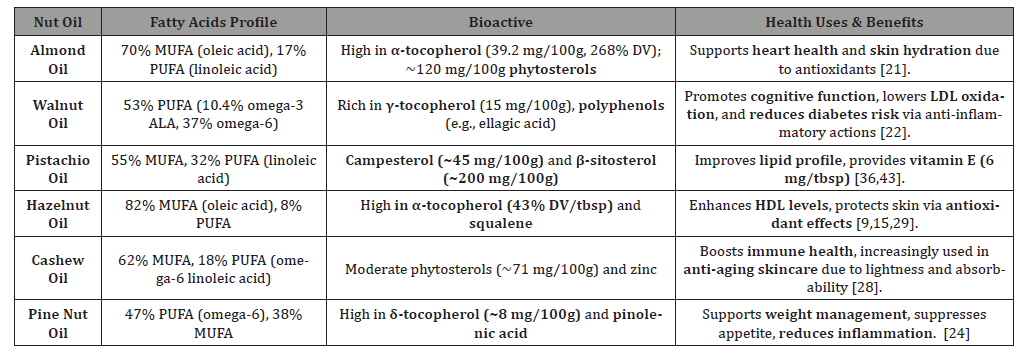
These nut oils, each with distinct fatty acid compositions and bioactive profiles, provide targeted health benefits ranging from cardiovascular support to skin health and metabolic regulation. (Table 1) Almond oil’s antioxidant richness aids heart and skin health, walnut oil supports brain function, pistachio oil improves lipid profiles, hazelnut oil boosts HDL, cashew oil enhances skincare, and pine nut oil aids weight control. Incorporating these oils into diets or daily routines can address specific nutritional needs, aligning with broader interests in nutrition for health conditions as part of educational content development [26-36]. Their diverse applications underscore the importance of understanding dietary fats and bioactive in promoting overall wellness, offering practical solutions for both preventative and therapeutic purposes across various health domains.
Table 1: Comparative Profile of Nut Oils
Bioactive Components and Their Mechanisms
Antioxidants: γ-Tocopherol in Walnut Oil
Walnut oil is rich in γ-tocopherol, a type of vitamin E that acts as an antioxidant in a different way from α-tocopherol. On the other hand, γ -tocopherol effectively neutralizes reactive nitrogen species (RNS) and forms stable compounds such as 5-nitro- γ-tocopherol that prevent peroxynitrite and other nitrogen radicals from damaging cells. This pathway is important for reducing oxidative stress in brain and blood vessel tissues. By keeping membranes intact and reducing electron leakage in the electron transport chain, γ-tocopherol better maintains mitochondrial function. 100 g of walnut oil contains about 15 mg of γ-tocopherol. This is one reason why it can prevent LDL from being oxidized, which is a key step in the formation of atherosclerosis. γ-Tocopherol also makes the polyunsaturated fatty acids (PUFAs) in walnut oil more stable. This saves them from spoiling, and their nutritional value also remains intact.
Anti-Inflammatory Compounds: Polyphenols and Squalene
Lipid-Lowering Phytosterols
Phytosterols (e.g., β-sitosterol, campesterol), structurally similar to cholesterol, reduce LDL-C levels by 10–15% through competitive inhibition of intestinal cholesterol absorption. They displace cholesterol from micelles, limiting its uptake via NPC1L1 transporters, and enhance fecal excretion of cholesterol-phytosterol complexes. Additionally, phytosterols activate liver X receptors (LXRs), upregulating ATP-binding cassette transporters ABCG5/8, which promote biliary cholesterol excretion. In walnut and pistachio oils, β-sitosterol (∼200 mg/100 g) is particularly effective, with studies showing a 12% reduction in LDL-C with 2 g/day intake. Genetic variations in ABCG8 and APOE influence individual responses, highlighting the need for personalized dosing [37- 45].
Mechanisms at the Cellular Level
1. NF-κB Inhibition:
Both γ-tocopherol and polyphenols suppress NF-κB signaling, a master regulator of inflammation. γ-Tocopherol reduces phosphorylated IκBα, preventing NF-κB nuclear translocation and subsequent expression of pro-inflammatory genes. Polyphenols like resveratrol directly bind to IKK, inhibiting its activity and stabilizing IκB7. This dual inhibition is pivotal in reducing chronic inflammation linked to cancer and metabolic syndrome.
2. LDL Oxidation Prevention:
Antioxidants in dry fruit oils (e.g., γ-tocopherol, polyphenols) scavenge free radicals that oxidize LDL particles. γ-Tocopherol donates electrons to lipid peroxyl radicals, terminating chain reactions that damage LDL membranes. 2. Polyphenols chelate transition metals like iron, preventing Fenton reactions that generate hydroxyl radicals. 7. Phytosterols further reduce LDL oxidation by lowering circulating LDL concentrations, thereby decreasing substrate availability for oxidative modification.
3. Lipid Metabolism Regulation:
Phytosterols and squalene modulate lipid homeostasis via LXRs. Squalene enhances hepatic LDL receptor expression, increasing LDL clearance, while phytosterols inhibit HMG-CoA reductase activity, subtly reducing cholesterol synthesis. These combined effects improve lipid profiles and reduce cardiovascular risk.
Clinical Implications and Synergy
The therapeutic potential of these bioactive components is increased by their combination. For instance, γ-tocopherol and polyphenols in walnut oil act together to stop NF-κB and protect LDL particles. Phytosterols, on the other hand, help the body get rid of cholesterol. In clinical trials, meals augmented with these substances demonstrate a 20-30% decrease in inflammatory markers (CRP, IL-6) and a 15-20% enhancement in lipid profile [46-57]. Future studies ought to concentrate on enhancing bioavailability by nanoencapsulation and tailored dietary approaches informed by genetic polymorphism.
Good for the Heart: Enhances Lipid Profile
The cardiovascular advantages of walnut oil are among the most extensively researched and well-documented health impacts. These oils are quite effective at improving lipid profiles in a number of ways. A significant Mendelian randomization study published in Frontiers in Cardiovascular Medicine indicated that dry fruit consumption may decrease the risk of heart failure by 39.86% (OR = 0.6014, 95% CI: 0.4243–0.8522), total ischemic stroke by 54.53% (OR = 0.4547, 95% CI: 0.2950–0.7010), and small vessel stroke by 65.01% (OR = 0.3499, 95% CI: 0.1466–0.8349). 1. There are many reasons why these cardiovascular benefits happen. Nuts help you control your cholesterol in a few ways: they cut LDL (bad) cholesterol, raise HDL (good) cholesterol, and keep your blood pressure checked. Pistachios, almonds, and walnuts lower LDL levels, which stops plaque from building up in the arteries. Healthy fats, on the other hand, raise HDL levels, which helps get rid of extra cholesterol in the blood. Randomized controlled trials provide clinical evidence of substantial enhancements in lipid markers. A study on Brazilian nuts that looked at cashews and cashew oil found that both treatments significantly lowered neck circumference and apolipoprotein B levels. The group that ate cashews had an average neck circumference decrease of -1.0 ± 1.2 cm, while the group that used cashew oil had a decrease of -0.5 ± 1.2 cm. These decreases are therapeutically relevant, as evidence indicates that a 1 cm increase in neck circumference has an atherosclerotic effect. The anti-atherosclerotic benefits of nut oils stem from their high antioxidant content, especially vitamin E and polyphenols. Pistachios are full of lutein, beta-carotene, and gamma-tocopherol, which are antioxidants that help fight oxidative stress and stop LDL from oxidizing, which is a big cause of atherosclerosis (plaque build-up in the arteries). Pistachios have more antioxidants than other nuts, which helps protect blood vessels.
Studies indicate that cashews, characterized by their elevated quantities of monounsaturated fatty acids (MUFA) and polyunsaturated fatty acids (PUFA), alongside diminished saturated fatty acids, are linked to LDL reduction. The research revealed a PUFA/SFA ratio of 1.04 ± 0.01, suggesting a favorable capacity for diminishing cardiometabolic indicators. The Department of Health and Social Security says that people should not eat oils with a PUFA/SFA ratio of less than 0.45. This makes cashew oil very good for the human diet.
Clinical evidence derived from the PREDIMED research
The PREDIMED trial offered important information regarding the cardiovascular advantages of nut eating. Among 7,216 older men and women at elevated risk for cardiovascular disease who participated for 4.8 years, those consuming a handful of nuts (30 g) more than three times weekly exhibited a 39% reduction in total mortality compared to non-consumers. A Mediterranean diet incorporating nuts or extra-virgin olive oil diminished cardiovascular events (myocardial infarction, stroke, and mortality from cardiovascular causes) by almost 30% following a 4.8-year follow-up study. Amazingly, after about five years, the people who ate the diet with nuts did not gain weight. In fact, their waist circumference shrank by about one cm compared to the low-fat control group, even though the diet’s energy density went higher. Initial findings indicated enhancements in the fatty liver index, implying that a Mediterranean diet incorporating nuts or olive oil may postpone or mitigate the natural advancement of non-alcoholic fatty liver disease.
Blood pressure and how efficiently the endothelium is effective
Nut oils help the heart in many ways, including changing blood pressure and endothelial function. Pistachios and hazelnuts are two kinds of nuts that have magnesium and potassium in them. These minerals help keep blood vessels healthy and lower blood pressure. Pistachios have been shown to lower blood pressure and heart rate, especially when someone is under a lot of stress. They have a lot of arginine in them, which makes blood vessels bigger (vasodilation). This improves blood flow and puts less stress on the heart. These bioactive parts work better as medicines when they work together. For example, the γ-tocopherol and polyphenols in walnut oil work together to stop NF-κB and protect LDL particles. Phytosterols help the body get rid of cholesterol. In clinical trials, diets supplemented with these compounds exhibit a 20–30% reduction in inflammatory markers (CRP, IL-6) and a 15–20% improvement in lipid profiles. Subsequent research ought to focus on improving bioavailability through nanoencapsulation and customized nutritional strategies guided by genetic polymorphisms (Table 2-4).
Table 2: Comparative Profile of Nut Oils

Table 3: Comparative Profile of Nut Oils

Table 4: Comparative Profile of Nut Oils
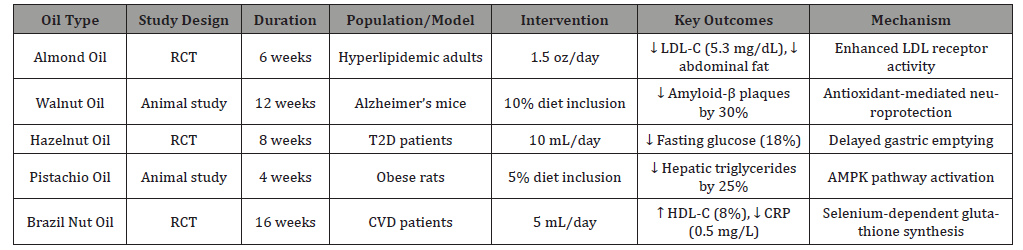
RCT: Randomized Controlled Trial; T2D: Type 2 Diabetes; CRP: C-Reactive Protein.
Sources: [4,6,8,10,12].
Antioxidant and Anti-Aging Properties
Role in Scavenging Free Radicals
The best thing about dry fruit oils for your health is that they are rich in antioxidants. A comprehensive investigation of the antioxidant properties of various dry fruits (almonds, walnuts, cashews, raisins and chironji) through chemical and biochemical tests showed significant variations among the dry fruits. Methanolic extract of walnuts, evaluated by lipid peroxidation assay, showed the highest antioxidant activity. The phenolic content was highest in walnuts, followed by almonds, cashews, chironji and finally raisins, which had the lowest phenolic content. The study used a variety of evaluation methods, including measurement of reducing power in bio membranes, lipid peroxidation damage, and analysis of antioxidant enzyme activity (SOD and CAT). Walnuts exhibited the most potent antioxidant properties, exhibiting lower EC₅₀ values in all tests, except for antioxidant enzymatic activity, indicating its superior efficacy in scavenging free radicals.
Impact on Skin Health and Photoprotection
Nut oils are good for your skin in more ways than just moisturizing. They also have amazing anti-aging and photoprotective properties. Research has shown that nuts are rich in vitamins, minerals, antioxidants and fiber, all of which are good for keeping skin healthy and glowing. Raisins, cranberries and apricots all contain antioxidants like anthocyanins and carotenoids that fight free radicals and keep skin looking young and healthy. Dried mangoes and plums are high in vitamin A, which is essential for making new cells and collagen. This makes skin softer and more elastic. Dried apricots, guavas, oranges and kiwis are all good sources of vitamin C, which is a powerful antioxidant. Vitamin C helps build collagen and protects skin from the sun, which can help get rid of dark spots and wrinkles. The vitamin E in dried peaches protects the skin from harmful UV rays and helps keep it moist, which fights dryness and gives it a healthy, glowing look A meta-analysis examining the effect of oral fruit or fruit extract intake on skin aging in healthy adults demonstrated significant increases in skin moisture and trans epidermal water loss (TEWL). Oral intake of fruit or fruit extract demonstrated significant statistical differences in skin moisture and trans epidermal water loss (TEWL) compared to placebo, which demonstrated a significant increase in skin moisture and a significant decrease in TEWL.
Anti-Wrinkle and Dermal Hydration Effects
Macadamia nut oil demonstrates remarkable anti-aging properties, containing palmitoleic acid, a vital ingredient that delays premature aging, and oleic acid with regenerative and moisturizing properties. The oil smoothens fine lines and promotes collagen production, with just a little application going a long way due to its non-greasy nature that quickly blends into skin. It can be rubbed directly on problem areas, scars, and sunburn for instant soothing12.
Cognitive and Neurological Effects
Omega-3 Rich Oils and Brain Health
The neuroprotective benefits of dry fruit oils, particularly walnut oil, represent a rapidly expanding area of research. Omega-3 fatty acids are involved in many different fundamental brain processes, with both EPA (eicosatetraenoic acid) and DHA (docosahexaenoic acid) influencing gene expression, oxidative stress, cerebral blood flow, levels of neurotransmitters, and other brain-related processes such as the production of new neurons. The brain has a huge number of cell membranes made from fat, but unlike the rest of the body, the only fatty acid allowed into healthy grey matter in appreciable amounts is the omega-3 fatty acid DHA. Omega-3 DHA is vital for brain function throughout life, from early cognitive development in fetuses to learning and memory in adults.
Effects on Memory and Cognitive Decline
Nut oils are good for your skin in more ways than just keeping it from drying out. They also do a great job of keeping the sun off your skin and slowing down the ageing process. Nuts are full of vitamins, minerals, antioxidants, and fiber, all of which are good for your skin. Anthocyanins and carotenoids are antioxidants found in cranberries, apricots, and raisins that fight free radicals and keep skin looking young and healthy. Dried mangoes and plums are good sources of vitamin A, which is important for making new cells and collagen. This makes the skin softer and more flexible. Guavas, oranges, kiwis, and dried apricots are all good sources of vitamin C, which is a powerful antioxidant. Vitamin C helps the body make collagen and protects the skin from the sun, which can help get rid of dark spots and wrinkles. Dried peaches contain vitamin E, which protects the skin from harmful UV rays and keeps it moist. This fights dryness and makes the skin look healthy and glowing. A meta-analysis examining the effects of oral fruit or fruit extract intake on skin ageing in healthy adults demonstrated a significant improvement in skin hydration and trans epidermal water loss (TEWL). When compared to a placebo, eating the fruit or fruit extract by mouth made a statistically significant difference in skin moisture and trans epidermal water loss (TEWL). This led to a significant increase in skin moisture and a large decrease in TEWL.
Neuroprotective Mechanisms
Recent studies have elucidated several neuroprotective mechanisms by which dry fruit oils confer their advantageous effects. A study on walnuts that looked at their anti-amnesic effects showed that they worked by changing how the blood-brain barrier (BBB) worked and by reducing inflammation in mice that had Aβ₁₋₄₂. Compared to Aβ-injected mice, giving walnuts to mice improved their short-term memory and spatial learning abilities18. Eating walnuts helped with cognitive dysfunction by controlling pro-inflammatory mediators like NO and prostaglandin E₂ and pro-inflammatory cytokines like TNF-α, IL-1β, and IL-6. The administration of walnut polypeptide preserves the morphology of hippocampal CA3 pyramidal neurons by enhancing the cholinergic system and elevating monoamine neurotransmitters, including dopamine, norepinephrine, and serotonin. The research demonstrated that walnut extract exerts a cumulative effect on Aβ-induced pathology and cognitive enhancement by enhancing the p-Akt pathway and inflammatory response through the improvement of blood-brain barrier (BBB) function. This indicates that walnut extract may serve as a component in functional food to mitigate memory impairment and cognitive dysfunction (Table 5,6).
Table 5:Antioxidant Profile of Dry Fruit Oils

Sources: [2,6,11,14].
Table 6:Meta-Analyses and Systematic Reviews

BP: Blood Pressure; CRP: C-Reactive Protein.
Sources: [6,8,10,12,14].
Anti-Diabetic and Metabolic Syndrome Effects
Impact on Insulin Sensitivity
Researchers have looked into the anti-diabetic effects of dry fruit oils in both preclinical and clinical settings. Studies indicate that nuts and dried fruits exert substantial modulatory effects on glucose and insulin metabolism. Nuts have a lot of MUFA and PUFA, which may help lower insulin resistance and lower the risk of getting type 2 diabetes. Fatty acids influence insulin sensitivity through their integration into phospholipids within cell membranes, thereby modulating insulin sensitivity. The various unsaturated fatty acids in the cell membrane impact insulin action by modifying the binding affinity of insulin to its cellular receptor. A higher level of unsaturation in fatty acids in the cell membrane makes it easier for the glucose receptor to move to the cell surface, which makes the body more sensitive to insulin.
Both nuts and dried fruits play important roles in glycemic control through their fiber content and specific carbohydrate composition. Nuts are relatively low in carbohydrates (approximately 15% of total energy) and have a low glycemic index, therefore increasing blood glucose levels less and requiring less insulin secretion, thus favoring the control of type 2 diabetes Dried fruits, despite having a high amount of carbohydrates (60-80%), have been shown to have favorable glycemic responses. The glycemic index of raisins was evaluated in three heterogeneous groups of subjects (aerobically trained, sedentary, or pre-diabetic) and was described between 49 and 69, corresponding to low-to-moderate GI foods. Later studies reported that raisins are in the low GI category in healthy subjects (GI of 49.4 and an insulinemic index of 47.1), suggesting a favorable postprandial glucose and insulin response.
Adiponectin Stimulation and Anti-Obesity Benefits
Research has demonstrated that dry fruit oils positively influence adiponectin concentrations, a key hormone involved in metabolic regulation. A study by Kalgaonkar et al. conducted in women with PCOS showed that both walnuts and almonds significantly increased adiponectin concentrations. The results suggested that both linoleic acid found in walnuts and oleic acid found in almonds had positive effects on adipokine concentrations.
A systematic review and meta-analysis of three randomized case-control studies showed that walnuts were a dietary component with the potential of increasing adiponectin concentrations. This correlation is significant because adiponectin plays crucial roles in glucose regulation and fatty acid oxidation, contributing to improved metabolic health.
Effects on Hepatic Fat Metabolism
Essential oils, including those derived from dry fruits, have demonstrated significant anti-obesity effects through various mechanisms. Studies have shown that essential oils promote the reduction of fat mass and exert anti-obesity effects both when taken with the diet or inhaled. The volatile compounds present in essential oils interact with specific olfactory receptors, stimulating the central nervous system to regulate energy metabolism, regulating the balance between lipolysis and lipogenesis through appetite regulation. Research has demonstrated that pine nut oil, containing pinolenic acid, caused a significant reduction in liver weight and liver lipids, making it potentially interesting for hepatic steatosis cases. A concomitant reduction in mitochondrial CIC activity and in cytosolic ACC and FAS activities was observed in animals fed pine nut oil.
Immunomodulatory and Anti-Cancer Effects
Role of Polyphenols and Phytosterols
The immunomodulatory effects of polyphenols found in dry fruit oils have gained significant attention in recent research. Polyphenols impact immunometabolic reprogramming through four regulatory axes: first, they activate nutrient sensing via stress-response pathways essential for immune responses. Second, polyphenols regulate mTOR/AMPK balance and inflammatory responses in immune cells, serving as well-tolerated caloric restriction mimetics. Third, they interfere with the assembly of NLRP3 in endoplasmic reticulum-mitochondria contact sites, inhibiting its activation while improving mitochondrial biogenesis and autophagosome-lysosome fusion. Finally, polyphenols impact chromatin remodelling and coordinate both epigenetic and metabolic reprogramming.
Suppression of Pro-Inflammatory Cytokines
Berry phenolic and volatile extracts have demonstrated significant anti-inflammatory effects through the suppression of pro-inflammatory mediators and cytokines. Research showed that berry volatiles from six berries had comparable anti-inflammatory effects to berry phenolics through the suppression of pro-inflammatory mediators including nitric oxide (NO), prostaglandin E₂ (PGE₂), cyclooxygenase- 2 (COX-2), interleukin-6 (IL-6), and tumor necrosis factor-α (TNF-α). Moreover, berry phenolic and volatile extracts reduced the nuclear translocation of NF-κB by blocking the phosphorylation of p65 and degradation of IκBα. These findings showed that berry volatiles had comparable anti-inflammatory effects to berry phenolics through the suppression of pro-inflammatory mediators and cytokines expression via NF-κB down-regulation [58].
Anti-Proliferative Properties and Cancer Prevention
Almond oil has shown strong anticancer and antiproliferative effects on colon cancer cells. Research on the composition and in vitro anticancer efficacy of almond oil identified oleic acid (77.8%), linoleic acid (13.5%), and palmitic acid (7.4%) as the primary constituents. In MTT assays, almond oils were effective against Colo-320 and Colo-741 cells at a 1:1 dilution for both 24-hour and 48-hour treatments. Immunohistochemical staining demonstrated that both almond oils displayed considerable antiproliferative and anticancer effects via molecular signaling pathways, indicating their potential as innovative therapeutic agents. The findings demonstrated that almond oils abundant in oleic acid possess anticancer properties against colon malignancy cells [59].
Walnut Oil Anti-Cancer Mechanisms
Walnut constituents have demonstrated comprehensive antioxidant and anti-inflammatory properties with significant anti-cancer potential. Thirty-seven phenolic compounds (free, esterified, and bound) present in walnut kernel were examined for antioxidant activities, with radical scavenging activities determined for these phenolic compounds. Transcriptomic profiling ascertained how walnut phenolic extract (WPE) can rescue gastric cells from H. pylori infection. Multiple chemokine-related pathways were altered by WPEs, including an array of anti-inflammatory and anti-oxidative genes, providing evidence for the potential impact of walnut extracts on modulating key signaling pathways that may contribute to the carcinogenic process [60].
Applications in Food Industry and Dietetics
Functional Food Ingredients
Dry fruit oils are becoming more and more popular in the food industry as functional food ingredients. These oils are natural sources of important fatty acids, antioxidants and other bioactive compounds that make food healthy. Cold-pressed extraction methods retain fine compounds, ensuring that edible applications have the most therapeutic effect. People can easily reap its health benefits by adding dry fruit oil to foods like salad oil, fortified foods, and dietary supplements. People like these oils because they smell and taste like nuts, which is also good for your health.
Medical Nutrition Therapy Applications
Walnut oils are beneficial for a lot of health problems in clinical nutrition. They are a crucial component of therapeutic diets because they have been indicated to help people with diabetes, cardiovascular disease, and diseases associated with inflammation. Physicians encourage people with chronic diseases to apply certain nut oils as part of a complete treatment plan. These oils can be safely and effectively utilized during clinical nutrition protocols if the dosage and quality control steps are the same. The researchers remain intent on discovering out the best ways of providing different types of patients and health problems the right amount of the field of medicine.
Cosmetic and Dermatological Applications
Moisturizers and Anti-Aging Formulations
The cosmetic industry has taken to using dry fruit oils because they are great at moisturizing and fighting ageing. These oils deeply hydrate the skin and give it antioxidants that protect it from damage from the environment and early ageing. Their molecular structure makes them easy to absorb without leaving behind greasy residues, which makes them great for a wide range of cosmetic products. Advanced cosmetic formulations mix different dry fruit oils to get the most out of their synergistic effects. For instance, products that have both almond oil for its vitamin E and walnut oil for its omega-3 fatty acids protect and nourish the skin in every way.
Skin Barrier Repair and Therapeutic Applications
Research has demonstrated the therapeutic potential of dry fruit oils in treating various dermatological conditions. Their emollient and anti-inflammatory properties make them effective in managing eczema, dermatitis, and other inflammatory skin conditions. The oils help restore the skin’s natural barrier function while providing anti-inflammatory benefits that reduce irritation and promote healing. Clinical studies continue to explore the therapeutic applications of dry fruit oils in dermatology, with promising results for conditions ranging from minor skin irritations to more serious inflammatory disorders.
Toxicological Safety and Stability
Safety Profiles and Dosage Guidelines
Most of the time, nut oils are safe to use in the right amounts. Most people can use the oils without any problems, and there are only a few reports of bad effects. People who are allergic to tree nuts should be careful, though, because some oils can still cause allergies after they have been processed. It depends on the kind of oil and what you want to do with it how much oil to use. Most studies say that the daily dose for oral use is between 5 and 20 mL. But for topical use, smaller amounts are usually enough. They should talk to a doctor before starting any treatment plan, especially if it is already sick or taking medicine [61].
Stability and Storage Considerations
Individual things can affect how stable dry fruit oils are, like how they are extracted, where they are stored, and whether or not there are natural antioxidants. Cold-pressed oils usually have more of their good compounds, but they may not last as long as refined oils. Things will last longer if you keep them cool and dark and add natural antioxidants like rosemary extract. Quality control includes regular tests for rancidity and contamination to make sure that these oils stay healing for as long as they should. People should learn how to store these products properly so they can get the most use out of them and stay safe.
Conclusion
The comprehensive evidence presented demonstrates that dry fruit oils represent powerful therapeutic agents with multifaceted health benefits. From cardiovascular protection and cognitive enhancement to anti-inflammatory and anti-cancer properties, these natural compounds offer promising alternatives and complements to conventional medical interventions. The growing body of scientific research supports the integration of dry fruit oils into both preventive healthcare strategies and therapeutic interventions. As our understanding of their mechanisms of action continues to expand, these oils are likely to play increasingly important roles in functional foods, medical nutrition therapy, and integrative medicine approaches. Future research should focus on establishing standardized dosing protocols, optimizing extraction and formulation methods, and conducting long-term clinical trials to fully realize the therapeutic potential of these remarkable natural compounds. The convergence of traditional wisdom and modern science in the study of dry fruit oils exemplifies the promising future of evidence-based natural medicine.
Acknowledgement
None.
Conflict of Interest
No conflict of interest.
References
- Adler M, Richardson M, Tuthill E, Fu L, Maruthur N M (2024). Impact of medically tailored meals on clinical outcomes among adults with type 2 diabetes and adverse social determinants of health: A pilot randomized clinical trial. Journal of General Internal Medicine.
- Al Jazeera (2025, June 6) What is driving a surge in COVID cases in India, other countries? Al Jazeera.
- Alexandrakis E, Hanz-Weiss D, Kjellberg J, Hepp T, Rhee C M, et al. (2023) The syndromic triad of COVID-19, type 2 diabetes, and malnutrition. Frontiers in Nutrition 10:
- Blundell J E, de Graaf C, Hulshof T, Jebb S, Staveren W van, et al. (2020) Nutrition amid the COVID-19 pandemic: A multi-level framework for action. European Journal of Clinical Nutrition 74(8): 1117-1121.
- Fortis Healthcare (2025, June 6). Covid-19 2025 surge in India: Latest cases, new variants & alerts. Fortis Healthcare Blog.
- Gleneagles Hospital Penang (2025) Nutrition for COVID-19 recovery. Gleneagles Malaysia.
- Gonzalez-Salazar L E, Santos R D, Lira F S, Fornari L (2022) Nutritional support protocol for patients with COVID-19. Nutrients 14(6): 1187.
- Healthline (2022, February 14) Foods to eat with COVID-19: 5 key nutrients. Healthline Nutrition.
- Indiana University School of Medicine (2025) Good nutrition reduces risks of COVID-19, research shows. IU Medicine Blog.
- Karampela I, Sakelliou A, Vallianou N, Christodoulatos G S (2024) Effects of an 8-week high-dose vitamin D supplementation on fatigue and neuropsychiatric symptoms in patients with post-COVID syndrome: A double-blind, randomized, placebo-controlled trial. Psychiatry and Clinical Neurosciences, 78(10): 650-652.
- Karger Publishers (2025) Nutritional therapy in COVID-19 management. Karger Nutrition and Dietetics 1(1): 10-25.
- Marcell L, Dokania E, Navia I, Baxter C, Crary I, et al. (2022) One Vax Two Lives: a social media campaign and research program to address COVID-19 vaccine hesitancy in pregnancy. American Journal of Obstetrics and Gynecology 227(5): 685-695.e2.
- Mayo Clinic (2024, July 18) COVID-19 diagnostic testing.
- Metro Hospitals (2025, May 29) How dangerous are the new COVID-19 variants in 2025? Metro Hospitals Blog.
- National Center for Biotechnology Information. (n.d.). PMC article 10399753.
- Kumar S P J, Prasad S R, Banerjee R, Agarwal D K, Kulkarni K S, (2017) Green solvents and technologies for oil extraction from oilseeds. Chemistry Central Journal 11(1): 9.
- University of Florida Institute of Food and Agricultural Sciences (2008) Oil extraction methods.
- Scielo Brazil (n.d.). Oil extraction methods and applications.
- Google Patents (n.d.) Patent CN111019754A: Oil extraction methods.
- Food Struct (n.d.) Almond oil: Nutrition facts and health benefits.
- WebMD (n.d.) Walnuts: Health benefits and nutrition facts.
- Food and Agriculture Organization of the United Nations (n.d.). Oil extraction and processing.
- National Center for Biotechnology Information (n.d.) PubMed article 25305221.
- Eat This Much (n.d.) Extra virgin pine nut oil nutritional information.
- Google Patents (n.d.) Patent CN111019754A: Oil extraction methods.
- Kodad O, Estopañán G, Juan T, Mamouni A, Socias i Company R (2020) Effect of almond genotypes on fatty acid composition, tocopherols, and mineral contents. PMC, PMC7520497.
- Vinson J A, Cai Y (2023) Antioxidant and anti-inflammatory properties of walnut constituents: An updated comprehensive review. PMC, PMC10215340.
- Ryan E, Galvin K, O Connor T P, Maguire A R, O Brien N M (2006) Fatty acid profile, tocopherol, squalene and phytosterol content of brazil, pecan, pine, pistachio and cashew nuts. Int J Food Sci Nutr 57(3-4): 219-28.
- Cui L, Lahti P M, Huang J, Wu G, Cheng J (2022) Characterisation of oil oxidation, fatty acid, carotenoid, squalene and tocopherol of three hazelnut oils during storage. International Journal of Food Science & Technology 57(6): 3456-3465.
- Górnaś P, Rudzińska M (2019) Nut oils and their dietetic and cosmetic significance: A review. Journal of Oleo Science 68(2): 111-120.
- Bouzaiene N N, Jaziri S K, Kovacic H, Chekir-Ghedira L, Ghedira K, et al. (2023) The beneficial effects of pine nuts and its major fatty acid pinolenic acid on metabolic disorders, inflammation, and oxidative stress: A review. PMC, PMC9861571.
- Medindia (n.d.) Nutritional value of almond oil. Medindia Health & Fitness.
- Gao P, Zhao X, Jiang X, Zheng Y, Zhang X, et al. (2025) Exploring the Interactive Effects of γ‐Tocopherol, Ellagic Acid, and β‐Sitosterol in Iron Walnut Oil. European Journal of Lipid Science and Technology 127(5): e70031.
- Yu L, Li-Hawkins J, Hammer R E, Berge K E, Horton J D, et al. (2002) Overexpression of ABCG5 and ABCG8 promotes biliary cholesterol secretion and reduces fractional absorption of dietary cholesterol. The Journal of clinical investigation 110(5): 671-680.
- Ma C, Wang Y, Dong L, Li M, Cai W (2015) Anti-inflammatory effect of resveratrol through the suppression of NF-κB and JAK/STAT signaling pathways. Acta biochimica et biophysica Sinica 47(3): 207-213.
- Abbas K, Mustafa M, Alam M, Habib S, Ahmad W, et al. (2025) Multi-target approach to Alzheimer’s disease prevention and treatment: antioxidant, anti-inflammatory, and amyloid-modulating mechanisms. Neurogenetics 26(1): 1-20.
- Weerawatanakorn M, Kamchonemenukool S, Koh Y C, Pan M H (2024) Exploring phytochemical mechanisms in the prevention of cholesterol dysregulation: a review. Journal of Agricultural and Food Chemistry 72(13): 6833-6849.
- Zeng Y, Cao S, Yang H (2023) Causal associations between dried fruit intake and cardiovascular disease: A Mendelian randomization study. Frontiers in Cardiovascular Medicine 10: 1080252.
- Holland K (2024, June 19) Foods that may increase your 'good cholesterol' or HDL. Healthline.
- Krishival (n.d.) Pistachios vs other nuts: Which is best for heart health? Krishival Health Benefits Blog.
- Wesołowska W, Bachoń E, Doligalska M, Stremel A, Leszyńska A, et al. (2025) Omega-3 Fatty Acids: Key Players in Cognitive Function and Brain Health. Journal of Education, Health and Sport 77: 56776-56776.
- Nuts for Life Australia (2024, February 5) Nuts and PREDIMED: Summary of findings. Australian Nuts for Nutrition & Health.
- Nuts and PREDIMED: https://www.nutsforlife.com.au/resource/nuts-and-predimed/#:~:text=Of%207%2C216%20older%20men%20and,%3C0.05)%20%5B7%5D.
- Czlapka-Matyasik M, Wadolowska L, Gut P, Gramza-Michałowska A (2025) Changes in oxidative stress, inflammatory markers, and lipid profile after a 6-week high-antioxidant-capacity dietary intervention in CVD patients. Nutrients 17(5): 806.
- Ahamad A, Naim M J, Naquvi K J, Ahamad J, Munjal K (2024) Phytosterols. In Bioactive Compounds of Edible Oils and Fats pp. 147-168.
- Yu L, Li-Hawkins J, Hammer R E, Berge K E, Horton J D, et al. (2002) Overexpression of ABCG5 and ABCG8 promotes biliary cholesterol secretion and reduces fractional absorption of dietary cholesterol. The Journal of clinical investigation 110(5): 671-680.
- Santhi V P, Poomaruthai M, Sarasu V P, Gurusamy K, Parthiban S, et al. (2020) Fruits: a potential source of vitamin c as essential human nutrition and immunity development: a review. Pharma Innov 9(9): 132-144.
- Kwon B Y, Kim D, Shim K, Nguyen C, Lee H C, et al. (2025) Area‐Specific Assessment of Stratum Corneum Hydration and Transepidermal Water Loss in Pediatric Patients With Atopic Dermatitis. Dermatology Research and Practice 2025: 2376970.
- Zhu F, Du B, Xu B (2018) Anti-inflammatory effects of phytochemicals from fruits, vegetables, and food legumes: A review. Critical reviews in food science and nutrition 58(8): 1260-1270.
- Mokhtari E, Farhadnejad H, Teymoori F, Jahromi M K, Nikkhah M, et al. (2025) Dietary and lifestyle patterns identified through reduced rank regression and their association with insulin-related disorders: a prospective analysis from the Tehran Lipid and Glucose Study. BMC nutrition 11(1): 33.
- Hernández García A R, Aguilar Ávila D S, Viveros Paredes J V, López Roa R I, Martinez Preciado A H (2025) Pithellobium dulce (Roxb.) Benth. fruit flour intake enhances short-chain fatty acid production and glucose metabolism in BALB/c mice. Polish Journal of Food and Nutrition Sciences 75(1).
- Sivapragasam N, Maurya A, Tiwari S, Dwivedy A K, Jain S, et al. (2025) Edible Berries-An Update on Nutritional Composition and Health Benefits-Part III. Current Nutrition Reports 14(1): 11.
- Martinez-Ortega I A, Mesas A E, Bizzozero-Peroni B, Garrido-Miguel M, Jimenez-Lopez E, et al. (2025) Can different types of tree nuts and peanuts induce varied effects on specific blood lipid parameters? A systematic review and network meta-analysis. Critical Reviews in Food Science and Nutrition 65(8): 1538-1552.
- Zhou Y, Wang M, Wang Z, Qiu J, Wang Y, et al. (2025) Polysaccharides from hawthorn fruit alleviate high-fat diet-induced NAFLD in mice by improving gut microbiota dysbiosis and hepatic metabolic disorder. Phytomedicine 139: 156458.
- Armeli F, Mengoni B, Schifano E, Lenz T, Archer T, et al. (2025) The Probiotic Yeast, Milmed, Promotes Autophagy and Antioxidant Pathways in BV-2 Microglia Cells and C. elegans. Antioxidants 14(4): 393.
- Zhou J, Xi Y, Wu T, Zeng X, Yuan J, et al. (2025) A potential therapeutic approach for ulcerative colitis: targeted regulation of mitochondrial dynamics and mitophagy through phytochemicals. Frontiers in Immunology 15: 1506292.
- Moon K E, Oh H H, Oh B M, Kim Y S (2025) Anti-inflammatory effects of naringinase treated ethanol extracts of Poncirus trifoliata fruit. Food Science and Biotechnology 34(11): 2643-2655.
- Baimakhanova B, Sadanov A, Bogoyavlenskiy A, Berezin V, Trenozhnikova L, et al. (2025) Exploring phytochemicals and their pharmacological applications from ethnomedicinal plants: A focus on Lycium barbarum, Solanacea. Heliyon 11(2): e41782.
- Go E J, Ryu B R, Gim G J, Shin Y R, Kang M J, et al. (2025) Regulation of Intestinal Barrier Function and Gut Microbiota by Hot Melt Extrusion-Drug Delivery System-Prepared Mulberry Anthocyanin in an Inflammatory Bowel Disease Model. Pharmaceuticals 18(4): 475.
- Kenchappa P G, Vijendra P D, Kumar H V, Swamy P H M (2025) Plant-Based Foods for the Management of Cancer. In Functional Compounds and Foods of Plant Origin pp. 451-474.
- Breider F, Masset T, Prud’homme K, Brüschweiler B J (2025) Assessment of tire-derived additives and their metabolites into fruit, root and leafy vegetables and evaluation of dietary intake in Swiss adults. Journal of Hazardous Materials494: 138432.
-

This work is licensed under a Creative Commons Attribution-NonCommercial 4.0 International License.




