



 Mini Review
The Role of Nutrition in Children with Cystic Fibrosis: Managing the Impact of CFTR Modulator Therapies on Metabolism and Long-Term Health
1C.O.U. II Pediatrics with a focus on Pneumology, Allergology and Cystic Fibrosis, Children’s Hospital “G. Di Cristina” ARNAS Civico, Palermo, ItalyA
2University of Palermo, Dietetics Degree Program, School of Medicine and Surgery, Italy
3PROMISE Department “G. D’Alessandro” School of Specialization in Pediatrics, University of Palermo, Italy
Received Date:August 14, 2025; Published Date:Septemeber 17, 2025
Abstract
Cystic fibrosis (CF), a genetic disorder caused by mutations in the CFTR gene, significantly impacts respiratory and digestive health. Recent advances in CFTR modulator therapies, particularly Elexacaftor-Tezacaftor-Ivacaftor (ETI), changed disease management, improving lung function and survival. However, metabolic side effects, including weight gain, dyslipidemia, and glucose intolerance, necessitate complementary management strategies. This study evaluates the impact of a tailored diet on 15 children aged 6–11 years undergoing ETI therapy. Results indicate that nutritional interventions mitigate adverse effects, optimize growth and enhance pulmonary outcomes, emphasizing the importance of integrated care in CF management.
Introduction
Cystic fibrosis (CF) is a life-limiting genetic disorder caused by mutations in the cystic fibrosis transmembrane conductance regulator (CFTR) gene, which encodes an anion channel on epithelial cell membranes. These mutations disrupt ion and fluid transport, leading to thickened mucus secretions that impair multiple organ systems, particularly the pulmonary and digestive systems [1,2]. While CF has historically been associated with severe malnutrition, growth failure, and poor metabolic health due to intestinal malabsorption and increased energy expenditure, significant advancements in nutritional interventions and pharmacological therapies have transformed the disease landscape [1,3,4].
The introduction of highly effective modulator therapies (HEMT), such as the elexacaftor-tezacaftor-ivacaftor (ETI) combination, has deeply changed CF management by targeting the underlying molecular defects of CFTR mutations. These treatments not only improve pulmonary and gastrointestinal outcomes but also enhance nutritional absorption and metabolic function [1,5]. As a result, challenges traditionally associated with undernutrition are being replaced by new concerns, including overweight and obesity, particularly in high-income countries and adult CF populations [6]. Overweight and obesity, previously rare in CF, now raise critical questions regarding their metabolic implications, such as risks for dyslipidemia, insulin resistance, and cardiovascular complications [7-11].
CFRD
Cystic fibrosis diabetes (CFRD = Cystic Fibrosis Related Diabetes) is the most frequent complication in the evolution of the under lying disease. The frequency increases with age and is higher in people with pancreatic insufficiency. CFRD, even in the early stages of evolution, causes a worsening of clinical conditions if not properly diagnosed and treated. The diagnostic protocol recommended today is based on the execution of an Oral Glucose Tolerance Test (OGTT) every year from the age of ten. This is a test that measures blood glucose values on an empty stomach and every 30 minutes for two hours after taking an oral glucose solution. In recent years, new diagnostic investigations have entered the mainstream of FC Centre protocols. In particular, the continuous monitoring of the glycemic value (CGM), by means of a device that is easy to apply to the skin, which does not require the classic thumb puncture or similar blood samples.
The CGM can produce information on glycemic changes throughout the day, in relation to meals and various activities of daily life and is probably useful for detecting the earliest stages of altered glucose metabolism.
Specifically, the Holter is a device consisting of an electrode connected to a millimetre tube implanted under the skin, not painful or dangerous, which is usually applied to the back of the arm or abdomen and records glucose levels approximately every five minutes for a maximum period of about six days.
Despite the increasing prevalence of CFRD, it setiology and risk factors are still poorly understood. It is mainly characterized by insulin deficiency due to dysfunction or loss of pancreatic β cells. Obstruction of the pancreatic duct contributes to chronic pancreatitis, loss of acinous tissue, ductal fibrosis and ultimately fatty transformation of pancreatic tissue and glandular failure. In this way, the gradual exocrine pancreatic dysfunction damages the nearby pancreatic islands, decreasing the production of pancreatic hormones. With the arrival of CFTR modulating therapies, the landscape of glucose abnormalities in CF is changing, challenging our understanding of CFRD. The effect of CFTR modulator therapy on the evolution of CFRD and glucose control is not yet clear and needs further investigation. Prospective data collected during modulator therapy may provide information about possible improvement of β cell function with the use of these drugs. The increasing prevalence of CFRD and chronic hyperglycemia will likely increase conventional microvascular and cardiovascular complications in patients with CF, and future studies may need to consider these findings as well [12].
Elezacaftor/tezacaftor e ivacaftor e CFRD
A cohort study was conducted that included adults with CF who had atleast one copy of F508del. Study evaluations before treatment and atleast three months after the start of ELX/TEZ/IVA included an oral glucose tolerance test (OGTT) with glucose and insulin measurements, BMI, lung function tests and sweat chloride levels. The study included 33 patients (27.8 6.3 years; 73% male; 64% homozygous F508del). After a median of 184 days from the beginning of treatment, 16 (48.5%) patients improved their glucose tolerance category, while 13 (39.4%) remained unchanged and 4 (12.1%) worsened. Overall, OGTT blood glucose at 60, 90 and 120 minutes was significantly reduced from 11.9 2.7 mmol/l to 10.6 2.8 mmol/l (p = 0.012), from 10.4 3.0 mmol/l to 8.4 3.6 mmol/l (p = 0.002) and from 7.3 1 mmol/l to 5.7 3.0 mmol/l (p = 0.012).
Glycated hemoglobin levels also improved significantly, from 5.50 0.24% to 5.39 0.25% (p = 0.039). Patients considered fit for ELX/TEZ/IVA who were 18 years old or older were included in the study and in these subjects the OGTT was performed before and three months after the beginning of triple modulator therapy. Individuals with CF who had received another modulator treatment before the start of ELX/TEZ/IVA were also included. Patients who had taken hypoglycemic drugs or insulin in the three months prior to starting ELX/TEZ/IVA treatment were excluded. Sweat chloride was collected before and three months after treatment started according to ECFS guidelines. Weight, height, lung function by force dexpiratory volume in 1 second (FEV1) and liver parameters were compiled before and atleast three months after the start of ELX/ TEZ/IVA.
Clinical outcome data included glycated hemoglobin and OGTT with plasma glucose and serum insulin levels in venous blood samples at -15, 0, 30, 60, 90 and 120 min after ingestion of a 75 g glucose solution.
The C-Peptide values were measured at 0 and 120 min; instead, plasma glucose levels were measured by the enzyme-link edexo-kinase method on a Roche Cobas® c502 module (Roche Diagnostics, Rotkreuz, Switzerland). Insulin and C-Peptide were determined by chemiluminescence immunoassays (CLIA) on the DiaSorin Liaison analyzer.
Based on their glucose tolerance category, patients were assigned to four groups: normal glucose tolerance (NGT) as fasting glucose < 5.6 mmol/L and plasma glucose at 120 minutes < 7.8 mmol/L, indeterminate glucose tolerance (INDET) as normal fasting glucose and 120 minutes, but glucose at 60 minutes 11.1 mmol/L, impaired glucose tolerance (IGT) as fasting glucose< 7 mmol/L and glucose at 120 minutes of 7.8-11 mmol/L and diabetes mellitus related to fibrosis (CFRD) as blood sugar at 120 minutes 11.1 mmol/L.
Most of the participants were male (n = 24, 72.7%) with an age of 27.8 6.3 years. Twelve (36.4%) patients with CF-associated liver disease were identified, of which only two (6.1%) had a reduced dose of ELX/TEZ/IVA due to a previous liver transplant in one case. All patients recruited had an exocrine pancreatic insufficiency.
Before the start of triple modulator therapy, 22 (66.6%) individuals were using an ongoing inhaled antibiotic therapy due to a chronic lung infection and 14 (42.4%) had already been treated with CFTR modulator therapy. At the end of the study, significant changes in weight, lung function and sweat chloride were found within the defined time interval after three months of treatment. Albumin increased significantly with body weight; C-reactive protein (CRP), a marker of allergic inflammation, also decreased significantly. There was also a significant decrease in glucose and insulin AUC after the start of ELX/TEZ/IVA: before and after the start of triple modulator therapy, the glucose AUC was 1541.17 793 mmol/ l*min and 1250.98 812 mmol/l*min, p = 0,04, and the insulin AUC was 48,449 2353 pmol/l*min at first and 41,441 2632 pmol/l*min at second, p = 0.010.
In total, 20 (60.6%) individuals changed their glucose tolerance category after atleast three months of treatment. In detail, sixteen (48.5%) of them improved glucose tolerance, while a deterioration of glucose tolerance was found in 4 (12.1%) of the study participants. In this retrospective cohort study, the 48.5% improvement of glucose tolerance categories was probably mediated by the triple-combination drug ELX/TEZ/IVA enhancer and effector. In addition, ELX/TEZ/IVA significantly improved FEV1, weight and chloride in sweat. In the light of these current findings, early admission with triple modulator might have a more convincing impact on glucose tolerance before irreversible glucose alterations occur [13]. So, even in the light of this, it is possible to say that modulating drugs have completely positively revolutionized the lives of people with cystic fibrosis. Despite the positive effects of these drugs, however, a range of side effects have been found, including weight gain, changes in lipid profile and increased blood pressure levels.
Dyslipidemia
Regarding alterations in the lipid profile, a study was conducted at the LeRoy W. Matthews Cystic Fibrosis Center to assess the impact of ETI on metabolic and nutritional parameters. All study procedures were approved by the University Hospital Institutional Review Board prior to the start of the study. Eligible subjects have been identified through the local CF Center Registry based on a diagnosis of FC and a prescription of ETI. Patient demographic characteristics such as age, sex, BMI, ppFEV1 and exocrine pancreatic status were obtained from the local CF center registry. Additional patient characteristics such as the presence of advanced CF liver disease (CFLD), presence of CFRD and transplant status (lung and/ or liver) were obtained through the review of medical records. The impact of ETI treatment on multiple clinical and laboratory results, including BMI, serum lipids and the relationship between BMI variation and lipid-soluble vitamin level variation by linear regression was evaluated. One hundred and thirty-six subjects met the inclusion criteria in the study, including 110 adults and 26 adolescents.
At the end of the study, it was seen that total cholesterol, LDL cholesterol and non-HDL cholesterol were all significantly increased after ETI therapy [14]. In this context, tailored nutritional strategies are critical to mitigate the risk of metabolic disorders. With the rising prevalence of overweight and obesity in people with cystic fibrosis (CF), updated nutritional guidelines have been issued to promote healthier eating patterns. In 2021, the Academy of Nutrition and Dietetics recommended that people with CF follow a balanced, age-appropriate diet like what is advised for the general population. These guidelines suggest adjusting calorie intake to meet the individual needs for growth in children and to maintain a healthy BMI in adults. The concept of high-calorie diet in the FC patient has been overcome by implementing a whole series of important precautions such as:
a. suspend caloric supplements for os (if not strictly necessary)
b. drinking low-calorie beverages
c. keep electrolyte drinks as a source of sodium when exercising,
if necessary, but reduce the calorie/sugar content
d. decrease the intake of whole milk except with modulator
dose
e. eliminate high-calorie seasonings
f. reduce oil, butter, margarine, sauces, creams, cheeses,
cream.
Fat-Soluble Vitamins
In patients with cystic fibrosis, supplementation of fat-soluble vitamins is also essential, as their absorption can be reduced due to the reduction of pancreatic function [15]. In detail, low levels of vitamin A are associated with poorer lung function and increased pulmonary exacerbations.
Vitamin D is critical for calcium homeostasis and optimal skeletal health, and vitamin D deficiency in CF can lead to skeletal complications of osteopenia and osteoporosis.
Vitamin E acts as an “antioxidant”, helps to have a good number of white blood cells and fight infections; a deficiency of vitamin E causes serious clinical consequences including hemolytic anemia, neuromuscular disorders, retinal and cognitive. Proper dosage is critical for lung health and antioxidant status.
Vitamin K is essential in case of bleeding because it activates the process of blood clotting.
For the intestine to absorb fat, and therefore also fat-soluble vitamins, a pancreas must function normally, able to digest fats through the action of its enzymes. In CF the pancreas often does not work: fats are not digested and therefore not absorbed, and with thermal so fat-soluble vitamins.
With the introduction of modulating drugs, however, there has been an improvement in intestinal absorption and consequently an improvement in vitamin values (mainly vitamin A and E), so you must constantly monitor these values and only if lacking to resort to oral supplementation. If the patient eats enough and with great variety, it is not necessary to supplement with vitamins of complex B and vitamin C [16]. The last recommendations from the European Society for Cystic Fibrosis (ECSF) also emphasized the importance of personalized nutrition care, based on each patient’s clinical data and health goals [1]. The present study investigates the impact of a structured nutritional protocol on the metabolic health of pediatric patients with cystic fibrosis (pwCF) undergoing CFTR modulator therapy. By monitoring key biochemical and anthropometric parameters over three trimesters, this study aims to highlight the role of diet in optimizing therapeutic outcomes and long-term health in CF.
Materials and Methods
Study Design and Participants
The study was conducted between September 2023 and June 2024 at the “G. Di Cristina” Pediatric Hospital in Palermo, Italy, center for cystic fibrosis (CF). It involved 15 pediatric patients aged 6 to 11 years who were undergoing CFTR modulator therapy with either Kaftrio or Kalydeco. Participants were included based on specific criteria: a confirmed diagnosis of CF through genetic testing, regular follow-up at the CF center, and the initiation of CFTR modulator therapy before recruitment. Comprehensive data collection was carried out using patient medical records, physical measurements, and dietary assessments. Anthropometric data, including weight (measured with an electronic scale) and height (measured with a stadiometer), were recorded. Biochemical parameters such as blood glucose, total cholesterol, HDL, LDL, triglycerides, and vitamin D levels were analyzed. Additionally, blood pressure measurements, both systolic and diastolic, were taken. Patients were monitored on a quarterly basis, and nutritional counseling sessions were conducted with both the patients and their caregivers to ensure adherence to the dietary and therapeutic protocols.
Nutritional Protocol
The nutritional protocol was tailored individually for each participant, with a personalized diet plan designed to meet specific needs, taking account the CFTR modulator therapy. Energy requirements were distributed across five daily meals: breakfast accounted for 20%, the mid-morning snack for 10%, lunch for 30%, the afternoon snack for another 10%, and dinner for the remaining 30%. Macronutrient distribution was carefully planned, with carbohydrates making up 45–60% of total energy intake, of which simple sugars were limited to less than 15%. Proteins contributed 20%, while fats accounted for 25–30%, ensuring that saturated fats remained below 10%. Additionally, fiber intake was set at a minimum of 20 grams per day, and sodium intake was improved at 4 grams daily, with adjustments made for periods of increased physical activity or exposure to higher temperatures in the summer season. Micronutrient supplementation was integrated only in cases of documented deficiencies, covering vitamins A, D, E, and K, as well ascalcium, magnesium, and zinc. Patients were advised to align CFTR modulator administration with breakfast and dinner to avoid additional high-fat meals.
Statistical Analysis
Statistical evaluation was performed using the R programming language [17]. Continuous variables were summarized using mean, median, and standard deviation, while changes across trimesters were analyzed using the Wilcoxon signed-rank test for paired data [18]. A p-value <0.05 was considered statistically significant.
Results
Anthropometric Changes
All participants showed stable or controlled weight gain over the study period. On average, patients gained approximately 800 grams per trimester, except for one participant who maintained stable weight and another who gained four kilograms. No significant trends in height were observed during the study.
Biochemical and Metabolic Parameters
At the beginning of the study, baseline measurements revealed average values for key health parameters. Blood glucose levels averaged 93.3 ± 12.8 mg/dL, while total cholesterol was 141.4 ± 14.8 mg/dL. LDL cholesterol was measured at 92.3 ± 8.5 mg/dL, HDL cholesterol at 35.8 ± 8.5 mg/dL, and triglycerides at 61.2 ± 15.4 mg/ dL. Vitamin D levels were found to be 27.0 ± 7.2 ng/mL.
Over the three trimesters, trends showed significant improvements in several parameters. The lipid profile demonstrated notable progress, with reductions in total cholesterol, LDL cholesterol, and triglycerides by the second and third trimesters, alongside a significant increase in HDL cholesterol (p < 0.05 for all changes).
Blood glucose levels also improved, showing an average decrease of 15 mg/dL.
Although there were slight increases in vitamin D levels, they remained suboptimal for most participants, and the changes were not statistically significant. These findings, illustrated in Figure 1, underscore the positive impact of the intervention on key metabolic parameters, albeit with some areas requiring further attention.
Table 1:
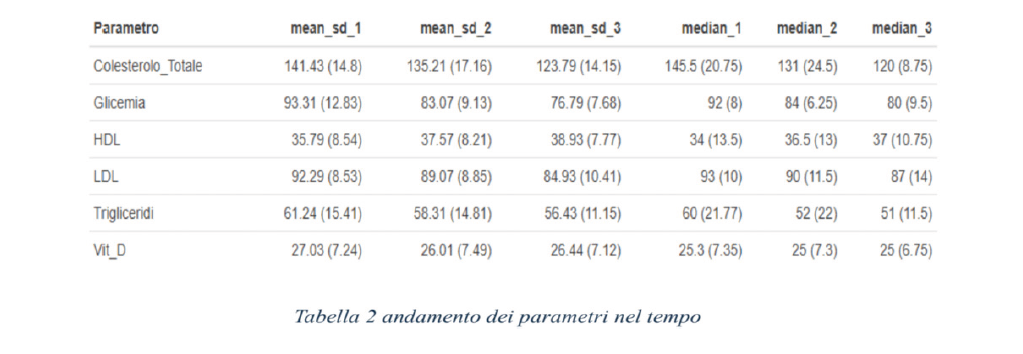


The Wilcoxon signed-rank test confirmed statistically significant improvements in glycemia, total cholesterol, LDL, HDL, and triglycerides over the three trimesters (p < 0.05). No significant changes were observed for vitamin D (p > 0.05). One patient temporarily discontinued CFTR therapy due to hypertransaminasemia but resumed after resolution. Most participants reported improvements in appetite, reduced cough, fewer infections, and overall well-being.
Discussion
The results of this study underscore the importance of integrating a tailored nutritional protocol for pediatric pwCF receiving CFTR modulator therapy. With the advent of these modulators, the metabolic landscape of CF has shifted from malnutrition to challenges such as overweight, dyslipidemia, and metabolic syndrome. This discussion highlights the implications of these findings, compares them to existing literature, and outlines potential strategies for improving care.
Nutritional Shifts in the CF Population
Historically, CF management focused on counteracting malabsorption and high energy expenditure through hypercaloric diets [19]. However, CFTR modulators improve nutrient absorption and reduce energy loss, leading to increased weight gain and associated metabolic risks, as observed in our study. Our findings confirm the necessity of transitioning from hypercaloric to normocaloric dietary strategies, as mentioned above. The average weight gain of 800 grams per trimester aligns with current recommendations for maintaining healthy growth paths without exacerbating risks of overweight or obesity.
Improvements in Metabolic Markers
The statistically significant reductions in total cholesterol, LDL cholesterol, and triglycerides, alongside an increase in HDL cholesterol, demonstrate the efficacy of dietary modifications in managing lipid profiles.
Similarly, the observed decrease in glycemia indicates improved glucose regulation. This is a crucial finding given the increased risk of CF-related diabetes (CFRD) in these patients. The tailored reduction of simple sugars and emphasis on low-glycemic-index foods likely contributed to this outcome.
Challenges in Vitamin D Optimization
Despite slight improvements, vitamin D levels remained suboptimal in most patients. This is concerning, as vitamin D deficiency in CF can exacerbate bone demineralization and impair overall health. While CFTR modulators improve gastrointestinal absorption, achieving adequate vitamin D levels may require targeted supplementation and regular monitoring, as suggested from the last ECFS recommendations. The results agree with data from other clinical studies [20] demonstrating BMI and circulating fat-soluble vitamins levels in CF patients are improved by CFTR modulators, in particular ETI therapy, whereas suboptimal levels of vitamin D is high in the population investigated.
Clinical Implications
The benefits reported by participants—such as reduced infections, improved appetite, and enhanced overall well-being—highlight the synergetic effects of nutrition and CFTR therapy. These findings emphasize the need for interdisciplinary care, combining dietary counselling with pharmacological management to optimize patient outcomes. However, the case of hypertransaminasemia in one participant underscores the importance of vigilance for adverse effects, both from the therapy and potential nutritional adjustments.
Limitations and Future Research
This study has some limitations, including the small sample size and single-center design, which may limit generalizability. Additionally, longer follow-up periods are needed to evaluate the sustainability of observed improvements and their long-term impact on health outcomes. Future studies should also investigate the effects of micronutrient supplementation and advanced dietary interventions tailored to the evolving needs of CF patients.
Conclusion
The transition to normo-caloric diets in CF patients undergoing CFTR modulator therapy is essential for preventing metabolic complications. This study demonstrates the effectiveness of personalized nutrition in improving metabolic health while maintaining appropriate growth paths. By addressing both macronutrient balance and micronutrient adequacy, this approach not only mitigates the risks associated with modulator therapy but also enhances overall quality of life for pediatric CF patients.
References
- Wilschanski M, Munck A, Carrion E, Cipolli M, Collins S, et al. (2024) ESPEN-ESPGHAN-ECFS guideline on nutrition care for cysticfibrosis. Clin Nutr 43(2): 413-445.
- Turck D, Braegger CP, Colombo C, Declercq D, Morton A, et al. (2016) ESPEN-ESPGHAN-ECFS guidelines on nutrition care for infants, children, and adults with cystic fibrosis. Clin Nutr 35(3): 557-577.
- Wilson A, Altman K, Schindler T, Schwarzenberg SJ (2022) Updates in Nutrition Management of Cystic Fibrosis in the Highly Effective Modulator Era. Clin Chest Med 43(4): 727-742.
- Wilschanski M, Peckham D (2022) Nutritional and metabolic management for cystic fibrosis in a post-cystic fibrosis transmembrane conductance modulator era. Curr Opin Pulm Med 28(6): 577-583.
- Konrad J, Eber E, Stadlbauer V (2022) Changing paradigms in the treatment of gastrointestinal complications of cystic fibrosis in the era of cystic fibrosis transmembrane conductance regulator modulators. Paediatr Respir Rev 42: 9-16.
- Zolin A, Adamoli A, Bakkeheim E, van Rens J et al, (2024) ECFSPR Annual Report.
- Gramegna A, Aliberti S, Contarini M, Savi D, Sotgiu G, et al. (2022) Overweight and obesity in adults with cystic fibrosis: An Italian multicenter cohort study. J Cyst Fibros 21(1): 111-114.
- Scully KJ, Marchetti P, Sawicki GS, Uluer A, Cernadas M, et al. (2022) The effect of elexacaftor/tezacaftor/ivacaftor (ETI) on glycemia in adults with cystic fibrosis. J Cyst Fibros 21(2): 258-263.
- Bacalhau M, Camargo M, Magalhães Ghiotto GAV, Drumond S, Castelletti CHM, et al. (2023) Elexacaftor-Tezacaftor-Ivacaftor: A Life-Changing Triple Combination of CFTR Modulator Drugs for Cystic Fibrosis. Pharmaceuticals (Basel 16(3): 410.
- Bass R, Alvarez JA (2024) Nutritional status in the era of highly effective CFTR modulators. Pediatr Pulmonol 59(Suppl 1): S6-S16.
- Merjaneh L, Hasan S, Kasim N, Ode KL (2021) The role of modulators in cystic fibrosis related diabetes. J Clin Transl Endocrinol 27: 100286.
- LSK Bilos (2024) The Role of Continuous Glucose Monitoring in Detecting Early Dysglycemia and Clinical Outcomes in Patients with Cystic Fibrosis 60(3): 477.
- C Steinack et al. (2023) Improved glucosetolerance after initiation of Elexacaftor / Tezacaftor / Ivacaftor in adults with cystic fibrosis 22(4): 722-729.
- T Patel (2024) Impact of elexacaftor/tezacaftor/ivacaftor on lipid and fat-solublevitaminlevels and association with body mass index.
- (2024) Il supplemento di vitamine liposolubili è indispensable nella fibrosi cystica. Consultato.
- M Wilschanski (2024) ESPEN-ESPGHAN-ECFS guideline on nutrition care for cystic fibrosis. Clinical Nutrition 43(2): 413–445.
- (2024) R (software) Consultato. Disponibile su.
- (2024) Test di Wilcoxon-Mann-Whitney. Consultato: novembre. Disponibile.
- Mariotti Zani E, Grandinetti R, Cunico D, Torelli L, Fainardi V, et al. (2023) Nutritional Care in Children with CysticFibrosis. Nutrients 15(3): 479.
- Francalanci M, Terlizzi V, Fevola C, Di Rosa G, Pierattini V, et al. (2023) Nutritional Status and Circulating Levels of Fat-Soluble Vitamins in Cystic Fibrosis Patients: A Cohort Study and Evaluation of the Effect of CFTR Modulators. Children (Basel) 10(2): 252.
-

This work is licensed under a Creative Commons Attribution-NonCommercial 4.0 International License.


 a Creative Commons Attribution 4.0 International License. Based on a work at www.irispublishers.com.
Best viewed in

 | Above IE 9.0 version | Privacy Policy