
 Review Article
Groundwater and Food Security: Constraints and Options in Punjab, Pakistan
Received Date: September 04, 2025; Published Date: September 22, 2025
Abstract
Groundwater plays a significant role in supporting livelihood and contributes significantly towards national economy of Pakistan. Irrigated
agriculture in the alluvial plains of Indus River and its tributaries is supported about 40-50% by groundwater. Accessibility to groundwater for
irrigation and other uses is the lifeline especially for the rural communities in the Punjab province. Groundwater use improves the agricultural
production of poor people but also works as a shield against the hydro climatic disasters like droughts, heat waves. Extensive use of groundwater
has improved the food security by a green revolution and helped in eradicating the poverty. Pakistan has become the 8th largest food producing
country where irrigated agriculture contributes over 90% of Pakistan’s food production, 22% of GDP, employs about 45% of the overall labour force
and generates over 60% of foreign exchange. Extensive and rapid pumpage of groundwater has put Pakistan as the 4th largest user of groundwater
globally. Use of groundwater has helped in increasing cropping intensity from 60% in 1947 to 150% or even more in at present. In Punjab province
about 1.3 million tubewells have been installed by farmers to pump groundwater. At the same time energy requirements for extraction of groundwater
are increasing as we need more and more water to cater for the food and fibre requirements. At present, groundwater levels are dropping abruptly
taking this resource beyond the bound of rural poor farmers and energy costs of pumping are increasing with falling water levels in aquifer.
Some other factors like poor well construction/development, inefficient pump, and improper design of well, aquifer characteristics also
contribute to the energy losses during pumping the groundwater. This has developed a nexus situation between groundwater, food and energy.
As groundwater levels drop, its cost of pumping (construction + operation) which gives rise to poverty especially in rural masses who are more
than 70% in the province. Research studies have indicated that in irrigated areas in Punjab province; an increase in depth to water table from
12 m to 22 m has increased the cost of pumping per unit volume of groundwater by 125%. In this regards, effective and multifaceted measures
for both demand and supply side management are required for sustainable, efficient and economical use of groundwater under nexus approach.
Various research studies have indicated that managed aquifer recharge (MAR) by harvesting rainfall and floodwater, improving implementation
methodology, awareness and developing community ownership by capacity raising, effective regulations, groundwater education, use of science and
technology, energy auditing of tubewells, management of wastewater and its reuse for irrigation and efficient use of available water resources can
support to build resilience for socio economic sustainability.
Keywords: Groundwater; Energy; Food; Nexus; Livelihood; Punjab; Pakistan
Introduction
The Groundwater-Food-Energy Nexus (GFE) is a systemic approach which provides an effective way for the management of resources efficiently while considering the inter connectedness among these three (Namany et al., 2019) [1]. This Nexus highlights the interdependency among water, energy and food. It is important for sustainable development because the three of these resources directly impact each other. This understanding helps in effective resources development, utilization and governance especially in the regions where the issues like water scarcity, energy crisis and food security prevail (Moraes-Santos et al., 2021) [2]. Water, food and energy crisis has become a global issue as a backdrop of increasing population and global climatic changes (Zakir-Hassan, Shabir, et al., 2022) [3]. To meet the food and fibre requirements of the mankind, food is an essential component, while for production of food we need energy and water. When surface water is inadequate, the pressure on groundwater increases. For generation of energy, water is required and for extraction of groundwater energy is a prerequisite. This is becomes a loop or nexus which itself is being adversely impacted by changing climate (Zakir-Hassan, Hassan, et al., 2022) [4]. Water has played an important role in the economic, social and cultural development of civilizations. The oldest dwellings around the world were established along the banks of rivers, creeks, lakes, springs, swamps and other water bodies (Cathcart, 2009) [5].
Food, fibre, and shelter constitute the most basic human needs, while land, water, and air are the fundamental natural resources required to sustain life on Earth. Pakistan ranks as the 8th largest food-producing country globally and is the 5th most populous nation. With a current population exceeding 220 million and an annual growth rate of approximately 2%, the country faces mounting pressure to ensure food security. To meet the needs of this rapidly growing population, both horizontal (area expansion) and vertical (productivity enhancement) growth in irrigated agriculture are imperative for Pakistan (Zakir-Hassan, 2022) [6]. Groundwater is a reliable, demand-based water source available at the doorstep of the farming communities, Although, it is costly as compared to surface water, it provides a buffer against the climatic disasters like global warming, droughts etc. It boost the food production through a revolution in irrigated agriculture (Zakir-Hassan, Allan, et al., 2022) [7]. Groundwater meets approximately one fifth of current world water needs for all uses combined and this proportion varies by country and by sector (UNESCO, 2008). Groundwater is the most important part of total water resources in many countries i.e., in Tunisia is 95%, in Belgium it is 83%, in the Netherlands, Germany and Morocco it is 75%. It is used in agricultural, industrial and domestic sectors (Reinecke et al., 2020).
Though traditionally a blessing for Pakistan’s agricultural industry, the uncontrolled and excessive exploitation of groundwater are leading to widespread sustainability issues (Zakir-Hassan & Hassan, 2018) [8]. With approximately 1.3 million tubewells drilled in Punjab alone, the nation is the world’s fourth largest consumer of groundwater (IWMI, 2016; Zakir-Hassan, 2023) [9,10]. The steep decline in groundwater levels due to such swift withdrawal has also raised the price of access while jeopardizing the profitability of smallholder farming (Qureshi, 2020) [11]. Studies indicate that a rise in the depth of the water table from 12 to 22 meters means a 125% rise in the unit cost of pumping groundwater (Bhutta & Sufi, 2021) [12]. Such a sharp increase in cost is particularly taxing for poor farmers who have to pay extra for energy—in most cases, diesel or electricity—to extract. Poor well design, inefficient pumps, and absence of maintenance also further raise the energy cost and decrease irrigation efficiency. This has built a difficult intersection among water, food, and energy: declining groundwater levels raise the cost of pumping, reducing the profitability of agriculture and rural poverty in turn (Khan et al., 2021; Zakir-Hassan et al., 2024) [13,14]. The interdependence of these sectors requires an integrated approach to resource management, especially with climate variability and population increases.
Groundwater is a vital natural resource supporting Pakistan’s food security and economic growth and is the backbone of irrigated agriculture, particularly of the Indus River floodplains and tributaries’ fertile alluvial plains. Groundwater accounts for around 40–50% of total irrigation in the Punjab province (Qureshi, 2020) [15]. This access is vital for rural societies, and it not only offers them agricultural water but also a cushion against climaterelated risks like droughts, heat waves, and fluctuating river flows (Shah, 2009; Zakir-Hassan et al., 2021) [16-18]. The importance of groundwater towards food and income security is also highlighted by the Green Revolution transformation. The pervasive application of tubewells resulted in the intensification of crops—from 60% in 1947 to more than 150% presently—rendering Pakistan the 8th greatest food-producing nation globally (FAO, 2018) [19]. Irrigated agriculture provides more than 90% of food, generates 22% of the GDP, has 45% of the employed workforce, and generates over 60% of national foreign exchange (GOP, 2022) [20].
Overview of Irrigated Agriculture in Punjab
Punjab, Pakistan’s most populous and most productive agriculture province, commonly known as the breadbasket of Pakistan, produces more than 75% of Pakistan’s overall food grains, especially wheat and rice (GOP, 2021) [21]. The province’s agri-economy depends highly on irrigation and contributes 20 % of the agriculture Gross Domestic Product (GDP) (Zakir et al. 2023) [22]. Therefore, it is essential to comprehend irrigated agriculture for sustainable water, energy, and food systems. Punjab irrigation is facilitated by one of the biggest continuous canal systems worldwide, originating from the Indus Basin Irrigation System (IBIS). The system has three large reservoirs (Tarbela, Mangla, and Chashma), 19 barrages, and more than 56,000 kilometres of canals and distributaries (Qureshi, 2011) [23]. Surface water from rivers is the main source, but groundwater has become a vital alternative source, particularly during water scarcity in canals or intensification of cropping. There are more than 1.2 million tube wells in the province, and about 90% are privately owned and managed by farmers (Shah et al., 2022) [24]. This twosource irrigation—canal and groundwater—has promoted annual cropping but also increased pressure on groundwater resources. Irrigated agriculture in Punjab sustains two prominent cropping cycles: Rabi (winter) and Kharif (summer). Wheat is the crop that prevails during the Rabi season, and rice, cotton, and sugarcane are large Kharif crops. Rice and sugarcane, and to some extent other crops, are water-guzzling crops, using up to 1,500 mm and 1,800 mm of water per season, respectively (Farooq et al., 2017) [25]. This dependence on water-intensive crops, combined with rising temperature patterns, has boosted irrigation water demand. There has been pressure for diversification and water-saving crops in recent years but adoption is still low due to market and policy policies that encourage traditional crops.
Even with the extensive system of canals, canal water supply is both temporally and spatially insufficient because of infrastructural losses (as high as 40%) and upstream withdrawals. Farmers now rely more on groundwater for irrigation. Consequently, extraction from groundwater is higher than recharge levels in most parts of central and southern Punjab, causing the water tables to drop by 0.3 to 1.0 meters every year (WWF-Pakistan, 2018) [26]. Excessive, uncontrolled exploitation of tube wells, fuelled by subsidized energy, has also exacerbated groundwater depletion. Also, poorquality groundwater in the southern areas presents further risk to crops and the land (Hassan, 2016) [27]. Flood irrigation is still the dominant practice in Punjab with low water-use efficiency (30–40%). Although the government and NGOs have promoted newer techniques like drip and sprinkler systems, they have seen slow uptake because of high investment costs, limited awareness, and fragmented land holdings. Laser land levelling, zero tillage, and other conservation techniques in agriculture are also increasingly in trend, with potential to enhance water productivity (Zakir- Hassan, Hassan, et al., 2022) [4]. Punjab Irrigated Agriculture Productivity Improvement Project (PIPIP) and the On-Farm Water Management (OFWM) program have operated with localized success in increasing water-use efficiency (PIPIP, 2020) [28].
Irrigated farming is a vital means of livelihood for Punjab’s millions. Approximately 65% of rural Punjab is directly or indirectly involved in farming (GOP, 2021) [21]. Despite this, disparities in access to groundwater and surface water continue to exist, especially for tail-end and smallholder farmers. Land tenure problems, groundwater pumping costs, and uncertain canal schedules add to these disparities. Women farmers, whose contribution in agricultural work is far too great, have limited access to irrigation technology and decision-making forums.
Groundwater Use and Challenges in Punjab
Though the Indus Basin is sustained by the vast Indus Basin Irrigation System (IBIS), the groundwater has been a vital supplementary source, particularly for maintaining cropping intensity and canal water variability resilience. But unsustainable abstraction of groundwater has resulted in increasing fear of depletion of aquifers and long-term agricultural sustainability issues. Groundwater exploitation in Punjab was initiated at a small scale during the early 20th century, primarily by Persian wheels and dug wells. The transition to a larger scale happened after independence in the 1960s, after the Indus Waters Treaty (1960) allocated the eastern rivers (Ravi, Sutlej, and Beas) to India, shrinking surface water in eastern Pakistan (Mustafa, 2002) [29]. In order to counteract water shortages, the government encouraged tube well development actively, subsidizing their installation and facilitating electrification. By the 1980s, private sector involvement and decreasing costs of drilling equipment and diesel engines created an exponential increase in private tube wells. From a mere 30,000 tube wells in the 1960s, the figure rose to over 1.2 million by 2020, with over 90% belonging to farmers (Qureshi, 2011; GOP, 2021) [21,23].
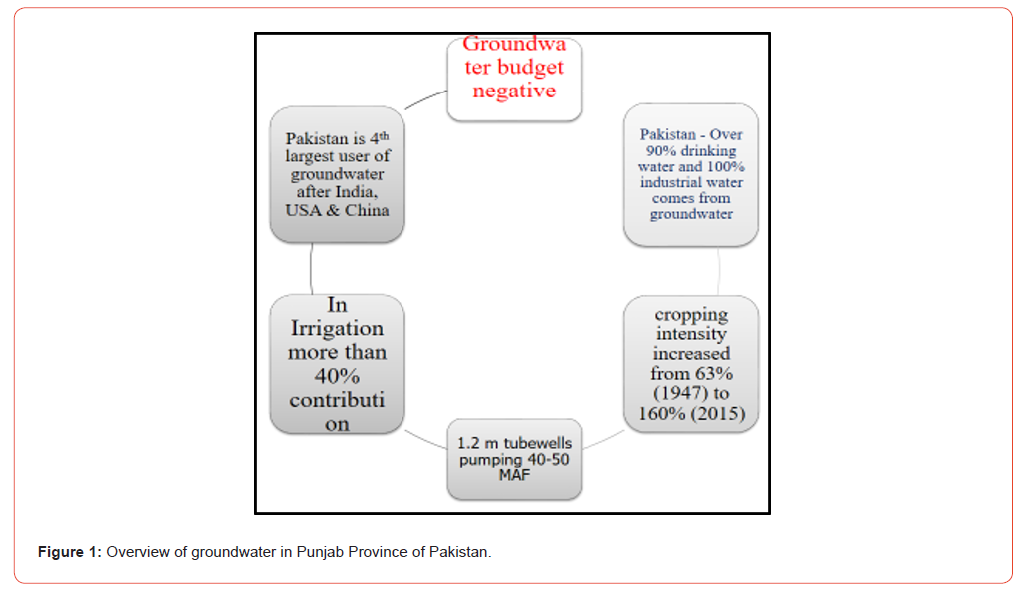
Presently, groundwater provides close to 60% of irrigation water requirements in Punjab, either alone or to augment poor canal supplies (Kahlown et al., 2006) [30]. It supports irrigation throughout the year, especially for water-hungry crops such as rice, sugarcane, and fodder. Tube well irrigation facilitated higher cropping intensity, now averaging more than 170% in some districts (GOP, 2021) [21]. This dependence is most acute in central and southern Punjab, where canal water supply is insufficient or unreliable. In a few places, groundwater has become the norm because of poor canal command and unequal water distribution (Hassan & Hassan, 2017a) [31]. Overview of groundwater resources of Punjab is shown in Figure 1. The growing reliance on groundwater has led to unsustainable abstraction levels. Evidence indicates that in much of central Punjab (e.g., Lahore, Faisalabad, Sahiwal), groundwater levels are falling at a rate of 0.3 to 1.0 meters annually (WWF-Pakistan, 2018) [26]. The issue is worst in urbanfringe and intensively cultivated regions.
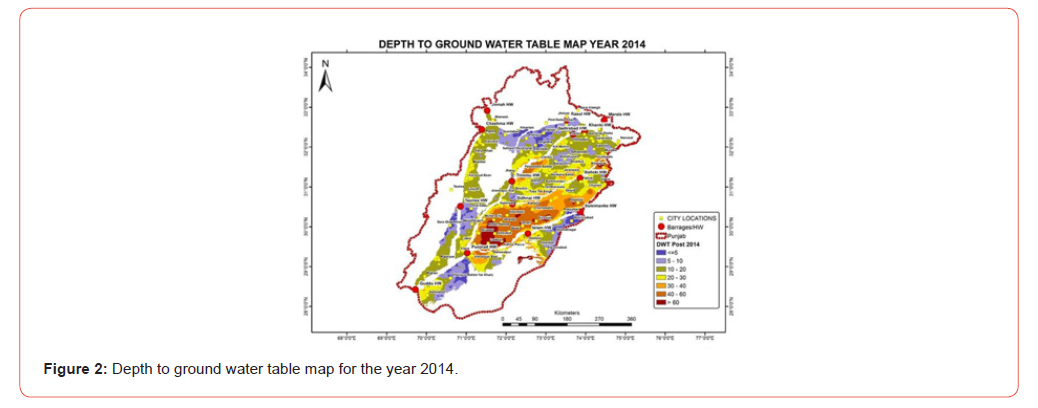
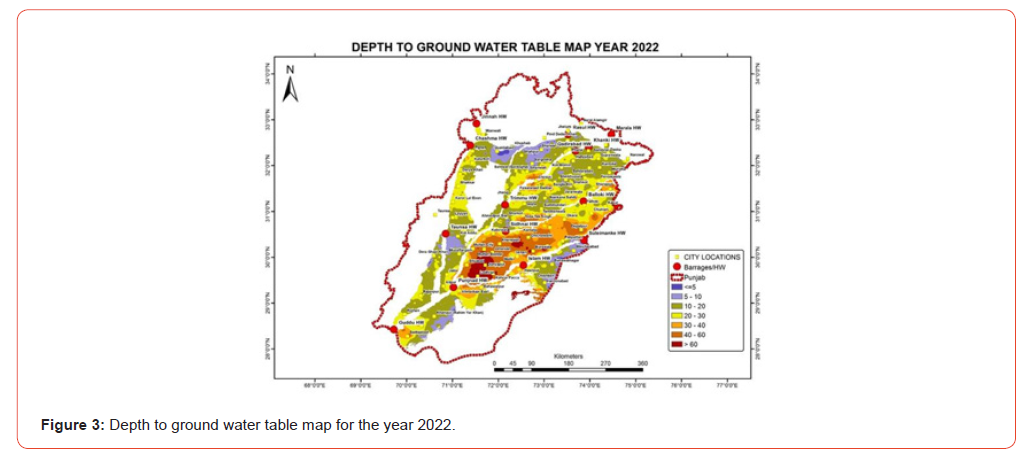
As mentioned above over-extraction of groundwater takes place due to many factors including subsidized electricity or diesel costs, lack of holistic regulation with prompt implementation, ever increasing food and fibre requirement etc. This has resulted in a groundwater-energy subsidy nexus, where low-cost energy encourages over-exploitation of groundwater without concern for sustainability (Shah, 2009) [16]. In addition, there is minimal regulation or metering of groundwater abstraction, and information systems for tracking extraction are weak or non-existent. Groundwater has emerged as a critical driver of agricultural productivity, particularly in supporting the Green Revolution through expanded irrigated farming. However, this vital resource is now under significant stress due to unregulated abstraction, poorly defined rights and entitlements, institutional capacity constraints, and limited public awareness. The situation is further aggravated by aquifer contamination, inefficient waste management, unsustainable farming practices, and the absence of integrated groundwater governance frameworks. These challenges collectively threaten the long-term sustainability of groundwater, necessitating urgent policy, technical, and institutional interventions to safeguard its future. Figures 2 and 3 show the depth to ground water table maps of Punjab for the years 2014 and 2022, respectively (IRI, 2025) [32]. It is evident from these maps that the groundwater level is declining in Punjab and situation is moving towards water scarce scenario.
Food Security Challenges
Water underpins the food security and livelihood of many in the country, but the water storage capacity of Pakistan is only 30 days, and the country is moving from water-stressed to water-scarcity status, mainly due to rapidly increasing population coupled with climate change (GoP-MoPD&R, 2014) [33]. In terms of both ratios of withdrawals to runoff and per-capita water availability, Pakistan’s water resources are already highly stressed. Any change in available resources through, for example, climate change and population increase, could have a serious impact on food security, economic development and the environment. It is projected that, by 2025, the shortfall of water requirements will be around 32%, which will result in food shortages (ADB, 2002) [34]. Depleting freshwater resources, rapid population growth, emerging public health concerns, environmental degradation, and the impacts of climate change pose significant threats to food security and livelihoods in Punjab, Pakistan. About forty seven percent of the population of Pakistan is food insecure as well as the access to food is uneven and malnutrition is widespread in the country (Hassan & Hassan, 2017b; Kirby et al., 2017) [35,36]. Numerous studies indicate that over one billion people in developing countries lack access to safe drinking water. Water availability—including groundwater—is increasingly under stress due to excessive extraction, aquifer contamination, inadequate waste management, inefficient water distribution systems, and unsustainable agricultural practices (Vojinovic & Abbott, 2017) [37].
The future of Pakistan will continue to be shaped by its management of water, and how it responds to the increasing scarcity of supply. As per estimates by (WB, 2019) [38] more than 300 million people will be living in Pakistan by 2047 (the 100 years of the country) which will increase the water demand by 60. Although population and economic growth are the main drivers of water scarcity, climate change will exacerbate the gap between demand and supply of water. The largest water demand will be in the agriculture sector and the fastest rates of water demand growth will be in the industrial and domestic sectors. With this situation in mind, the Government of Pakistan has endorsed the “National Water Policy 2018” which has prescribed many reforms and investment priorities to ensure the water and food security in the country. It has outlined a platform for dialogue between the major stakeholders (provinces) and have provided them with the opportunity to formulate their own regulatory and implementation plans as per their own requirements and circumstances (GoP, 2018) [39].
Food Security Challenges
Increasing population pressure.
Low agricultural productivity.
Dwindling land for agriculture.
Shrinking water resources (quality, sedimentations etc).
Limiting/diminishing energy resources.
Shortage of electricity.
High cost of diesel.
Increasing cost due to lowering of GW levels.
High water losses in irrigation system (more than 100 yrs
old system).
Over exploitation of groundwater (Salinity issues/energy
issues).
Pakistan despite being among top ten producer has yields
well below potential.
Limited focus on areas like livestock, poultry, forestry and
fisheries.
Poor awareness of the farmer on latest technologies.
low mechanization.
Punjab’s food production process is closely related to having access to irrigation water and energy for groundwater pumping on a timely basis. Punjab’s key crops—wheat, rice, sugarcane, and cotton—are heavily reliant on irrigation, and rice and sugarcane each need around 1,200–1,800 mm of water annually (Farooq et al., 2017) [25]. Even with the availability of the Indus Basin Irrigation System (IBIS), canal water supply is inadequate and sometimes erratic on account of seasonal fluctuation, upstream allocation, and conveyance loss. To make up for deficiencies, farmers rely more and more on tube wells, which are fuelled by either electricity or diesel. But energy in rural Punjab is unreliable and costly. Load shedding and the volatility of fuel prices have a big impact on irrigation planning, particularly when crops are at critical stages of growth. Inconsistent energy implies that tube wells will not be available to use when needed most, resulting in water shortages and decreased yields (Qureshi et al., 2010) [40].
In spite of a good agro-climate, there remain serious productivity gaps in Punjab agriculture. For instance, the all- India average wheat yield in Punjab is around 2.8–3.2 tons per hectare, much lower than the potential of more than 5 tons/ha realized in research experiments (GOP, 2021) [21]. The same gaps also occur in rice and sugarcane, mainly because of inefficient use of water, energy constraints, soil erosion, and outdated agronomic management. These productivity deficiencies have serious food security implications. Punjab produces more than 70% of Pakistan’s rice and wheat, and therefore is crucial to the food stability of the nation. Reductions in per-acre yields not only impact farmer revenues but also enhance national reliance on food imports. Smallholder farmers, who are the majority, are most susceptible because they have limited access to capital, watersaving technologies, and stable sources of energy (Gill et al., 2022) [41]. Also, unequal allocation of canal water and groundwater water further intensifies food insecurity at the local scale. Tail-end irrigators in canal command areas tend to experience insufficient irrigation supply, which leads to reduced yields. Likewise, farmers who lack access to cheap energy for pumping groundwater cannot irrigate sufficiently, causing yield differences among regions and income levels (Zakir-Hassan et al., 2021b) [18].
Climate change is introducing an additional layer of complexity into the groundwater-energy-food nexus in Punjab. Climate warming, unpredictable rainfall, and more frequent occurrences of extreme weather events (such as floods and heat waves) are impacting crop yields, water availability, and energy demand (IPCC, 2021) [42]. Wheat and rice are highly climate-variable crops. According to a study by Ahmad et al. (2019) [43], an increase of 1°C in average temperature would decrease wheat production by 5–6% in Punjab. In addition, delayed or truncated winter seasons impinge on the sowing period and augment water demands during warm growth periods. Likewise, late monsoon showers or drought periods influence rice transplanting and establishment, accelerating again groundwater drawing requirements. Stress due to climate change is also projected to raise energy usage, as higher groundwater levels will demand stronger pumping facilities, imposing economic burdens on farmers and infrastructure. Conversely, heavy precipitation events may cause flash floods, which destroy standing crops and leach out nutrients from the soil. All these climate effects will exacerbate prevailing food security unless the adaptive measures are taken.
Groundwater-Energy-Food Nexus
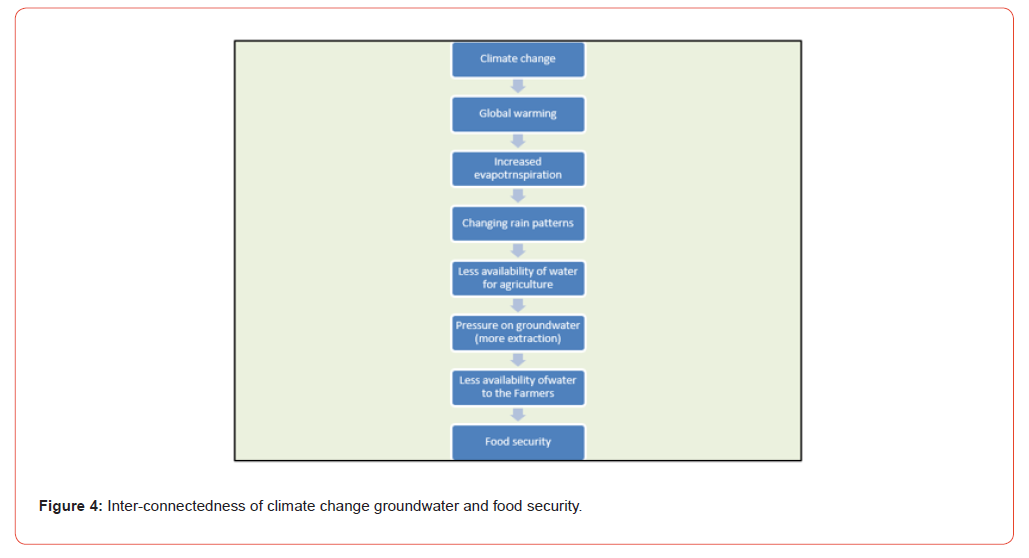
By 2030, global demand is projected to increase by approximately 50% for food, 40% for energy, and 30% for water to meet the needs of a growing population and to sustain economic development in both developed and developing countries (Yang et al., 2016) [44]. Agriculture in Pakistan’s Indus River Basin (IRB) is predominantly irrigation-dependent, with approximately 90% of food grains and nearly 100% of cash crops—including fruits, vegetables, sugarcane, cotton, and rice—produced on irrigated lands (Ringler & Anwar, 2013) [45]. Climate change Climate change is putting an added layer of complexity on the already interconnected groundwater-energy-food (GEF) nexus in Pakistan’s Punjab (Zakir- Hassan, 2022) [6]. Increased average temperatures, changing monsoon patterns, and rising frequency and intensity of extreme weather events—like long-duration droughts, intensive and nonseasonal rains, floods, and heat waves, are significantly impacting agricultural production, the predictability of water resources, and energy supply system stability (IPCC, 2021) [42]. Specifically, unpredictable rainfall decreases the availability and predictability of surface water supplies, which increases the reliance on groundwater for irrigation. This, consequently, puts extra pressure on already over-exploited aquifers. Increased temperatures also enhance evapotranspiration rates, which further push up the water needs of crops and further contribute to groundwater depletion. Concurrently, heat extremes increase the energy demand for irrigation pumping and cooling, aggravating strain on the power grid, especially during peak agricultural periods (Ali et al., 2019) [46]. Floods, frequently exacerbated by global warming, not only destroy crops and drive farm communities out of their homes but also destroy energy infrastructure and irrigation systems, halting farming activities. The combined effect of climate variability weakens food security by lessening yield stability and farmer incomes, thus making it increasingly difficult for smallholder farmers to adapt in the absence of support systems. Figure 4 shows the inter-connectedness of climate change with these issues.
Groundwater-Energy-Food Nexus
Demand for water, food and energy is expected to rise by
30-50% in the next two decades.
Direct energy intensity has risen 80% (from 1 to 1.8 MJ
per kg of crop produced) in Punjab (between 2010-2020).
Rising energy costs adversely impact food security in the
major bread bowls relying on groundwater.
Groundwater use consumes 30 times more energy/cost
as compared to surface water/canal water.
Agriculture accounts consumes more than 90% of
extracted groundwater in Punjab.
Food production and supply chain consume 30% of total
energy consumed globally.
Energy is required to Produce, transport and distribute
the food.
Energy is used to extract, pump, lift, collect, transport and
treat groundwater.
To feed the increasing population we need more food will
and for food production we need energy and water and vice versa.
Climate change is profoundly modifying the hydrological cycle in Punjab, Pakistan, with direct implications on all elements of the GEF nexus. Recent hydro-meteorological data indicate changes in the timing and magnitude of the monsoon season, with diminishing predictability in early monsoon onset and augmented variability in rainfall events (Hassan et al., 2019) [47]. This uncertainty interferes with canal water allocations, which are heavily reliant on seasonal assumptions, leading farmers to increasingly resort to groundwater to compensate for irrigation needs. In addition, altered precipitation patterns diminish opportunities for groundwater recharge. Previously, Punjab’s shallow aquifers were recharged during the monsoon months; however, with increasing rain falling in brief, intense bursts, most of the rainwater flows over the surface rather than being absorbed into the ground (Arshad et al., 2020) [48]. This imbalance between groundwater abstraction and recharge is leading to rapid aquifer decline in major agricultural areas such as Lahore, Faisalabad, and Multan. The outcome is a build-up of pressure on both energy and food systems. Increased irrigation from deeper wells raises the energy requirements for pumping, in many regions with poor or unreliable electric supply. Without proper regulation or recharge measures, this trend is a serious threat to the long-term sustainability of agriculture in Punjab.
Punjab’s energy system is also similarly exposed to the direct effects of climate change that feed back into agriculture. High ambient temperatures drive up the demand for electricity— irrigation pumping and domestic cooling—causing seasonal energy shortages, particularly during the Kharif season when water crops such as rice are cultivated (Malik et al., 2020) [49]. Pakistan’s electricity generation remains unevenly reliant on hydropower, which is vulnerable to fluctuations in river flows from glacial meltdown and seasonality. Lower water availability during drought years can reduce hydropower generation, causing the country to switch to more costly and less environmentally friendly thermal generation, adding to the cost of electricity for end-users like farmers. Climate projection for Punjab indicates a future with warmer summers, reduced duration of winters, and an increase in the occurrence of extreme weather conditions (Ahmad et al., 2019) [43]. All these will have varying effects on crop suitability, necessitating a readjustment of Punjab’s cropping season and varieties. Such crops as wheat and rice, which are very sensitive to heat stress during certain growth phases, are already facing yield losses. According to research by Iqbal et al. (2022) [50], yields of wheat go down by as much as 6% with each 1°C rise in mean daytime temperature during the grain-filling stage. In the same vein, rice is highly susceptible to heat stress at flowering, which can more often than not overlap with future heat waves.
Conclusion and Recommendations
Climate change in Punjab is no longer a future threat—it is a present and intensifying challenge that is remaking the groundwater-energy-food nexus. Its effects on water supply, energy security, and agricultural productivity are interconnected rather than independent. Without coordinated governance, adaptive technology uptake, and fair access to resources, the food system resilience of Punjab will remain to be undermined by climate stress. There is a need for an integrated, science-driven strategy for managing the GEF nexus to provide sustainable livelihoods and long-term food security in the region. Recently, Pakistan government has promulgated the National Water Policy 2018, Punjab Water Policy 2018 and Punjab Water Act 2019 where due importance has been accorded to the groundwater development, protection and management for its sustainable use to support food security and livelihood under changing climatic situation. We -need to study the water-food-energy nexus and devise the new ways and means to meet the future challenges. River Indus- 2900 km longis the lifeline for economy of the country as its – along with five tributaries- supports livelihood and food security by providing about 171 km3 of water annually for irrigated agriculture in the basin (Zakir-Hassan, 2023) [51]. Therefore, it is imperative to leverage hydro-informatics, information and communication technologies (ICTs), advanced mobile applications, robotics, sensors, and data loggers to optimize food production through climate-smart and energy-efficient agricultural practices (Zakir- Hassan et al., 2025) [52]. To address these pressing challenges, a multifaceted strategy is required:
a. Promote water-efficient technologies such as drip irrigation
and laser land leveling, while encouraging a shift towards less
water-intensive crops.
b. Enforce the Punjab Water Act through the establishment of
groundwater abstraction standards, licensing systems, and
robust monitoring mechanisms.
c. Rationalize energy subsidies to discourage excessive
groundwater pumping and incentivize the adoption of clean
energy alternatives, such as solar-powered irrigation systems.
d. Support managed aquifer recharge (MAR) in suitable
hydrogeological zones, particularly during monsoon seasons
to harness surplus floodwater.
e. Enhance farmer awareness on groundwater quality, cropspecific
water requirements, and best practices in sustainable
irrigation.
f. Precision Agriculture will support in the food security under
current situation.
Future Strategies
Nationwide resource assessment and groundwater
mapping using state of the art tools.
Adoption of advance research, for mitigating the climatic
impacts.
Adopting agro-climatic zones and cropping patterns/
calendars.
Establishment of autonomous and fully powered
regularity authority for groundwater management for food security.
Supply management through judicious exploitation of
surface and groundwater.
Demand side management by promotion of water
conservation culture.
Waste and water quality management to protect the
aquifers.
Managed Aquifer Recharge for flood and drought
mitigation.
Rainfall harvesting to supplement water resources.
Development of integrated risk management plan to
combat the climatic changes- threats for food security.
Shared Vision on Groundwater Governance and food
security.
Understand climatic changes and their impacts on water
resources and food-energy nexus.
Adaptation to the potential threats of energy and water
crisis.
Use of water smart and climate-resistant varieties of
crops/trees.
Energy auditing in agriculture sector.
Develop policies and tools to grow more per drop and per
joule.
Use of modern tools, AI and robotics for water and energy
efficient agriculture.
Acknowledgement
None.
Conflicts of Interest
No conflicts of interest
References
- Namany S, Al Ansari T, Govindan R (2019) Sustainable energy, water and food nexus systems: A focused review of decision-making tools for efficient resource management and governance. Journal of Cleaner Production 225: 610-626.
- Moraes Santos E, Dias R, Balestieri J (2021) Groundwater and the water-food-energy nexus: The grants for water resources use and its importance and necessity of integrated management. Land Use Policy 109: 105585.
- Zakir Hassan G, Shabir G, Hassan FR, Akhtar S (2022) Groundwater-food security nexus under changing climate-historical prospective of Indus basin irrigation system in Pakistan. Int J Social Science Humanities Research 5(10): 28-38.
- Zakir Hassan G, Hassan FR, Punthakey JF, Shabir G, Khan4 MAH (2022) Behavior of groundwater under changing climate in an irrigated agricultural area of Indus Basin Pakistan:P:56-57, 24th International Congress on Irrigation and Drainage; ICID, 3-10 October, Adelaide, Sourh Australia.
- Cathcart M (2009) The water dreamers: the remarkable history of our dry continent. Melbourne: Text Publishing Company.
- Zakir Hassan G (2022) Groundwater-Climatic changes Nexus and Food Security Challenges in Indus Basin of Pakistan. MedPress Nutrition and Food Sciences 1(1).
- Zakir Hassan G, Allan C, Punthakey JF, Baumgartner L (2022) Groundwater a driver for boosting irrigated agriculture to support national growth in Punjab Pakistan. Presented in DocFest22, Graduate Research Conference Program, “Beyond the Doctoral Degree” Charles Sturt University, NSW, Australia.
- Zakir Hassan G, Hassan FR (2018) Groundwater reservoir as a source of flood water storage: A case study from Punjab, Pakistan: 8TH Asian Regional Conference of ICID on “Irrigation in Support of Evergreen Revolution" May 2-4, Kathmandu, Nepal.
- (2016) IWMI. Groundwater governance in the Middle East and North Africa-IMWI project report No 1- Groundwater governance in the Arab World: IWMI-USAID joint project.
- Zakir Hassan G (2023) Improving Sustainable Groundwater Management: A Case Study of Managed Aquifer Recharge in Punjab Pakistan: PhD thesis, School of Agricultural, Environmental, and Veterinary Sciences Charles Sturt University, Australia.
- Qureshi AS (2020) Groundwater governance in Pakistan: From colossal development to neglected management. Water 12(11): 3017.
- Bhutta MN, Sufi AB (2021) Impact of Groundwater Depletion on Pumping Costs in Punjab, Pakistan. Pakistan Journal of Water Resources 25(2): 85–92.
- Khan MR, Nabeel E, Amin M, Punthakey JF, Mitchell M, et al. (2021) Improving groundwater management to enhance agriculture and farming livelihoods: Integrating web and mobile based applications for groundwater management: Report No 162, Institute for Land, Water and Society, Charles Sturt University, Albury, NSW 2640, Australia.
- Zakir Hassan G, Punthakey JF, Shabir G, Hassan FR (2024) Assessing the potential of underground storage of flood water: A case study from Southern Punjab Region in Pakistan. Journal of Groundwater Science and Engineering 12(4): 387-396.
- Qureshi AS (2020) Sustainable Groundwater Management in Pakistan: Past Trends and Future Challenges. Water Policy 22(3): 456–470.
- Shah T (2009) Climate change and groundwater: India's opportunities for mitigation and adaptation. Environmental Research Letters 4(3): 035005.
- Zakir Hassan G, Hassan FR, Punthakey JF, Shabir G (2021a) Challenges for groundwater-irrigated agriculture and management opportunities in Punjab province of Pakistan. International Journal of Research in Agronomy 4(2): 61-73.
- Zakir Hassan G, Allan C, Punthakey JF, Shabir G, Hassan A (2021b) Groundwater-livelihood-food security linkages-A case study from Punjab Pakistan. In 47th IAH Congress 2021, Brazil.
- (2018) FAO. Pakistan Country Profile: Food and Agriculture Indicators. Food and Agriculture Organization of the United Nations.
- (2022) Government of Pakistan (GOP). Pakistan Economic Survey 2021–22. Ministry of Finance.
- (2021) Government of Pakistan (GOP). Agricultural Statistics of Pakistan 2020–21.
- Zakir G, Kahlown MA, Punthakey JF, Shabir G, Aziz M, et al. (2023) Evaluation of hydraulic efficiency of lined irrigation channels – a case study from Punjab, Pakistan.
- Qureshi AS (2011) Water management in the Indus Basin in Pakistan: Challenges and opportunities. Mountain Research and Development 31(3): 252–260.
- Shah T, Rajan A, Shah M (2022) Groundwater governance in South Asia: Turning the tide. IWMI Research Report.
- Farooq M, Hussain M, Siddique KHM (2017) Conservation agriculture and integrated crop-livestock systems: synergies and trade-offs. Agricultural Systems 153: 93–112.
- (2018) WWF-Pakistan. The Groundwater Crisis in Pakistan: A Policy Perspective. World Wide Fund for Nature – Pakistan.
- Hassan GZ (2016) Groundwater use for agriculture and sustainability concerns. Paper presented at the 43rd IAH Congress, September 25-29th, Montpellier, France.
- (2020) PIPIP. Punjab Irrigated Agriculture Productivity Improvement Project – Project Completion Report. Government of Punjab.
- Mustafa D (2002) Theory versus practice: The bureaucratic ethos of water resource management and administration in Pakistan. Contemporary South Asia 11(1): 39–56.
- Kahlown MA, Majeed A, Ashraf M (2006) Water-use efficiency and economic feasibility of growing rice and wheat with sprinkler irrigation in the Indus Basin of Pakistan. ICID Journal.
- Hassan GZ, Hassan FR (2017a) Environmental concerns for sustainable use of groundwater for food security in Punjab: Presented at World Environment Day, Pakistan Engineering Congress, Lahore, Pakistan.
- (2025) IRI. Spatio-Temporal Analysis and Mapping of Groundwater in Punjab (2014-2022). GIS & Computer Section, Irrigation Research Institute, Punjab Irrigation Department Lahore. Report No. IRI/Phy/GIS&CS/3009.
- (2014) GoP-MoPD & R. Pakistan-vision 2025: Ministry of Planning, Development & Reform, Govt of the Pakistan.
- ADB (2002) Water Resources Strategy Study: Draft Report Vol. 1. Asian Development Bank, Islamabad, Pakistan.
- Hassan GZ, Hassan FR (2017b) Sustainable use of groundwater for irrigated agriculture: A case study of Punjab, Pakistan. European Water 57: 475-480.
- Kirby M, Ahmad M.-u.-D, Mainuddin M, Khaliq T, Cheema MJM (2017) Agricultural production, water use and food availability in Pakistan: Historical trends, and projections to 2050. Agricultural Water Management 179: 34-46.
- Vojinovic Z, Abbott MB (2017) Twenty-Five Years of Hydroinformatics. Water 9(1): 59.
- (2019) WB. Opportunities-for-a-Clean-and-Green-Pakistan-A Country Environmental-Analysis: The World Bank, Washington DC 20433.
- (2018) GoP. National Water Policy 2018: Ministry of Water Resources, Government of Pakistan, Islamabad.
- Qureshi AS, McCornick PG, Sarwar A, Sharma BR (2010) Challenges and prospects of sustainable groundwater management in the Indus Basin, Pakistan. Water Resources Management 24(8): 1551–1569.
- Gill MA, Shahbaz M, Qaisrani SA (2022) The uneven impacts of groundwater access on smallholder agriculture in Pakistan. Water International 47(2): 254–272.
- (2021) IPCC. Climate Change 2021: The Physical Science Basis. Sixth Assessment Report of the Intergovernmental Panel on Climate Change.
- Ahmad S, Turral H, Scott C (2014) Managing Groundwater in Pakistan: Challenges and Opportunities. International Water Management Institute (IWMI).
- Yang YCE, Ringler C, Brown C, Mondal MAH (2016) Modeling the Agricultural Water–Energy–Food Nexus in the Indus River Basin, Pakistan. Journal of Water Resources Planning and Management 142(12).
- Ringler C, Anwar A (2013) Water for food security: challenges for Pakistan. Water International 38(5): 505-514.
- Ali G, Hasson S, Khan AM (2019) Climate change and its impact on the groundwater–energy–food nexus in Pakistan: A policy perspective. Environmental Research Letters 14(5): 054010.
- Hasson S, Lucarini V, Khan MR, Petitta M, Bolch T (2019) Early 21st century snow cover state over the western Himalayas and its implications for water resources in the Indus River Basin. Hydrology and Earth System Sciences 18(10): 4077–4100.
- Arshad M, Shafique M, Rasul G (2020) Climate-induced hydrological variability in Punjab, Pakistan: A long-term analysis. Climate 8(7): 88.
- Malik RN, Bukhari N, Shahid M (2020) Energy-water nexus in the context of climate change: Case study of Punjab province. Renewable and Sustainable Energy Reviews 132: 110047.
- Iqbal MA, Shakeel M, Hassan S (2022) Wheat productivity under climate variability in Punjab: Evidence from district-level panel data. Agricultural and Forest Meteorology 314: 108754.
- Zakir Hassan G, Allan C, Punthakey JF, Baumgartner L (2021) Potential of managed aquifer recharge in an irrigated river basin- a case study from Punjab Pakistan” abstract presented at 24th International River Symposium 27-30 Sep 2021, Brisbane (online), Australia.
- Zakir Hassan G, Punthakey JF, Allan C, Baumgartner L (2025) Integrating Groundwater Modelling for Optimized Managed Aquifer Recharge Strategies. Water 17(14): 2159.
- Khan NI, Akhtar M, Shabbir R (2013) Arsenic contamination in groundwater of Lahore and Kasur districts, Punjab, Pakistan. Environmental Science and Pollution Research 20(10): 7580–7590.
-

This work is licensed under a Creative Commons Attribution-NonCommercial 4.0 International License.