
 Short Communication
Accelerating Climate Resilience: A Geologically Integrated Framework for Rapid CO2 Mineralization and Extreme Heatwave Mitigation
Received Date: August 14, 2026; Published Date: August 21, 2026
Short Communication
This study establishes a unified geological framework to enable
efficient, scalable responses to two interconnected dimensions of
the climate crisis:
a. Accelerated mineralization of atmospheric and industrial
CO2, and
b. Targeted mitigation of the rising frequency and intensity
of extreme heatwave events.
The framework strategically integrates specific geological conditions with engineering interventions to address both urgent challenges concurrently. The Tibetan Plateau, which was formed by the continuous collision between the Indian and Eurasian continental plates, is marked by its extensive geographic extent and high average elevation. It acts as a huge heat source that induces monsoon development and modulates global atmospheric circulation patterns. Under the current context of continuous global warming, this thermal forcing significantly contributes to the formation and persistence of extreme heatwave events in downstream regions, particularly in Europe and North America during summer. To mitigate this effect, we propose the deployment of large-scale photovoltaic arrays across the plateau, which generates four coordinated benefits:
a. Utility-scale renewable energy production,
b. Additional large-scale agricultural output,
c. Increased carbon sequestration capacity, and
d. Elevation of regional surface albedo.
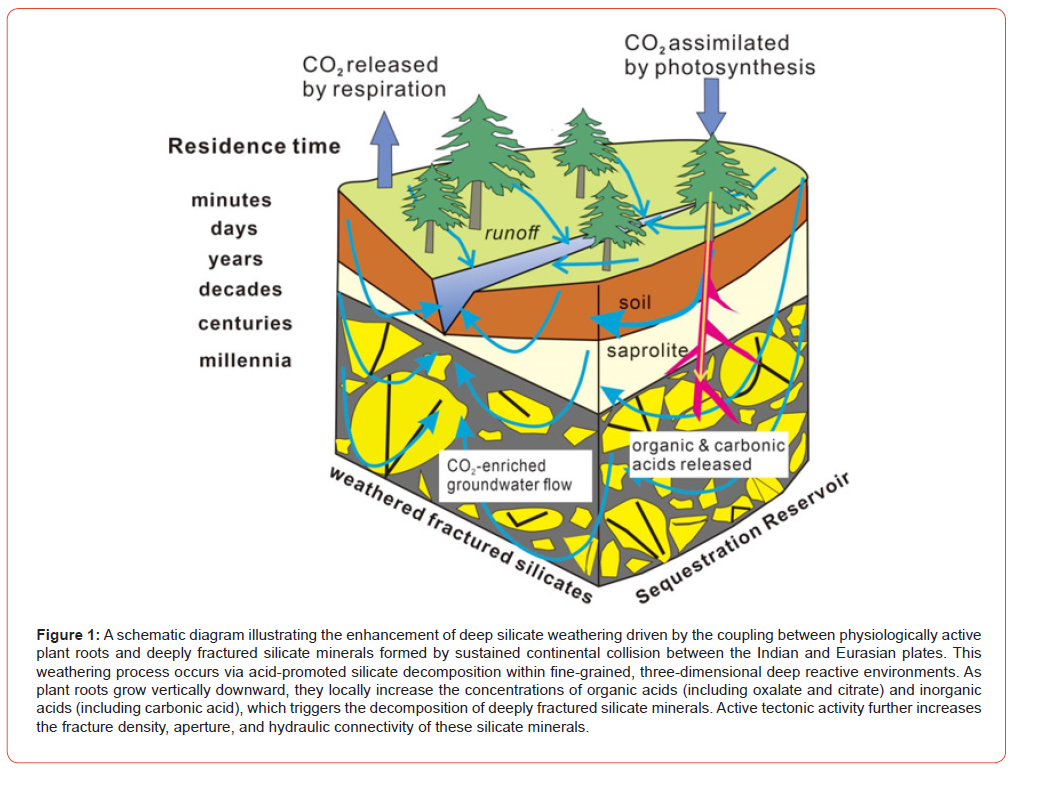
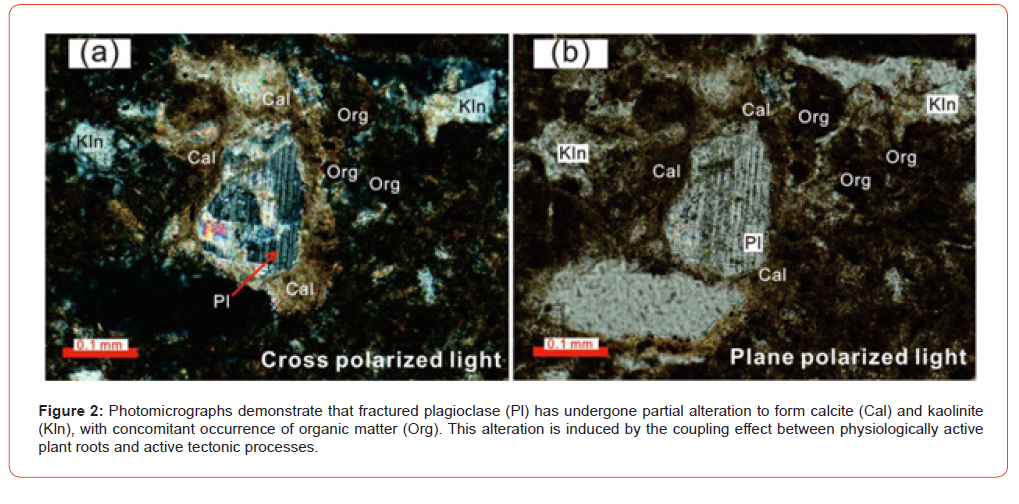
Consequently, a larger proportion of incident solar radiation is directly reflected back to outer space at the plateau’s average elevation of 4,000 meters above sea level, where the impact on tropospheric thermal conditions is the most pronounced. At the same time, the shaded microclimate formed under elevated photovoltaic panels provides appropriate growth environments for herbaceous vegetation on the plateau’s sparsely vegetated land largely due to much water provided for cleaning the solar panels, generating substantial additional agricultural output. More importantly, this vegetation promotes the sequestration of large volumes of atmospheric CO2 via accelerated deep silicate weathering on the tectonic-active Tibetan regions. This process is driven by the combined action of physiologically active plant roots and active tectonics associated with the ongoing Indo- Eurasian continental collision (Figure 1). As a result, the subsurface fractured silicate minerals beneath the photovoltaic panels are rapidly converted into stable carbonate and clay minerals, consuming tremendous amounts of atmospheric CO2 (Figure 2). A representative stoichiometric reaction for this process is:
CaAl2Si2O8 (anorthite) + 3H2O + 2CO2 → CaCO3 (calcite) + Al2Si2O5(OH)4 (kaolinite)+ CH2O (organic matter) + O2.
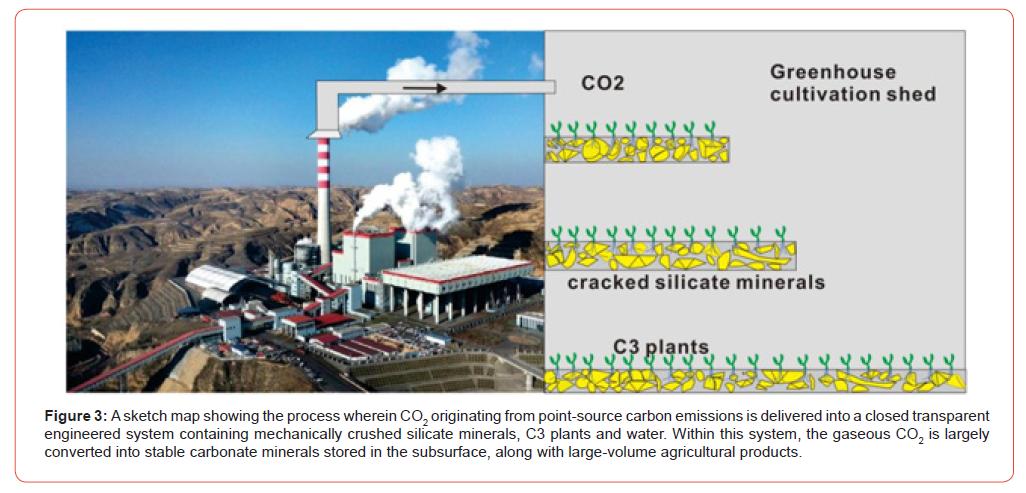
Through the integrated geophysical and biogeochemical effects of albedo regulation and enhanced carbon sequestration, the anomalous thermal output of the Tibetan Plateau heat source will be significantly reduced. This reduction directly weakens a core driving factor of continental heatwaves, thereby substantially decreasing the frequency and intensity of these extreme meteorological events. As an auxiliary engineering method, this framework addresses point-source CO2 emissions through further integration of established research on the coupling interaction between physiologically active root systems and the aforementioned active tectonic processes. When industrial CO2, or concentrated CO2 captured directly from the atmosphere, is injected into a closed, transparent engineered system configured as a water-filled bioreactor charged with mechanically pulverized silicate minerals (Figure 3), the gas undergoes rapid conversion. This process produces two final products: stable subsurface carbonate minerals that enable long-term CO2 storage, and incrementally large-scale agricultural output. The conversion is propelled by the coupling interaction between C3 plant photosynthesis and accelerated subsurface silicate weathering (Figure 3), both of which are amplified under the system’s optimized and controlled operational parameters. By directly extracting CO2 from industrial emission streams, this method generates both additional environmental and economic gains, and realizes the complete carbon capture and utilization cycle.
-

This work is licensed under a Creative Commons Attribution-NonCommercial 4.0 International License.