
 Research Article
A Gap Analysis to Improve Climate Information Services in Mali to Foster Climate Smart Agriculture
Received Date: June 23, 2025; Published Date: July 14, 2025
Abstract
Many Sahel countries are vulnerable to climate change and suffering from lack of readiness towards climate resilience. Increasing climate vulnerability has posed unprecedented socio-economic challenges to the region. This region needs an appropriate climate service with better climate risk management in multiple sectors including agriculture. This paper focused on Mali in the Sahel region as a case study to test if an upgrade is needed in its existing climate information services. The study explores if the existing systems require transformations and whether existing regional and national systems are well suited to provide sector wise customized climate information services, which is required for an easy proliferation of climate smart agriculture in Mali. Results revealed that existing climate information services in Mali are not giving full climate services. They cover only basic and essential climate information about seasonal rainfall and crop growing season, but are not sufficient for extreme weather predictions and individual farmer’s preparedness. In this study, after in-depth assessment, we proposed two frameworks of engagement considering shortcomings of existing setups, one refers to national meteorological services for transforming information into targeted, user-specific, and easy-to-digest products. Second, active participation from the private sector for effective and customized climate information in Mali as well as other Sahelian countries. Because climate change is already negatively impacting crop production and crop vulnerability to climate change is also increasing. Even with adaptation and potential beneficial effects of increased CO2 concentrations, substantial yield declines (in excess of 5%) are projected for staple crops in the region. So, managing the production risks from climate change is foremost important and equally important is effective public private partnerships in climate data services.
Keywords: Climate Information Services; Climate Smart Agriculture; Sahel; Climate risk management; Mali
Introduction
Some of the countries in Sahel region are the most vulnerable to the effects of climate change. Environmental deterioration, poverty, food insecurity, rapid population expansion, gender inequality, political instability, and violence are some of the region’s current vulnerabilities, which are being further worsened by climate change. Climate change and rising vulnerability together pose unprecedented difficulties to society in the Sahel countries because of their lack of readiness to climate resilience. They need to develop and implement solutions from research and innovation for system transformations in order to restore land for production, increase food, health, nutrition and thereby improve climate resilience.
Mali is one of the least developed landlocked countries in West Africa and mainly depends on the production of rain fed cereals for its economy. About 80% of Mali’s workforce is employed in farming and fishing, which together make up 45% of the country’s GDP (Butt et al., 2005). Mali’s population is expanding at a rate of around 3% annually, but agricultural production is not keeping up with demand. With little improvement since 1990, the Food and Agriculture Organization (FAO) estimates that more than 25% of Mali’s population is undernourished. It is ranked in Category 4 of the FAO’s list of nations at risk of hunger, with Category 5 being the greatest, due to its level of food insecurity. More than 80% of the population in rural areas relies on the cultivation of vegetables, fish, and the staple crops (maize, rice, millet, sorghum, and cowpea). Cotton, groundnuts, rice, vegetables, and maize make up the majority of national agricultural exports, accounting for 38 percent of all exports, with cotton being the primary export crop (37 percent). The nation imports a considerable amount of oilseed, livestock, goats, maize, and oilseed.
Despite a wide range of national climate change commitments under Paris agreement, implementing climate change policies and plans here are still lacking at both the national and local government levels. Whereas this gap is often filled by relatively strong regional institutions, transboundary approaches and local actors that provide capacity for action. To this end, what is urgently needed is to prioritize climate change adaptation and mitigation as sectoral interventions, particularly in the agricultural sector. They need to improve the understanding of climate, climate predictions, and the use of climate information services to serve the region’s citizens’ need which will enable the society to better manage the risks arising from climate variability and change, especially for those who are most vulnerable to climate-related hazards. It can only be achieved through developing and incorporating science-based climate information and prediction into planning, policy and practice at every level.
The term climate information service in this paper advocates the creation and distribution of climate information to a variety of consumers, from private citizens to governments. These activities can support climate-resilient societal development and can provide knowledge for climate-related decision- making, as well as climate-smart policy and planning. In this service, climate information packages are processed and delivered in the form of meteorological and climatic variables like temperature, precipitation, wind, soil moisture, and indicators of extreme weather [1]. They can include future forecasts on daily, monthly, seasonal, or decadal timeframes, as well as projections at multi-decadal and centenary dimensions [2]. They can also explain past, present, and future weather and climatic trends which can serve to fore- casts, seasonal trends, economic analysis, warnings, and advisory services. There are numerous efforts to develop climate information service capabilities in the Sahel [1], although many operate in isolation and with varying degrees of success with respect to improved management of risks arising from climate change. While many of the foundational capabilities and infrastructure for climate services already exist or are being established, coordination among numerous programs, projects and institutes that have addressed individual aspects of climate service are generally weak. The primary challenges are i.e. lack of coordination and communication between the supply side (providers) and demand side (users) of climate information services, Inability to act by users on available information regardless of the quality, wide range of availability and quality of climate data, lack of easily interpretable and user-specific information for the decision-making process and continued limitations on access to climate services. This study is based on two objectives. The first objective provides a review of the country’s decision-making processes in the agriculture sector and the current state of the country’s climate information services with a comparison with related climate services in other Sahel countries. In the second objective existing and projected climate change and their impacts are assessed using inputs from gridded climate data, Coupled Model Intercomparison Project-6 (CMIP6), climate change data, and other observations. Based on the climate assessment a framework is designed considering the needs of Mali with a focus on managing risks from climate change.
Mali, with about two-thirds of its total geographical area made up of desert and semi-desert regions, its majority area is not suitable for agriculture. Here, about 33.7% of the land area devoted to agriculture where annual cultivation of rice, maize, millet, sorghum, cowpea, and groundnuts accounts for 5.3% of the total area. The production of sheep, goats, and cattle is aided by the 28.4% of the total territory covering permanent meadows and pasture with low levels of forest and woods covering only 4% of its total land area (FAO. 2019). Mali is shown in complex regional food crisis with other Sahel countries in which region’s food insecurities and climate vulnerability is obvious. In order to help restore land, improve nutrition, health, and food security, improve climate resilience, and create green jobs, entire region needs to develop and implement research- and innovation-based system-transforming solutions. Such Agricultural system transformations that can drive their operations to limit GHG emissions from food systems, prepare for global warming and urgent climate threats, and lead towards carbon sequestration with sustainable animal husbandry, agriculture and land use strategies.
Synthesis Approach
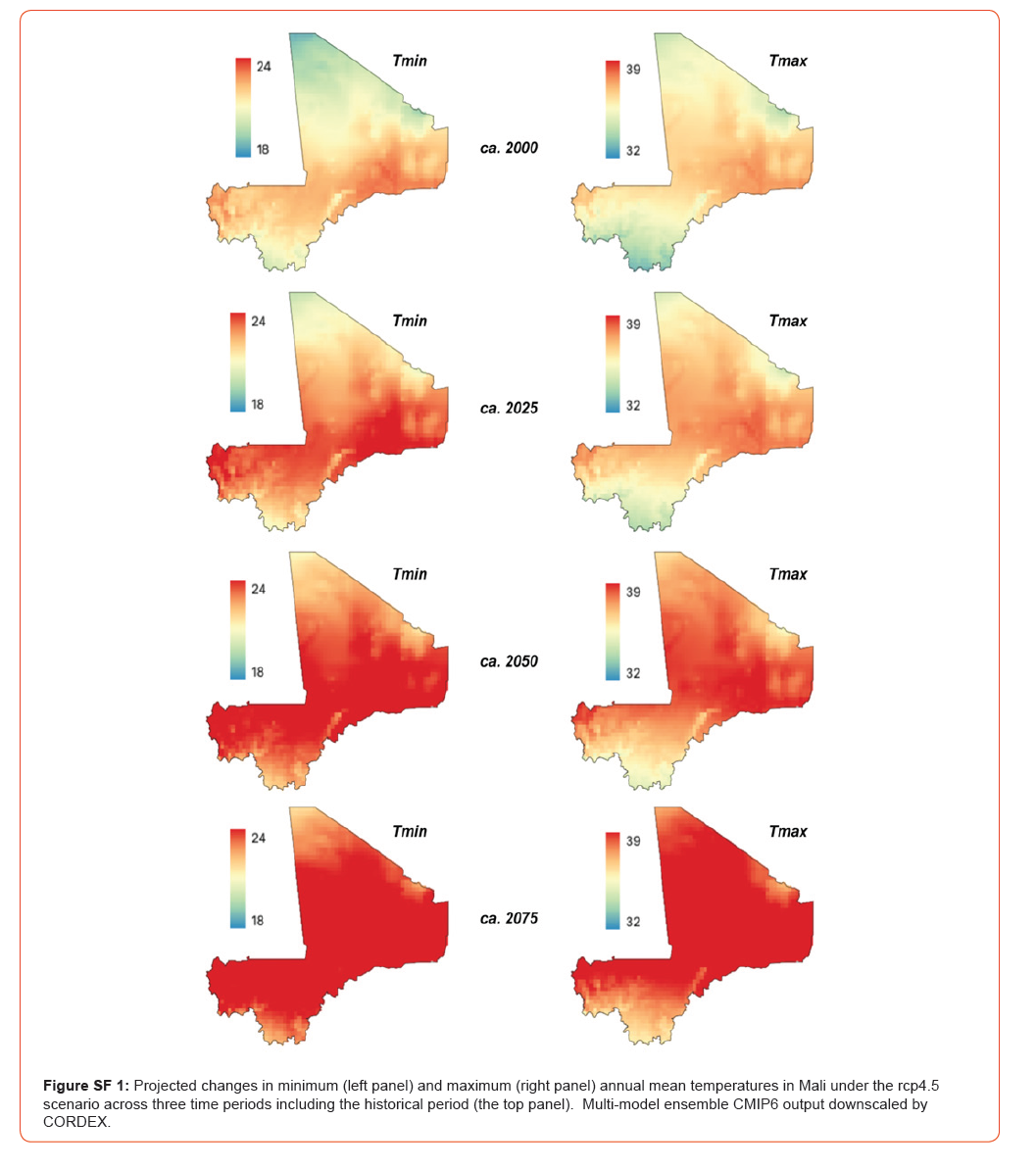
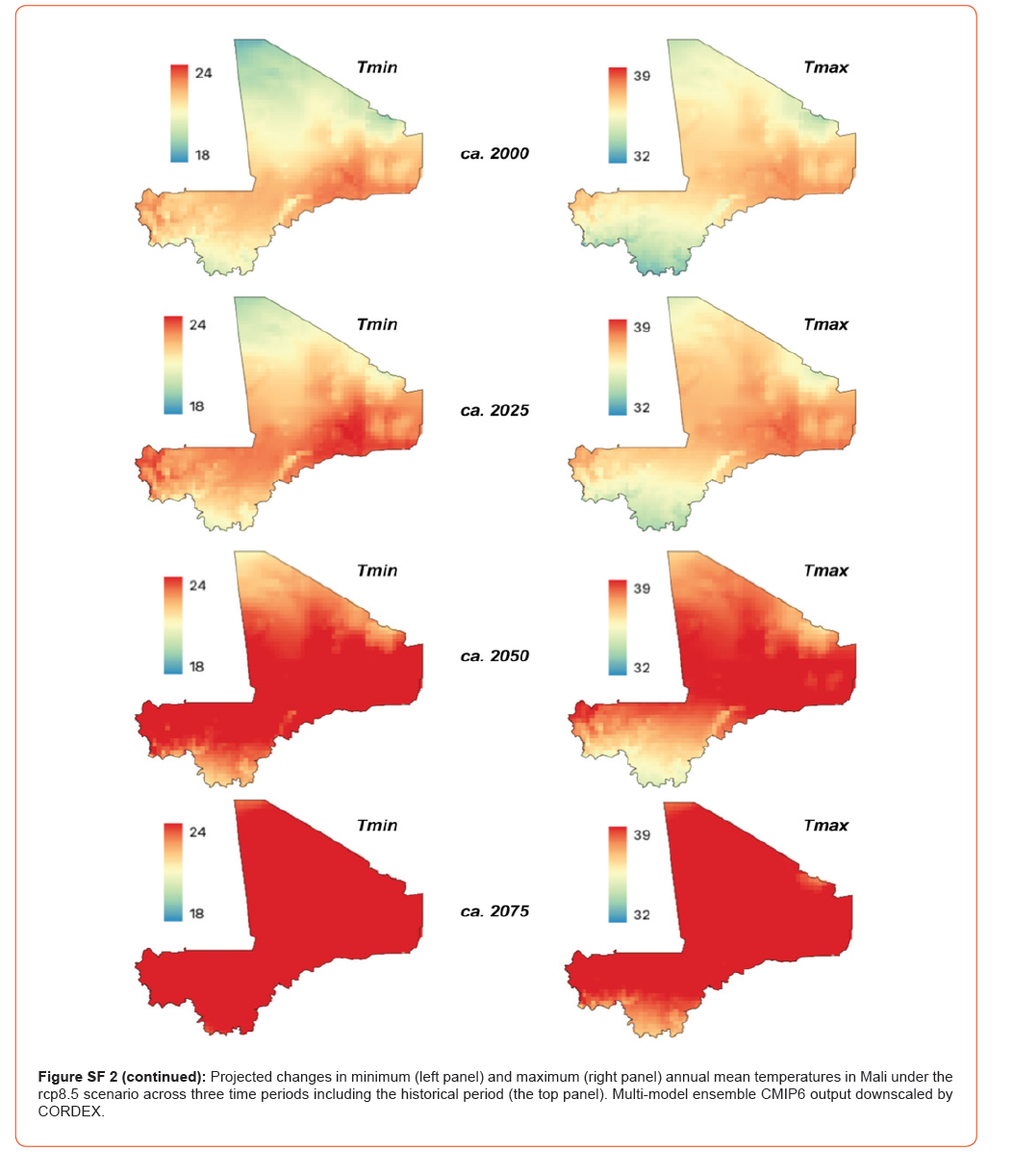
Initially, existing climate information services in Mali are assessed with particular attention to climate data institutions, their focus areas, and the types of climatic information they aim to provide. Then, these services are compared with other climate services in the region. Some of them are the Intergovernmental Authority on Development (IGAD) Climate Prediction and Application Centre (ICPAC), Nairobi, Kenya; AGRometeorology, HYdrology, METeorology (AGRHYMET) regional center, Niamey, Niger; Southern African Development Community – Climate Service Centre (SADC-CSC); African Centre of Meteorological Application for Development, Niamey, Niger; Weather and Climate Information Services for Africa and Enhancing National Climate Services (ENACTS). Besides national and regional infrastructure assessment, we analysed projected changes in temperature and precipitation patterns at the regional scale under two emission scenarios across three time periods i.e. 2025, 2050, 2075. Then also analysed impacts of these projected changes on the agricultural sector, with particular attention to crop production. In the last, we proposed a framework for a better climate information service system based on the limitations observed in the existing system.
Literature Findings
Existing climate information services in Mali
Mali had a fair share of developments in the climate information services sector in the last 50 years. Most of these services involve multinational organizations, with or without a western research organization, targeting all or some of the countries in the Sahel, including Mali (Figure 2), and are mostly funded by international aid organizations [3-5].
National Meteorological Agency (or MALI-METEO) also called the Direction Nationale de la Météorologie (DNM) has been a member of the World Meteorological Organization (WMO) for over 50 years. It has been a flag carrier for successful agro-meteorological climate information services for farming communities in Mali since the early 1980s). They mainly focus on five common crops i.e. millet, sorghum, peanuts, cotton, and maize. Initially program’s aim was to assist rural farmers in making informed agricultural decisions to improve production and alleviate drought-related food insecurity [6]. In addition to receiving rain gauges and associated training to guide decisions such as planting dates and variety selections, farmers were provided with weather (mostly rain) forecasts, which included agricultural advice in different parts of the country to help rural communities manage the risk associated with a variable climate [3]. The country program also received technical assistance from the Regional Centre for Training and Application in Agrometeorology and Hydrology (AGRHYMET), the World Meteorological Organization (WMO), and funding from the Swiss Agency for Development and Cooperation (SDC). One of the groundbreaking attributes of these services was the translation of climate data into practical advice for farmers by representatives from several government agricultural service agencies, who regularly formulated agro-meteorological opinions, warnings and advice and disseminated through various networks [6]. Over the intervening years, the program has trained over 2,500 farmers and there is evidence to suggest significant yield gains for major crops for farmers using agrometeorological information to make management decisions compared with national averages [3].
A comprehensive review revealed that the use of agrometeorological advisories by farmers were generally low (often less than 20% in surveyed villages) and there were strong gendered differences, particularly in the south with Malian women’s rate of use of the advisories was lower than that of men or simply non-existing. The primary reason for low rates appears to be related to farmers’ ability to use the advisories, rather than their trust in the quality of advisories. On this point, the assessment also found that those farmers who are able to use the advisories followed them closely with regard to variety selection and timing of planting, only those advisories are seen as useful. However, the advisories currently do not include uncertainties surrounding forecasts, because of the inherent assumption that the farmers are unable to understand them. Unfortunately, this creates a false sense of certainty in communicating inherently uncertain information that could undermine the trust in delivered information, and lead to incorrect planting times or varieties. Finally, there is an important gap in evaluating the performance of forecasting methods. The MALI-METEO’s forecasting methods date back to the establishment of PRESAO (French acronym for Synthesis and evaluation of seasonal forecasts in West Africa) from the mid-1990s, which is based on the statistical relationship between historical sea surface temperatures in the Atlantic and rainfall quantities [7]. Unfortunately, emergence of new trends associated with climate change challenge strong assumptions of stationarity and diminish our ability to forecast the future from past experience. To this end, there is an urgent need for a dynamical synthesis of our understanding of the West African climate system in the context of climate change [6].
In addition, there is a regional Meteorological Center in West Africa, the AGRHYMET Center that issue seasonal forecasts of cumulative rainfall for West Africa for informed decision making in the agricultural and water management sectors. Originally statistical in nature, these forecasts are increasingly based on outputs of coupled atmosphere–ocean dynamic models that are locally implemented and tested [8]. More recently, seasonal forecasts made by AGRHYMET include other characteristics of the rainy season that are more relevant for rainfed agriculture such as the inception and termination dates of the season as well the potential length of the dry periods during the critical growth stages of the major cereal crops [8]. Mali also benefits from extensive crop simulation experiments, results of which are used to map the onset dates of the crop growing season, the water requirements satisfaction indices and the potential yields in the country that are important agro-climatic services [9]. Emergence of climate extremes in the Sahel region, and Mali in particular, brings renewed focus on AGRHYMET capabilities. Of particular note are activities surrounding the assessment of climate change impacts on crop production and water resources. While the link between these activities and its role as an essential climate information service provider is not yet clear, though AGRHYMET Center is uniquely positioned to address many climate hazards and food security issues in the region.
Another program, Participatory Integrated Climate Services for Agriculture (PICSA) was introduced in Mali to overcome the challenges of ineffective disseminations among farmers due to top-down and generic nature of information. Developed in 2011 by researchers at the University of Reading, PICSA is a successful participatory approach for climate services and agricultural extension by combining historical climate data and forecasts with farmers’ knowledge of what works in their own context, and then uses participatory planning methods to help them make informed decisions about their agricultural practices [10]. The key to its success is the ability to combine accurate and hyper-local historical climate as well as seasonal and short-term weather forecasts with crop, livestock, and livelihood options at the level of individual farmers with the help of participatory decision-making tools that assist farmers to make informed decisions when planning their activities [10]. Implementation of PICSA in two sites in Mali and Senegal in 2016 received strongly favorable views and profound benefits to participating farmers by making strategic plans long before the season, based on their improved knowledge of local climate features [11]. The approach also enabled participating farmers to consider additional interventions such as changing sowing dates, selecting crop varieties, and fertilizer management within their own context and resources. The study also demonstrated the potential of farmer- to-farmer extension in scaling up the approach, which is of great interest especially in the current context of limited extension services in the West African region [10].
Thus, Malian farmers though have been exposed to a wide variety of climate information services for some time. These services appear generally beneficial but not all farmers benefit equally, nor can they all act on the information they receive. Among them, The METEO-MALI approach with fortnightly bulletins is a strong player in generating and disseminating agriculturally-relevant climate information but it is often seen as too top-down without considering the actual needs and livelihood circumstances of farmers. While a more farmer-centric approach is beginning to take shape, climate change is challenging the forecast approaches that rely on historical information and analog climate years. On the other hand, the test phase of the PICSA approach in Mali was hugely successful, through extension programs and communicating with farmers to help them make their own decisions that suit their conditions and improve their livelihoods with local climate information. The Mali work also suggests that the scalability issue - the current bottleneck - can be overcome by farmer-to-farmer extension of PICSA that can reach a large number of farmers in Mali and beyond.
Comparison of climate information services to others in the Sahel
Being part of other Africa-wide climate information services, Mali benefits from regional services too. Mostly are based on agro-meteorological services and often do not include climate change factor and associated risk. It is important to revise regional data sharing activities and protocols that are in place that provide the framework of climate information services in Africa. Because, regional data-sharing policies are implemented at the country level by national meteorological and hydrological services. Such as, the Intergovernmental Authority on Development (IGAD) Climate Prediction and Application Centre (ICPAC), based in Nairobi, Kenya, implements a data-sharing policy with the services of countries in the Greater Horn of Africa; the AGRometeorology, HYdrology, METeorology (AGRHYMET) regional center in Niamey, the Niger, implements a data-sharing policy with national services in countries in West Africa; and the Southern African Development Community – Climate Service Centre (SADC-CSC) implements a data-sharing policy with national services in countries in Southern Africa.
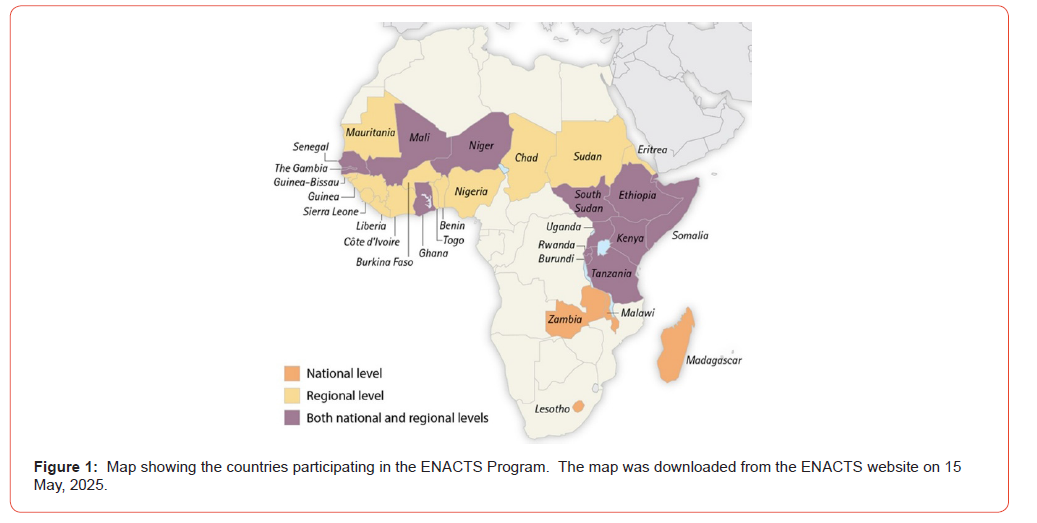
Created in 1985 African Centre of Meteorological Application for Development (ACMAD) is providing a meteorological watch and early warning system over Africa and also conducting the training of African scientists and technicians in the application of meteorology for development. ACMAD data and services can help alleviate the effects of drought, atmospheric phenomena, and tropical cyclones by applying methodologies based on a thorough knowledge of the impact of meteorological factors on food production, on the availability of water resources and on efficient use of renewable sources of energy. Mali also have access to The Enhancing National Climate Services (ENACTS) services to assist national Meteorological and Hydrological Services (NMHS) in Africa to develop high-resolution, spatially and temporally complete gridded historical meteorological datasets. ENACTS produce suites of derived climate information products; and disseminate them through a web-based platform [12]. In systems, ENACTS enables the NMHS to provide enhanced services by overcoming the challenges of data quality, availability and access – while at the same time it fosters stakeholder engagement and data use. Their new data products allow for characterization of climate risks at a local scale and offer opportunities to support applications and research. ENACTS has so far been implemented in 10 countries at the national level and at regional levels in East Africa and the West African Sahel (Figure 1).
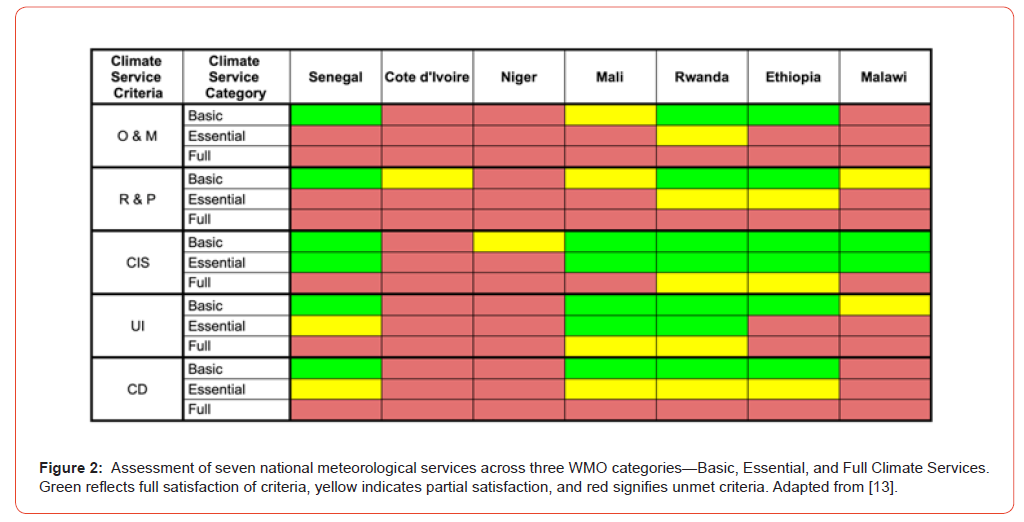
There is another WISER program led by UK Met office that helping Mali till now to address climate information gaps and ensures accelerated uptake of climate information services for development planning and practice. This program is essential to weather-sensitive business and economic activities such as transport, aviation, construction, and agriculture, agriculture being the dominant source of employment and highly sensitive to weather and climate. However, by implementing this programme, the ACPC has noticed the limited contribution of the private sector to the production and uptake of climate information services. The study summarized the services by seven national meteorological services using three WMO categories (Basic Climate Services, Essential Climate Services, and Full Climate Services) across five service criteria (O & M - Observations and Monitoring; R & P - Research, Modeling and Prediction; CIS - Climate Service Information system; UI - User Interface Platform; and CD - Capacity Development). In all service criteria, majority countries have access to essential climate information services only (Figure 2).
Climate change impacts on the agricultural sector in Mali
It is widely accepted that projected climate changes associated with increasing atmospheric concentrations of greenhouse gasses will fundamentally alter the magnitude and the seasonal variations of temperature and precipitation patterns in many parts of the globe [14]. What is less known, however, are the impacts these changes will have on social and economic sectors that are important to human well-being, such as agricultural production, water availability, and public health [15-17]. In particular, climate change impacts on agricultural productivity, defined as the amount of food/fiber production over a unit of land area, are critically important as global population increase coincides with diminishing productive land area and water resources. While a vast amount of research in recent decades has focused on crop productivity under changing climates, a great deal is still unknown about many regions, particularly in the Sahel and Western Africa [18]. There is evidence to suggest that climate change is already negatively impacting crop production and slowing productivity growth in Africa [19-21]. These effects are largely dependent on current climatic and soil conditions, the direction of change, and the adaptation strategies used to cope with these changes. For example, in sub-Saharan Africa, climate change has already reduced maize, and wheat yields by 5.8% and 2.3%, on average, respectively in the period 1974–2008 [19]. With these issues in mind, this study has quantified climate change impacts on the agricultural sector in Mali. Study explored recent trends in climate across Africa with a focus on western Africa, also projected changes in temperature and precipitation patterns under two emission scenarios across three time periods 2025, 2050, and 2075. The impacts of these projected changes on the agricultural sector have been discussed, with particular attention to crop production, crop disease, and water use for agriculture. This temporal investigation set the stage for developing a needed framework for climate information services for Mali in the context of climate change.
Observed changes in climatic variables in the Sahel and Mali
Results have shown 1–3°C increase in mean annual and seasonal temperatures since the mid-1970s across Africa with the highest increases in the Sahara and Sahel [22,23] and positive trends in mean annual maximum and minimum of 0.16°C and 0.28°C per decade, respectively [24] (Figure 3). The frequency of very hot days (defined as maximum temperature > 35°C) and warm nights has increased by 1–9 days and 4–13 nights per decade between 1961– 2014 in Africa [25], and cold nights have become less frequent [24]. In the 21st century, heatwaves have become hotter, longer and more extended compared to the last two decades of the 20th century [26].
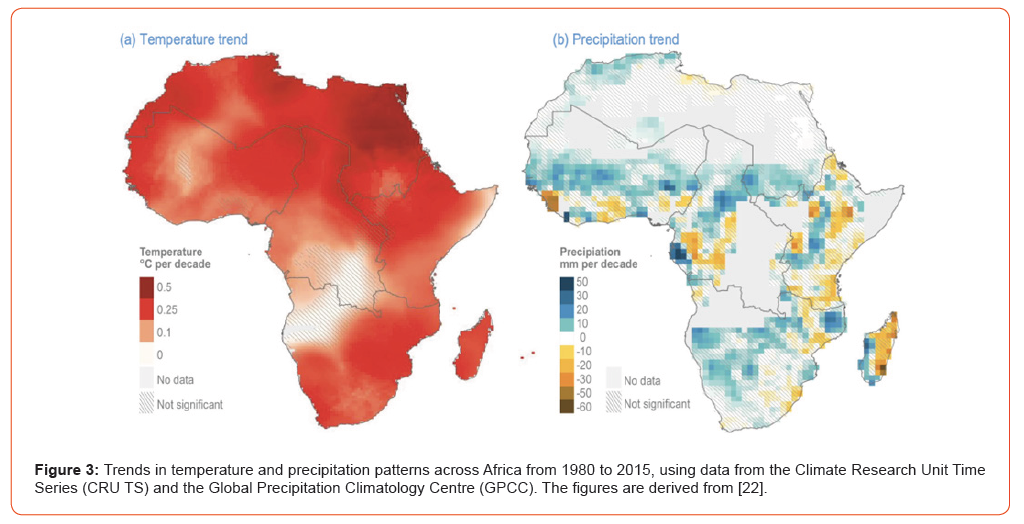
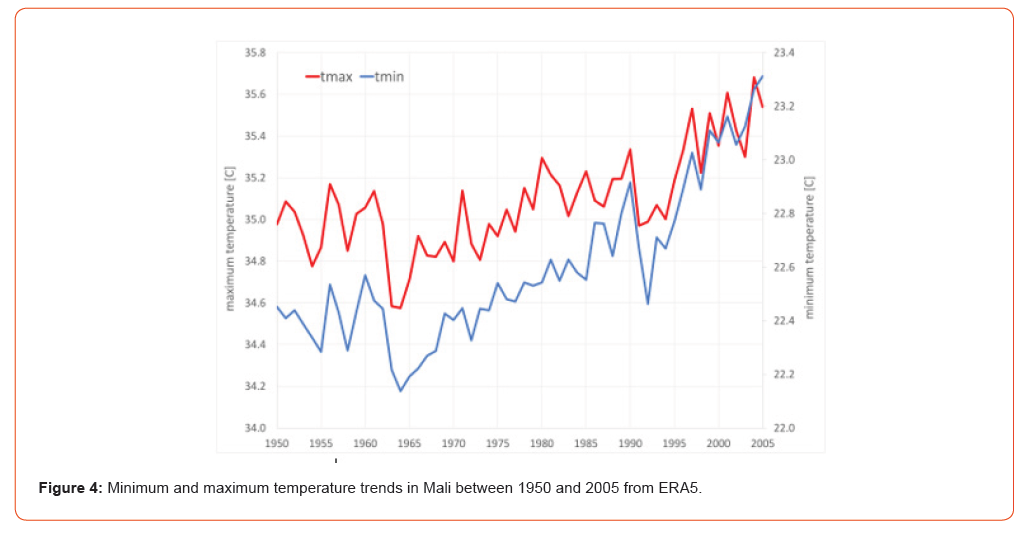
Negative trends in rainfall accompanied by increased rainfall variability were observed between 1960s–1980s over west Africa [27], caused by a combination of anthropogenic aerosols and GHGs emitted between the 1950s and 1980s [28]. A shift to a later onset and end of the west African monsoon is also reported in west Africa and Sahel but this observation has low confidence [23]. Between 1981–2014 the Gulf of Guinea and the Sahel have experienced more intense precipitation events, and the frequency of mesoscale storms has tripled [29]. Extreme heavy precipitation indices show increasing trends from 1981–2010 [24], increasing high flow events in large Sahelian rivers as well as small to mesoscale catchments leading to pluvial and riverine flooding [28]. Meteorological, agricultural and hydrological drought in the region has also shown signs of increased frequency since the 1950s [30]. Minimum and maximum temperature trends in Mali between 1950 and 2005 obtained from ERA5 clearly demonstrate that both temperatures show strong positive trends, starting from the second half of the 20th century that continues today (Figure 4).
Projected changes in climatic variables in the Sahel and Mali
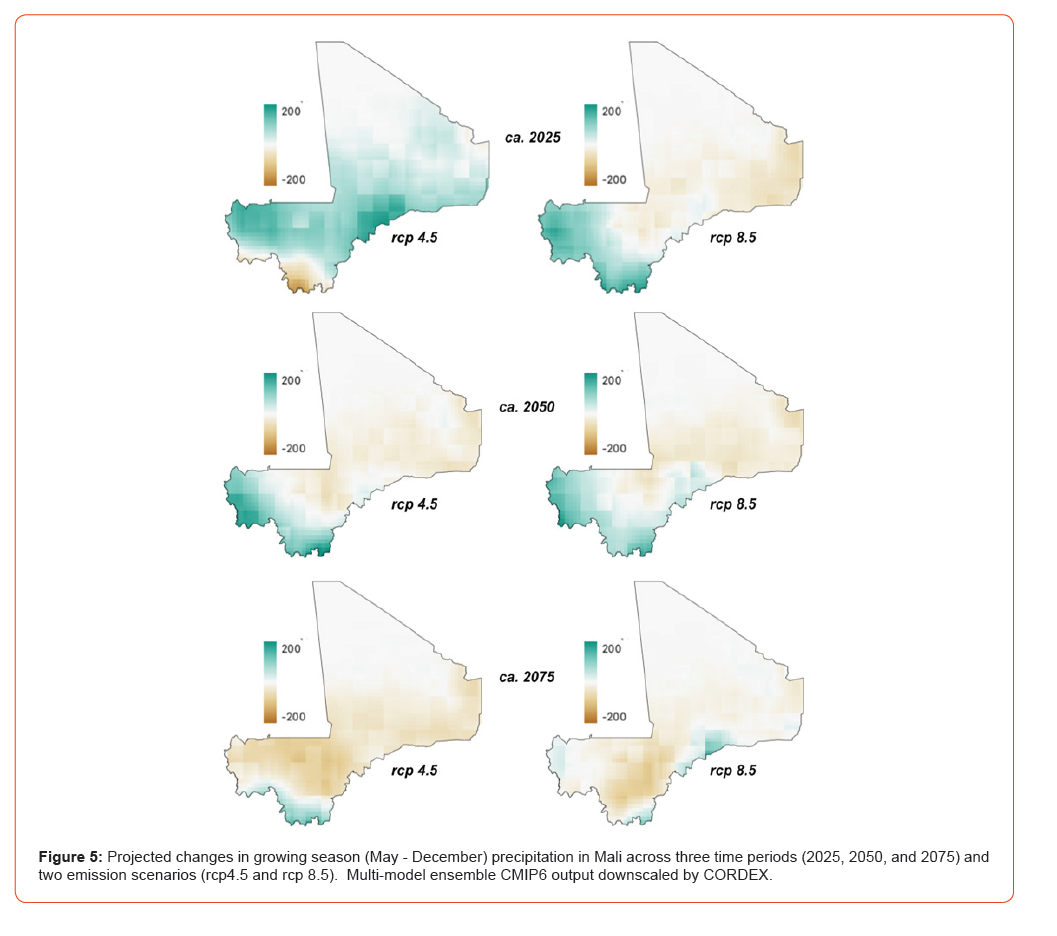
Mean annual temperatures in west Africa are projected to increase between 0.6°C and 2.1°C when compared to the 1994-2005 average period, depending on the emission scenario and location. Under mid- and high-emission scenarios, temperatures could increase by 2°C and 5°C, respectively [13]. Associated with these changes will be the projected increases in hot days at all global warming levels (GWL) with larger increases at higher warming levels. For example, by 2060 the frequency of hot nights is projected to be almost double the 1981–2010 average at GWL 2°C [23], with potentially devastating effects for maize production [31]. West African rainfall projections show a gradient of precipitation decrease in the west, including Mali, and increase in the east with medium confidence [23] (Figure 5). This pattern is evident at 1.5°C of global warming and the magnitude of change increases at higher warming levels [32]. A reduction in length of the rainy season is projected over the western Sahel through delayed rainfall onset by 4–6 days at global warming levels of 1.5°C and 2°C [32]. Although there are uncertainties in rainfall projections over the Sahel, CMIP6 models project monsoon rainfall amounts to increase by approximately 3% per degree of warming (Jin et al., 2020). At 2°C global warming, west Africa is projected to experience a drier, more drought-prone and arid climate, especially in the last decades of the 21st century [33] (Figure 7). The duration of meteorological drought in the western parts of West Africa is projected to increase from approximately 2 months during 1950–2014 to approximately four months in the period 2050–2100 under RCP8.5 and SSP5-8.5 [34].
Impacts of climatic changes on the agricultural sector in Mali
Climate-related hazards in Mali’s agriculture include droughts, floods, growing season changes, crop diseases and pests. These hazards are a natural occurrence in Mali, which nevertheless pose serious constraints on development and food security, and their intensity and frequency are likely to increase under a changing climate. Climatic changes are already a significant threat to the country’s development and the nutrition and health of its inhabitants, due to erratic rainfall, increased crop pests, rainfall shortages, and breaks during critical growing periods, as well as desertification over the last 50 years. The most highly stressed regions of the country are in the south where agriculture is concentrated, including Sikasso, Mopti, and Segou. Not only are these regions critical to the country’s continued food security, they also include regions with important ecosystem services which are deteriorating.
In this study key climate hazards are summarized that are affecting agriculture in Mali. It allows quick evaluation of vulnerability, thereby identifying the magnitude and locations of exposure of cropping systems. The section is organized as types of risks associated with agriculture, particularly from the viewpoint of crop production (yield) losses, changes in growing periods that affect yield and crop selection, expected increases in crop diseases and increased use of water in irrigated areas.
Table 1: List of climate change impact studies focused on Mali and the Sahel. These studies are ynthesized in this report to draw conclusions about climate change impacts on agricultural activities.
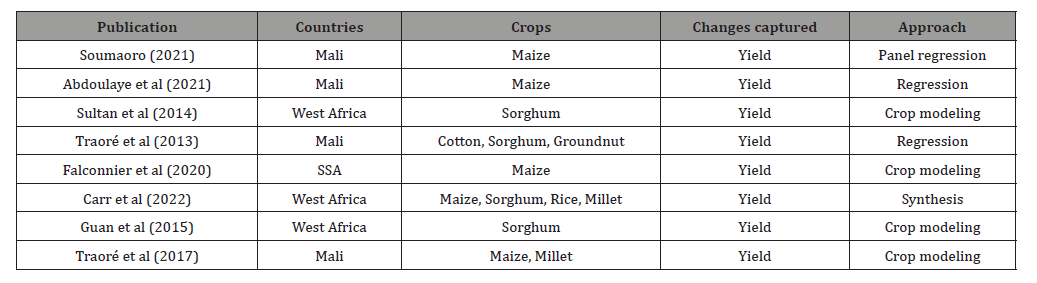
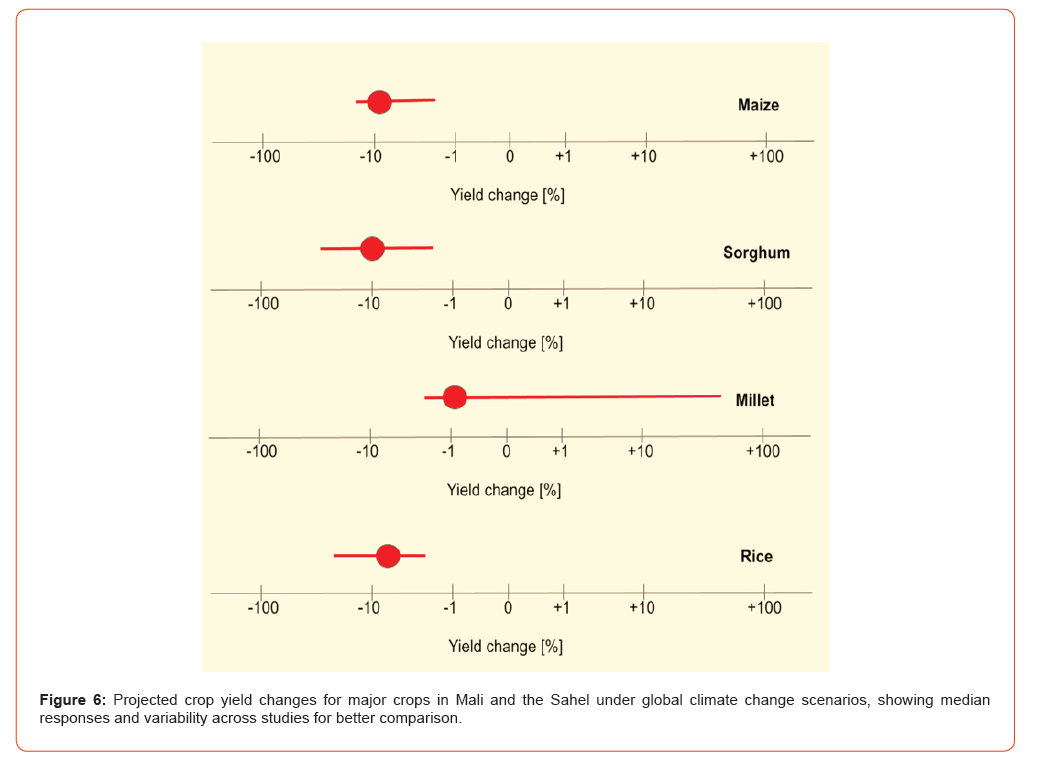
These results are based on synthesis from existing studies, incorporating statistical analyses, crop modeling studies, and field observations [42]. The reason for choosing this approach is, these synthesized studies can capture the in-depth changes in crop productivity in the Sahel beyond a single study. The included studies are provided in Table 1. Crop yields in Mali and the Sahel in general are especially vulnerable to future climate change in part because 90–95% of food production in the region is rainfed. Synthesis of a number of studies (Table 1) suggests that maize, rice, sorghum and millet yields in the Sahel are projected to decrease around 5% per degree Celsius of global warming in a multi-model ensemble, particularly driven by projected rainfall changes (Figure 6). Without adaptation, substantial yield declines (in excess of 8%) are projected for staple crops in the region. Negative changes in yields of staple crops are expected to occur even when accounting for CO2 increases and adaptation measures. For example, for maize in West Africa, compared to 2005 yield levels, median projected yields decrease 9% at 1.5°C global warming and 41% at 4°C, without adaptation (Figure 10). However, uncertainties in projected impacts across crops and regions are driven by uncertainties in crop responses to increasing CO2 and adaptation response, especially for maize and sorghum in West Africa[18].
New Framework for climate information services in Mali
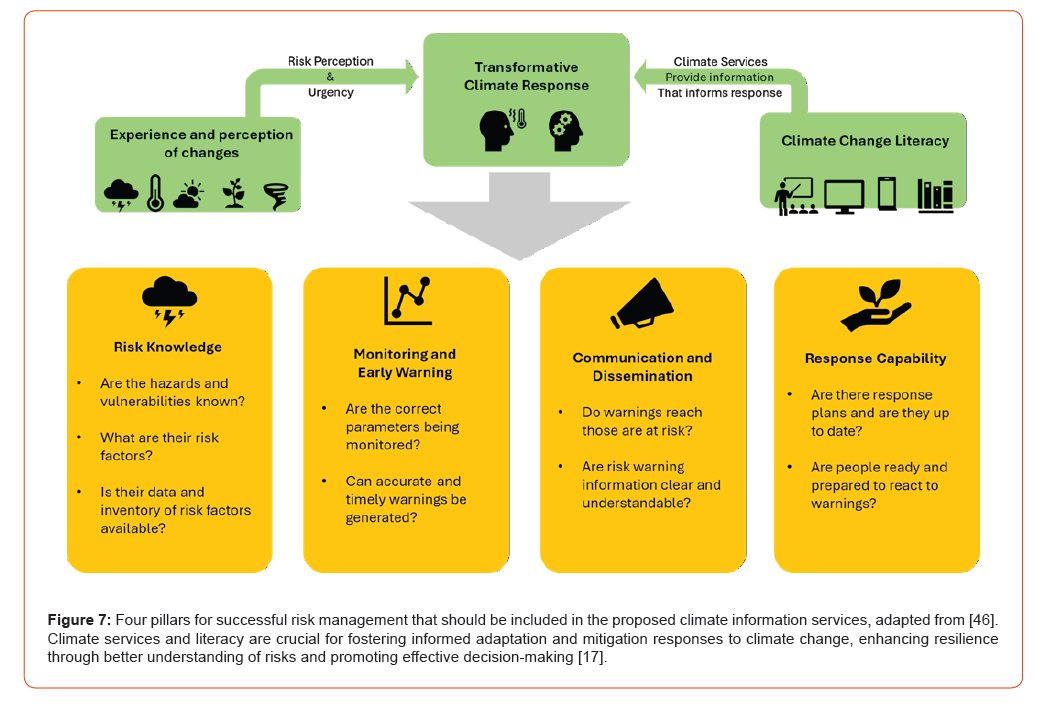
Sahel countries and Mali in particular, have limited capacity to adapt to climate change due to the poor quality and inaccessibility of climate information, low financing capacity and lack of political interest. Transformation of climate-related data and other relevant information into customized products is also missing on large scale. Whereas customized climate information provides projections, trends, economic analysis, counseling on best practices and the development and evaluation of solutions useful for the society at large. This study has proposed a framework for climate information services for effective adaptation and mitigation strategies in the agricultural sector. The proposal calls for two equally important building blocks. First, national meteorological services must continue to push for generation and analysis of new forms of data that are directly related to understanding and mitigating risk within the context of farmers’ livelihoods. Second, there should be an increasingly important role for the private sector to champion research on effective and sustainable production of climate information, customization of sector-specific information and dissemination. As climate change threatens development, the importance of private sector involvement cannot be exaggerated. Though, significant investments made in the past for climate information services in Mali and research shows that availability and access to weather and climate information can help reduce negative impacts from climatic events through proper preparation and planning, [43]. However, there remains a mismatch between the supply and uptake of climate information services in Mali. The reasons for the mismatch include inaccessibility, information afforded not being relevant to context or scale, or information being poorly communicated [44]. One way to address these issues is to encourage national meteorological service agencies that have traditionally been the custodian of climate information services to venture into transdisciplinary co-production of climate information [43, 45]. Co-production of climate information involves information producers, practitioners and stakeholders, and other knowledge holders participating in equitable partnerships and dialogues to collaboratively identify climate- based risk and develop scale-relevant climate information to address this risk [45]. The second part of effective risk management involves perceptions of climate variability and change as these perceptions determine how individuals and institutions act, and thus contribute to the success or failure of adaptation policies related to weather and climate. Together with perception, climate literacy and understanding the anthropogenic cause of climate change can affect the difference between coping responses and more informed and transformative adaptation. (Mutandwa et al., 2019). Combining co-generation of climate information services that are farmer centric, improved climate change literacy, enhanced institutional capacity building and strategic financial investment, there is a high probability that a new breed of climate information services can help Malian stakeholders adapt to projected climate risks (Figure 7).
Provision of climate information services involves many levels, including but not limited to, data production through monitoring and processing, contextualizing of data including research, value- adding or customizing information to sector-specific and dissemination to end users. The need for climate information must be understood and organized for sector use. Assessment revealed that Governments alone cannot effectively manage all the elements along the value chain of climate information services, especially as the impacts of climate change are becoming more varied and rampant, and as the concerns for adaptation and mitigation are growing. Moreover, the increasing demand for accurate and timely climate information at different levels and in different sectors necessitates a collaborative approach. National meteorological and hydrological institutions struggle to meet the demands of the general public and the various sectors at the same time. To this end, the involvement of the private sector is the best option to relieve the operations of the national institutions to some extent. The private sector can take responsibility for the contextualization of information and knowledge derived from climate research for decision-making at all levels of society. In some countries, the private sector is involved in climate information services at all stages of the process and there is now a growing recognition that private service providers could offer the resources needed to fill key gaps in climate information across Africa.
At least two gaps must be filled before effective engagement of the private sector can succeed. First, the business model of climate information providers in African countries must be compatible with the needs and requirements of the private sector. National meteorological and hydrological services should take pragmatic steps to fully integrate private sector services. There should be a clear national policy and legal framework on collaboration with private actors, specifying the roles and responsibilities of each player, especially those of national services and private actors. Second, in order to meet the demands of the private sector, cutting-edge technology must be deployed. This means that the current infrastructure, equipment and software of the national services needs to be upgraded. They need to improve their existing infrastructure to enable them to deliver high quality, high resolution, customized information in a timely manner. They need to build high-quality databases of clients and partners that will be used to create access to climate reports tailored to the needs of the private sector and development sectors.
Discussion
It has been well established that the countries of the Sahel region are some of the most vulnerable to the impacts of climate change. However, implementing climate change policies has been difficult at both the national and local government levels and the gap is often filled by relatively strong regional institutions and local actors that provide capacity for action. To alleviate climate risks and adapt to negative effects of climate change, there is an urgent need to prioritize climate change adaptation and mitigation as sectoral interventions, particularly in the agricultural sector.
It has been well established that the countries of the Sahel region are some of the most vulnerable to the impacts of climate change. However, implementing climate change policies has been difficult at both the national and local government levels and the gap is often filled by relatively strong regional institutions and local actors that provide capacity for action. To alleviate climate risks and adapt to negative effects of climate change, there is an urgent need to prioritize climate change adaptation and mitigation as sectoral interventions, particularly in the agricultural sector.
In Mali, existing climate information services are primarily provided through national meteorological and hydrological institutions supported by regional NGOs, which are largely funded by governments and foreign donors. While there is dedicated funding for these activities, provision of climate services would benefit immensely from private sector partnerships to deliver information would help to alleviate the burden on those institutions and ensure more efficient services. Due to their substantial reliance on agriculture for their livelihoods and their lack of resources and capacity to withstand shocks, smallholder farmers are anticipated to be more vulnerable. According to [47] and [48], climate information-based services are crucial for managing agricultural systems in a productive, profitable, and risk-free manner. Prior work on climate services in the majority of nations was mostly concentrated on controlling extreme events through early warning systems intended to improve readiness and react in a way that minimizes losses [49]. Based on all available climatic products, an efficient climate services system should offer the farming communities individualized, pertinent, and actionable advisories. In order to create knowledge that supports and directs early action and preparation, the right interaction is required. [50]. Recent studies indicate that better management decisions are supported by the co-production of knowledge by scientists and users [51,52]. In order to effectively address user needs, efforts to close the “usability gap” [53] must also include efficient access and delivery systems. According to [54], The “Intelligent Agricultural Systems Advisory Tool - iSAT” was created as a method to conceptualize crop advisories that may be sent as short messages (SMS) to farmers’ mobile phones at regular intervals during the crop season. The scientific problem that iSAT has taken on is how to formulate tactical agronomic judgements by fusing expert and indigenous knowledge with the analysis of historical, current, and anticipated climate and meteorological data. The Anantapur district of India, which is the second-driest district in the country with a highly changeable environment and limited resource endowment, hosted the iSAT system’s pilot programme from 2016 to 2020 in four villages.
To comprehend the possible advantages and difficulties connected with the use of probabilistic climate and weather information, the impact of climate and weather-based warnings on the planning and management of agricultural systems under highly variable conditions was studied by [55]. A pilot study with 720 farmers in the Anantapur district of Andhra Pradesh, India, over three cropping seasons in the years 2017–2020 used a semi-automated decision support tool called the “intelligent agricultural Systems advisory tool - iSAT” to produce and disseminate pre- and in-season advisories by fusing insights from historical trends in climate, current weather, and climate and weather forecasts. This study illustrates the benefits of separating the atmospheric variability. In total, 80% of the farmers utilized the information to make judgements about harvesting, 79% used it to make decisions about sowing, and 65% used it to prepare the field. Crop productivity has increased in climate-informed villages over the uneducated by between 1 and 56% as a result of advisory advice. The findings also show that farmers valued advice during normal and below-average seasons more than they did during above-normal seasons.
[56] studies show by improving climate services in agriculture, agricultural stakeholders can efficiently manage the risks and opportunities brought on by climate change and variability. The dissemination and application of climate information to support decision- and policy-makers is essential to comprehending and addressing the climate crisis. The United Nations now includes climate services as a core function. It is not necessary to shift present priorities in order to take expected climate change into account; rather, attention should be directed towards areas such as Mali, where current climate risk management can be improved as a first step towards adaptation to future climatic changes. climate risk management activities include the adaptation options that were identified, particularly crop diversification in relation to advancements in soil management through integrated natural resource management, facilitating access to credit for fertilizer, and communications outreach [57]. However, programs that aim to promote food security are likely to face additional stressors as a result of anticipated climate change, making it necessary to put these programs into place. Some modifications, like communications outreach, may require coordination and collaboration amongst agencies and organizations with related objectives in order to be implemented effectively [58].
The present study includes individual viewpoints, life experiences, and opinions on the crucial and current topic of better risk and opportunity management for the community and agriculture sector as a result of climate change. Outline a structure that, in an iterative cycle, combines improved knowledge and information products, effective information distribution and usage, and guaranteed policy and institutional support to assist motivate action to address the climate challenge.
Conclusions
Malian farmers have been exposed to a wide variety of climate information services for some time. In general, these services are beneficial but there is evidence to suggest that not all farmers benefit equally, nor can they all act on the information they receive. While a more farmer-centric approach is beginning to take shape, climate change is challenging the forecast approaches that rely on historical information and analog climate years. There are new and improved ways to provide these services that include extension and communicating with farmers to help them make their own decisions that suit their conditions and improve their livelihoods with local climate information. There is still a great deal of uncertainty about crop productivity under changing climates in the Sahel despite a vast amount of research in recent decades. There is evidence to suggest that climate change is already negatively impacting crop production and slowing productivity growth and vulnerability of crop production from future climate change is great. Even with adaptation and potential beneficial effects of increased CO2 concentrations, substantial yield declines (in excess of 5%) are projected for staple crops in the region. This study proposed a much needed framework for climate information services about transformation in existing climate services by National meteorological organizations for generation of new data that are directly related to understanding and mitigating risk within the context of farmers’ livelihoods and transdisciplinary co-production of climate information that involves information producers, practitioners and stakeholders, and other knowledge holders with a view towards collaboratively identifying climate-based risk. Private sector involvement is now a necessity for effective and sustainable production of climate information, customization of sector-specific information and dissemination. As climate change threatens development and the importance of private sector involvement cannot be ignored, a share burden approach is needed to cope climate related hazards and challenges in Mali.
Acknowledgement
The author thanks the [1] CGIAR Climate Action Science Program and specifically AOW2: Digital Advisories and Climate Risk Management and [2] CGIAR Initiative on Climate Resilience (ClimBeR). Dr. Mutlu Ozdogan, University of Wisconsin-Madison is acknowledged for critical comments and input during the preparation of the manuscript.
Supplementary Figures can be accessed Here
References
- Kadi M, Njau L, Mwikya J, Kamga A (2011) The State of Climate Information Services for Agriculture and Food Security in East African Countries. Copenhagen: Climate Change, Agriculture and Food Security.
- World Meteorological Organization (WMO) (2014) Annex to the Implementation Plan of the Global Framework for Climate Services – Observing and Monitoring Components. Geneva.
- Hellmuth M, Diarra DZ, Vaughan C, Cousin R (2010) World Resources Report Case Study. Increasing Food Security with Agrometeorological Information: Mali’s National Meteorological Service Helps Farmers Manage Climate Risk.” World Resources Report, Washington DC, USA.
- Vaughan C, Dessai S (2014) Climate services for society: origins, institutional arrangements, and design elements for an evaluation framework. Wiley Interdisciplinary Review: Climate Change.
- Vaughan C, Hansen J, Roudier P, Watkiss P, Carr E (2019) Evaluating agricultural weather and climate services in Africa: Evidence, methods, and a learning agenda. WIREs Clim Change 10: e586.
- USAID (2014) Assessing Mali’s Direction Nationale de la Météorologie agrometeorological advisory program: preliminary report on the climate science and farmer use of advisories, USAID Technical report.
- Hamatan M, Mahe G, Servat E, Paturel JE, Amani A (2004) Synthèse et évaluation des prévisions saisonnières en Afrique de l'Ouest. Sécheresse 15: 279-286.
- Seydou BT, Ali A, Tinni SH, Mamadou Samake, Issa Garba, et al. (2014) AGRHYMET: A drought monitoring and capacity building center in the West Africa Region. Weather and Climate Extremes 3: 22-30.
- Dingkuhn M, Baron C, Bonnal V, Maraux F, Sarr B, et al. (2003) Decision support tools for rainfed crops in the Sahel at the plot and regional. In: Struif Bontkes TE, Wopereis MCS (Eds.) Decision support tools for smallholder agriculture in sub-Saharan Africa: a practical guide. IFDC Muscle Shoals USA pp. 127-139.
- Clarkson G, Dorward P, Poskitt S, Stern RD, Nyirongo D, et al. (2022) Stimulating small-scale farmer innovation and adaptation with Participatory Integrated Climate Services for Agriculture (PICSA): lessons from successful implementation in Africa, Latin America, the Caribbean and South Asia. Climate Services 26: 100298.
- Dayamba DS, Catherine Ky Dembele, Jules Bayala, Peter Dorward, Graham Clarkson, et al. (2018) Assessment of the use of Participatory Integrated Climate Services for Agriculture (PICSA) approach by farmers to manage climate risk in Mali and Senegal. Climate Services 12: 27-35.
- Dinku T, Thomson MC, Cousin R, del Corral J, Ceccato P, et al. (2018) Enhancing National Climate Services (ENACTS) for development in Africa. Climate and Development 10(7): 664-672.
- IPCC (2022) Climate Change 2022: Impacts, Adaptation, and Vulnerability. Contribution of Working Group II to the Sixth Assessment Report of the Intergovernmental Panel on Climate Change [HO Pörtner, DC Roberts, M Tignor, ES Poloczanska, K Mintenbeck, (eds.)]. Cambridge University Press. Cambridge University Press, Cambridge, UK and New York, NY, USA. Pp. 3056.
- USAID, 2018. Assessing Sustainability and Effectiveness of Climate Information Services in Africa, USAID Technical report of the USAID-supported Assessing Sustainability and Effectiveness of Climate Information Services in Africa project. Washington, DC, USA.
- Rosenzweig C, Parry ML (1994) Potential impact of climate-change on world food supply. Nature 367: 133-138.
- Tubiello FN, Ewert F (2002) Simulating the effects of elevated CO2 on crops: approaches and applications for climate change. Eur J Agron 18: 57-74.
- Tubiello FN, Soussana JF, Howden SM (2007) Climate change and food security special feature: crop and pasture response to climate change. Proc Natl Aca Sci 104: 19686-19690.
- Trisos CH, IO Adelekan, E Totin, A Ayanlade, J Efitre, et al. (2022) Africa. In: Climate Change 2022: Impacts, Adaptation, and Vulnerability. Contribution of Working Group II to the Sixth Assessment Report of the Intergovernmental Panel on Climate Change [HO Pörtner, DC Roberts, M Tignor, ES Poloczanska, K Mintenbeck (eds.)]. Cambridge University Press, Cambridge, UK and New York, NY, USA. pp. 1285-1455.
- Ray DK, et al. (2019) Climate change has likely already affected global food production. PLoS One 14(5): e0217148.
- Sultan B, Defrance D, Iizumi T (2019) Evidence of crop production losses in West Africa due to historical global warming in two crop models. Scientific Reports 9(1): 12834.
- Ortiz Bobea A, et al. (2021) Anthropogenic climate change has slowed global agricultural productivity growth. Nature Climate Change 11(4): 306-312.
- Gutiérrez JM, Richard G Jones, Gemma Teresa Narisma (2021) Atlas [Masson Delmotte V, P Zhai, A Pirani, SL Connors, C Péan (Eds.)., Climate Change 2021. The Physical Science Basis. Contribution of Working Group I to the Sixth Assessment Report of the Intergovernmental Panel on Climate Change in Press, Cambridge University Press.
- Ranasinghe R, et al. (2022) Climate Change Information for Regional Impact and for Risk Assessment. Masson-Delmotte V, P Zhai, A Pirani, SL Connors, C Péan, (Eds.), Climate Change 2021: The Physical Science Basis. Contribution of Working Group I to the Sixth Assessment Report of the Intergovernmental Panel on Climate Change in Press, Cambridge University Press.
- Barry AA, Caesar J, Klein Tank AMG, Aguilar E, Carol McSweeney, et al. (2018) West Africa climate extremes and climate change indices. International Journal of Climatology 38(S1): e921-e938.
- Moron V, et al. (2016) Trends of mean temperatures and warm extremes in northern tropical Africa (1961–2014) from observed and PPCAreconstructed time series. J Geophys Res-Atmos 121(10): 5298-5319.
- Barbier J, Guichard F, Bouniol D, Couvreux F, Roehrig R (2018) Detection of Intraseasonal Large-Scale Heat Waves: Characteristics and Historical Trends during the Sahelian Spring. Journal of Climate 31(1): 61-80.
- Thomas N, Nigam S (2018) Twentieth-Century Climate Change over Africa: Seasonal Hydroclimate Trends and Sahara Desert Expansion. Journal of Climate 31(9): 3349-3370.
- Douville H, et al. (2021) Water Cycle Changes. Masson-Delmotte VP, Zhai A, Pirani SL, Connors C, Péan S (Eds.), Climate Change 2021: The Physical Science Basis. Contribution of Working Group I to the Sixth Assessment Report of the Intergovernmental Panel on Climate Change In Press, Cambridge University Press.
- Panthou G, et al. (2018) Rainfall intensification in tropical semi-arid regions: the Sahelian case. Environmental Research Letters 13(6): 064013.
- Seneviratne SI, et al. (2021) Weather and Climate Extreme Events in a Changing Climate [Masson-Delmotte V, P Zhai, A Pirani, SL Connors, C Péan (ed.)]. Climate Change 2021: The Physical Science Basis. Contribution of Working Group I to the Sixth Assessment Report of the Intergovernmental Panel on Climate Change In Press, Cambridge University.
- Fitzpatrick RGJ, Parker DJ, Marsham JH, Rowell DP, Jackson LS, et al. (2020) How a typical West African day in the future-climate compares with current-climate conditions in a convection-permitting and parameterised convection climate model. Climatic Change 163: 267-296.
- Kumi N, Abiodun BJ (2018) Potential impacts of 1.5°C and 2°C global warming on rainfall onset, cessation and length of rainy season in West Africa. Environmental Research Letters 13(5): 055009.
- Klutse NAB, Ajayi V, Gbobaniyi EO, Egbebiyi TS, Kouadio K, et al., 2018. Potential impact of 1.5°C and 2°C global warming on consecutive dry and wet days over West Africa. Environmental Research Letters 13(5): 055013.
- Ukkola AM, et al. (2020) Robust Future Changes in Meteorological Drought in CMIP6 Projections Despite Uncertainty in Precipitation. Geophysical Research Letters 47(11): e2020GL087820.
- Soumaoro T (2021) Assessment of Climate Change Impacts on Maize Production in Mali.
- Abdoulaye M, Bathily M, Bamba A, Soumaïla Mouleye I, Nimaga M (2021) Analysis of the Effects of Climate Change on Maize Production in Mali. Asian Research Journal of Agriculture 14(4):11.
- Sultan B, Guan K, Kouressy M, Biasutti M, Piani C, et al. (2014) Robust features of future climate change impacts on sorghum yields in West Africa. Environ Res Lett 9(10): 1-13.
- Traoré B, Marc C, Mark TW, Mariana CR, Ken EG (2013) Effects of climate variability and climate change on crop production in Southern Mali. European Journal of Agronomy 49: 115-125.
- Carr TW, Mkuhlani S, Seagnon AC, Ali Z, Zougmore R, et al. (2022) Climate change impacts and adaptation strategies for crops in West Africa: a systematic review. Environ Res Lett 17(5): 053001.
- Guan K, Sultan B, Biasutti M, Baron C, Lobell DB (2015) What aspects of future rainfall changes matter for crop yields in West Africa. Geophys Res Lett 42: 8001-10.
- Traoré B, Descheemaeker K, Van Wijk MT, Corbeels M, Supit I (2017) Modeling cereal crops to assess future climate risk for family food self-sufficiency in southern Mali. Field Crops Research 201: 133-145.
- Knox J, Hess T, Daccache A, Wheeler T (2012) Climate change impacts on crop productivity in Africa and South Asia. Environmental Research Letters 7(4): 034032.
- Vogel C, Steynor A, Manyuchi A (2019) Climate services in Africa: Reimagining an inclusive, robust and sustainable service. Climate Services 15: 100107.
- Antwi Agyei P, Dougill AJ, Doku Marfo J, Abaidoo RC (2021) Understanding climate services for enhancing resilient agricultural systems in Anglophone West Africa: The case of Ghana. Climate Services 22: 100218.
- Carter S, et al. (2020) Co-production of African weather and climate services. Future Climate for Africa and Weather and Climate Information Services for Africa 2ed, Cape Town 160 pp.
- Neussner O (2009) Manual: Local flood early warning systems - Experiences from the Philippines. Leyte, Philippines: Deutsche Gesellschaft für Technische Zusammenarbeit (GTZ) GmbH.
- Selvaraju R, Gommes R, Bernardi M (2011) Climate science in support of sustainable agriculture and food security. Clim Res 47 (1): 95-110.
- Hansen J, Furlow J, Goddard L, Nissan H, Vaughan C, et al. (2019) Scaling Climate Services to Enable Effective Adaptation Action. Global Commission on Adaptation. Rotterdam and Washington, DC. Referred report.
- Pulwarty RS, Sivakumar MVK (2014) Information systems in a changing climate: Early warnings and drought risk management. Weather Clim Extremes 3: 14-21.
- Tall A, Njinga J (2013) Developing a methodology to evaluate climate services for farmers in Africa and South Asia workshop report. Copenhagen, Denmark: CGIAR Program on Climate Change, Agriculture and Food Security.
- Nidumolu U, Adusumilli R, Tallapragada C, Roth C, Hochman Z, et al. (2021) Enhancing adaptive capacity to manage climate risk in agriculture through community-led climate information centres. Clim Dev 13 (3): 189-200.
- Streefkerk IN, van den Homberg MJC, Whitfield S, Mittal N, Pope E, et al. (2022) Contextualising seasonal climate forecasts by integrating local knowledge on drought in Malawi. Clim Serv 25: 100268.
- Lemos MC, Kirchhoff C, Ramparasad V (2012) Narrowing the climate information usability gap. Nat Clim Change 2: 789-794.
- Rao KPC, Dakshina Murthy K, Dhulipala R, Bhagyashree SD, Das Gupta M, et al. (2019) Delivering climate risk information to farmers at scale: the Intelligent agricultural Systems Advisory Tool (ISAT). CCAFS Working Paper.
- Ramaraj AP, Rao KPC, Kumar GK, Ugalechumi K, Sujatha P, et al. (2023) Delivering context specific, climate informed agro-advisories at scale: A case study of iSAT, an ICT linked platform piloted with rainfed groundnut farmers in a semi-arid environment. Climate Services 31: 100403.
- Kim KH, Hewitt CD, Kanamaru H, Alvar Beltrán J, Heureux A, et al. (2023) Prospects for enhancing climate services in agriculture. Bulletin of the American Meteorological Society 104(2): E352-E358.
- Ebi KL, Padgham J, Doumbia M, Kergna A, Smith J, et al. (2011) Smallholders adaptation to climate change in Mali. Climatic Change 108: 423-436.
- Abdoulaye AO, Lu H, Zhu Y, Hamoud YA (2021) Future Irrigation Water Requirements of the Main Crops Cultivated in the Niger River Basin. Atmosphere 12(4): 439.
-

This work is licensed under a Creative Commons Attribution-NonCommercial 4.0 International License.