


 Case Report
Sequential Treatment with Lecanemab and Deep Cervical Lymphovenous Anastomosis in Early-Onset Alzheimer’s Disease: A Case Report
Received Date: October 31, 2026; Published Date:November 10, 2026
Abstract
Clinical experience with lecanemab and deep cervical lymphovenous anastomosis in early-onset Alzheimer’s disease remains limited. A man in his 50s developed progressive memory, writing and calculation difficulties, with cerebrospinal fluid biomarkers supporting Alzheimer’s disease. After progressing to severe dementia, he received 10 lecanemab infusions followed by bilateral deep cervical lymphovenous anastomosis. Following lecanemab, Mini-Mental State Examination and Montreal Cognitive Assessment scores increased from 5 to 7 and from 4 to 6, respectively. One week after surgery, scores increased from 4 to 6 and from 3 to 5, accompanied by family-reported increases in spontaneous conversation. The Clinical Dementia Rating global score remained 3 throughout both interventions. Despite subsequent cognitive and functional decline, these modest improvements warrant further investigation. Their clinical significance and relationship to treatment remain uncertain, highlighting the importance of disease stage at intervention and longitudinal assessment of cognitive and functional outcomes.
Keywords:Alzheimer disease; early onset; behavioral and psychological symptoms of dementia; biomarkers; cerebrospinal fluid; deep cervical lymphovenous anastomosis; lecanemab
Abbreviations
AD, Alzheimer’s disease; Aβ40, amyloid-β40; Aβ42, amyloid-β42; CDR, Clinical Dementia Rating; CSF, cerebrospinal fluid; dcLVA, deep cervical lymphovenous anastomosis; EOAD, early-onset Alzheimer’s disease; FDG, fluorodeoxyglucose; MMSE, Mini-Mental State Examination; MoCA, Montreal Cognitive Assessment; MRI, magnetic resonance imaging; PET, positron emission tomography
Introduction
Early-onset Alzheimer’s disease (EOAD) is defined by symptom onset before 65 years of age. Clinical presentation and disease progression vary considerably among patients. In those with a more rapidly progressive course, cognitive and functional impairment may be substantially more advanced by the time treatment is initiated than at diagnosis [1]. Clinical evidence for lecanemab is derived primarily from studies in patients with mild cognitive impairment or mild dementia due to Alzheimer’s disease (AD). Preliminary clinical findings have also been reported for deep cervical lymphovenous anastomosis (dcLVA), but its efficacy and the optimal disease stage at which to perform the procedure require further investigation. Here, we report a case of EOAD in which biomarker evidence supported the diagnosis early in the disease course, but the patient had progressed to severe dementia by the time lecanemab and subsequent dcLVA were initiated. This case adds to the limited clinical observations of these interventions in EOAD and illustrates the importance of disease stage at treatment initiation when interpreting treatment responses and the subsequent clinical course.
Case Presentation
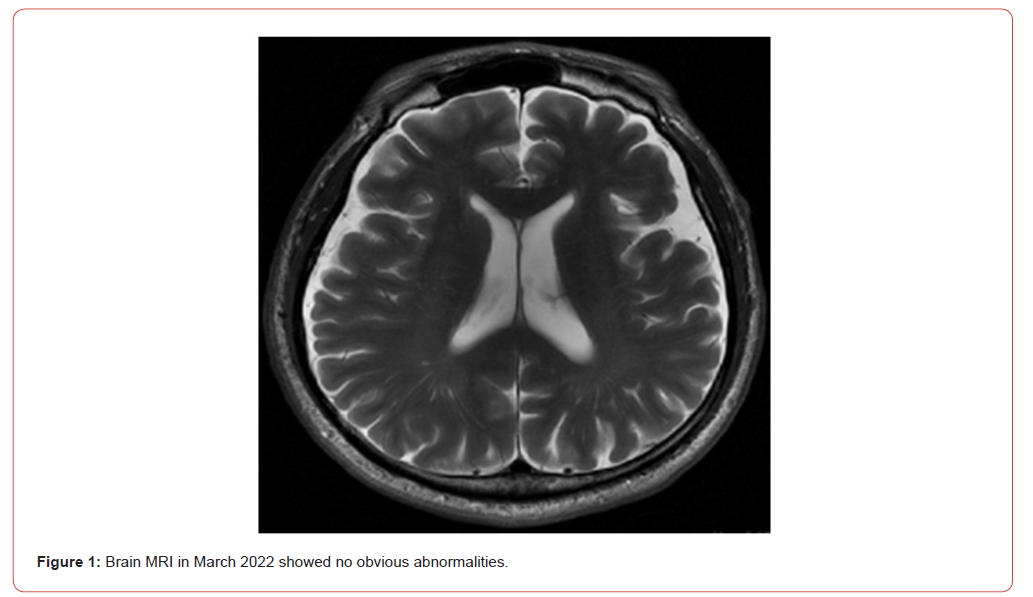
A 56-year-old man developed progressive memory, writing and calculation difficulties in 2021, aged approximately 52. He remained largely independent in daily life early in the course of the illness. In March 2022, he scored 22 on the Mini-Mental State Examination (MMSE) and 16 on the Montreal Cognitive Assessment (MoCA), with a Clinical Dementia Rating (CDR) global score of 0.5. Cerebrospinal fluid (CSF) analysis showed a reduced amyloid-β42 (Aβ42) level of 350.71 pg/mL and an Aβ42/Aβ40 ratio of 0.050, with elevated total tau (>399 pg/mL) and phosphorylated tau (176.04 pg/mL). Routine laboratory investigations, including thyroid function, vitamin B₁₂ and folate levels, were unremarkable. Brain magnetic resonance imaging (MRI) showed no abnormalities sufficient to explain his cognitive impairment (Figure 1).
These findings, together with his progressive cognitive decline, supported a clinical diagnosis of AD. Treatment with donepezil and other medications was initiated. His cognitive function and ability to perform instrumental activities of daily living continued to decline. By late 2023, he was getting lost in familiar surroundings and could no longer go out on his own. By 2024, he also needed reminders from family members to get dressed. Before lecanemab treatment was initiated in August 2024, his MMSE, MoCA and CDR scores were 5, 4 and 3, respectively. He received 10 intravenous lecanemab infusions (10 mg/kg every 2 weeks). Concomitant medications included sodium oligomannate, memantine and donepezil. Gastrointestinal symptoms, including vomiting, occurred but did not prevent further infusions.
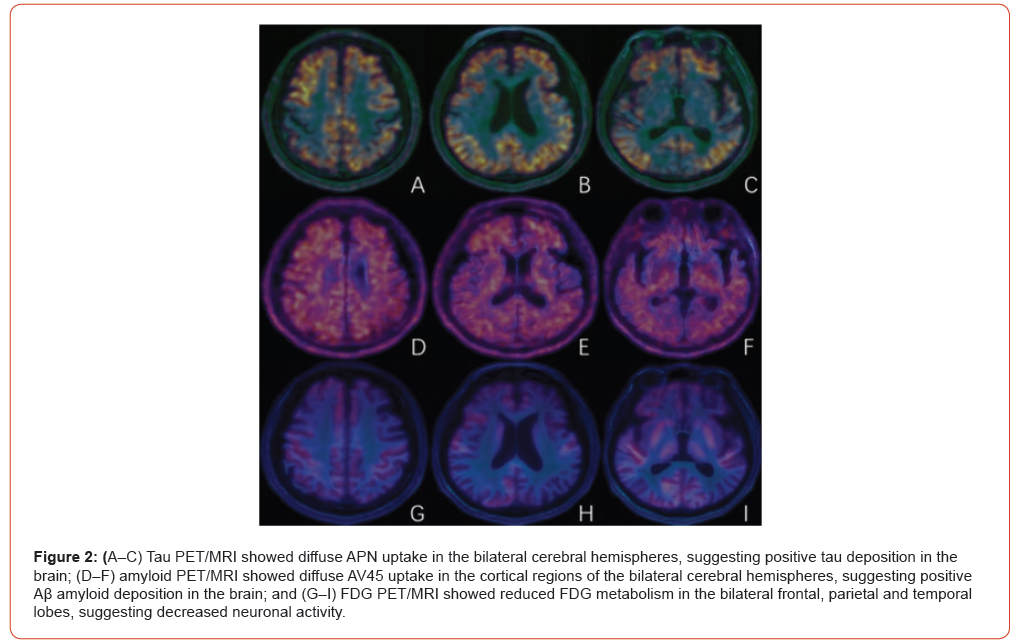
No amyloid-related imaging abnormalities were reported on follow-up MRI. At the end of treatment in January 2025, his MMSE and MoCA scores had increased from 5 to 7 and from 4 to 6, respectively, while his CDR global score remained 3. Despite these improvements in test scores, he continued to require assistance from family members with daily activities. Before dcLVA in February 2025, his MMSE, MoCA and CDR scores were 4, 3 and 3, respectively. Preoperative amyloid and tau positron emission tomography (PET) scans showed amyloid and tau deposition, while fluorodeoxyglucose (FDG) PET revealed hypometabolism in the frontal, parietal and temporal lobes bilaterally (Figure 2).
Bilateral dcLVA was performed, with two anastomoses on each side. Intraoperative fluorescence imaging demonstrated patency of the anastomoses, and no major procedure-related complications were documented during the perioperative period. Concomitant medications included sodium oligomannate and memantine. One week after surgery, his MMSE and MoCA scores had increased from 4 to 6 and from 3 to 5, respectively. His family also reported more frequent spontaneous conversation, while his CDR global score remained 3. During subsequent follow-up, however, cognitive and functional deterioration continued. By 1 month after surgery, he had developed increasing difficulty understanding speech and communicating, required assistance with dressing, and had become irritable. Approximately 5 months after surgery, he was readmitted with behavioral symptoms, including inappropriate toileting. He later became physically aggressive and verbally abusive and began damaging property.
In January 2026, his MMSE, MoCA and CDR scores were 2, 0 and 3, respectively. His behavioral symptoms improved somewhat with symptomatic treatment, but there was no improvement in cognition or daily functioning. By August 2026, he was living in a long-term care facility, and required assistance with all activities of daily living.
Discussion
This case documents modest improvements in cognitive test performance following both lecanemab and dcLVA in a patient who had progressed to severe EOAD before either intervention. Family-reported increases in spontaneous conversation after dcLVA provided an additional observation of early change. These findings merit attention, although they were not accompanied by a change in CDR global score or sustained improvement in cognition and daily functioning. Lecanemab reduces brain amyloid burden and slows cognitive and functional decline in early AD. Current appropriate use recommendations focus on patients with mild cognitive impairment or mild dementia due to AD [2,3]. This patient had already reached severe dementia when treatment began, with an MMSE score of 5 and a CDR score of 3, placing him well outside the disease severity represented in the pivotal trial. Cognitive test scores improved modestly after 10 infusions, although dependence in daily activities persisted.
Concomitant medications, the absence of a comparator and the relatively short treatment duration limit interpretation of these changes and their relationship to lecanemab. For dcLVA, available clinical evidence is largely derived from uncontrolled observational studies [4,5]. Early postoperative improvements in test scores were accompanied by family-reported increases in spontaneous conversation. The concurrence of these findings suggests modest early changes in both test performance and everyday communication. However, his CDR global score remained 3, and improvement in daily functioning was not documented. Given the concomitant medication and absence of a comparator, the contribution of dcLVA to these changes remains uncertain. Subsequent cognitive and functional deterioration indicates that the early observations were not accompanied by sustained clinical improvement.
Conclusion
This case highlights modest improvements in cognitive test scores following lecanemab and dcLVA in severe EOAD, despite subsequent cognitive and functional decline. These observations warrant further study of potential benefits and their durability in advanced disease.
Acknowledgement
We thank the medical staff at our hospital who conducted the cognitive assessment and imaging examinations.
Conflicts of Interest
The authors declare no conflicts of interest.
Funding
The authors have nothing to report.
Consent
Written informed consent for publication was obtained from the patient and his spouse (primary caregiver).
Disclosure
The authors have nothing to report.
Data Availability Statement
Data will be made available on request.
Author Contribution Statement
Xuan Ge and Wenzhang Qi collected and interpreted the clinical data. Xuan Ge drafted the manuscript. Xinyu Fang contributed to the interpretation of the clinical findings and critically revised the manuscript. Xiangrong Zhang conceived the case report, supervised its preparation, and critically revised the manuscript. All authors approved the final version submitted for publication.
References
- Sirkis DW, Bonham LW, Johnson TP, La Joie R, Yokoyama JS (2022) Dissecting the clinical heterogeneity of early-onset Alzheimer's disease. Mol Psychiatry 27(6): 2674-2688.
- Van Dyck CH, Swanson CJ, Aisen P, Bateman RJ, Chen C, et al. (2023) Lecanemab in Early Alzheimer's Disease. N Engl J Med 388(1): 9-21.
- Cummings J, Apostolova L, Rabinovici GD, Atri A, Aisen P, et al. (2023) Lecanemab: Appropriate Use Recommendations. J Prev Alzheimers Dis 10(3): 362-377.
- Lahmar T, Thuau F, Pinard G, Boutoleau-Bretonniere C, Perrot P, et al. (2026) Brain lymphatic drainage pathways, deep cervical lymphatic surgery, and current insights: A systematic review. J Prev Alzheimers Dis 13(1): 100335.
- Fu X, Zhang J, Xiao Q, Li T, Li Q, et al. (2026) Deep cervical lymphatic-venous anastomosis attenuates cognitive dysfunction and biomarker abnormalities in severe Alzheimer's disease: A prospective single-arm study. Alzheimers Dement 22(2): e71150.
-

This work is licensed under a Creative Commons Attribution-NonCommercial 4.0 International License.