


 Case Report
Longevity and Cancer: Who You Are, Where You Live, How You Live
Received Date: November 03, 2026; Published Date:November 13, 2026
Abstract
Background: Cancer remains one of the most complex diagnoses in medicine, shaped by interacting genetic, environmental, lifestyle, and
psychosocial factors. Over recent decades, the clinical picture has changed: while cancer was once viewed as uniformly fatal, many patients now live
for years with controlled disease. This review summarizes current evidence on cancer risk and its changing trajectory using a simple framework:
Who You Are (genetic and epigenetic makeup), Where You Live (environmental exposure), and How You Live (lifestyle and psychological factors).
Aim: To provide a concise, clinically relevant overview of: (1) genetic and epigenetic drivers of cancer; (2) environmental determinants of risk;
(3) the role of diet, physical activity, sleep, and stress; and (4) how modern therapies are transforming selected cancers into chronic, manageable
conditions.
Methods: We conducted a narrative literature review using PubMed, Scopus, and Cochrane Library. We included peer-reviewed articles,
systematic reviews, meta-analyses, major epidemiological studies, and current oncology guidelines published between 2000 and 2026.
Main Findings: Cancer arises through accumulated gene mutations, epigenetic dysregulation, exposure to environmental carcinogens, and
modifiable lifestyle factors. Chronic stress may further influence tumor biology via neuroendocrine and immune pathways. Modern treatmentsincluding
immune checkpoint inhibitors, targeted therapies, and cellular therapies-have substantially improved outcomes in several tumor types,
enabling long-term disease control for many patients. A Mediterranean-style diet, regular physical activity, adequate sleep, stress management,
tobacco and alcohol avoidance, and reduced exposure to established carcinogens remain the most evidence-based prevention strategies. The
tripartite framework (Who You Are, Where You Live, How You Live) offers an accessible model for communicating cancer risk, prevention, and longterm
health. Central to this evolving perspective is the concept that cancer is chronic for a growing number of patients.
Keywords:Cancer; longevity; carcinogenesis; chronic disease; immunotherapy; chronic stress; Mediterranean diet; epigenetics; telomeres; environmental carcinogens; lifestyle; neuroendocrine pathways; prevention; healthy aging
Introduction
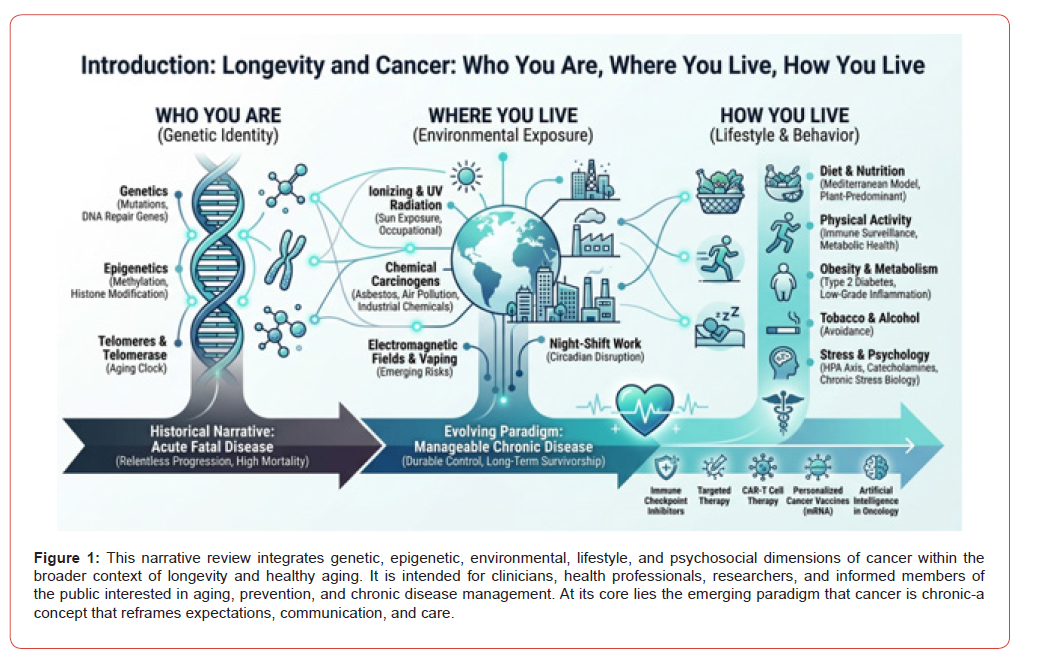
Cancer is a leading global health challenge, with approximately 20 million new cases diagnosed annually and projections approaching 30 million by 2040 [1,5,6]. Yet the story of cancer is no longer solely one of mortality. Advances in molecular oncology, immunology, and personalized medicine have transformed outcomes for many patients. Three questions capture the core determinants of cancer risk: Who are you, genetically and epigenetically? Where do you live, and what carcinogens are you exposed to? How do you live-what do you eat, how much do you sleep, how much stress do you carry? These questions form the conceptual framework of this review. Alongside this biological complexity, a significant clinical shift has occurred. For selected cancers and patient populations, cancer is increasingly managed as a chronic condition rather than an acutely fatal disease. Chronic myeloid leukemia (CML), for example, can now be controlled long term with tyrosine kinase inhibitors, allowing near-normal life expectancy for many patients [2]. In metastatic melanoma, modern immune checkpoint inhibitors have produced five-year survival rates approaching 50% or higher in some cohorts [3]. This evolution calls for a more nuanced communication about cancer diagnosis, prognosis, and survivorship (Figure 1).
Carcinogenesis: A Genetic and Epigenetic Process
The Genetic Architecture of Cancer
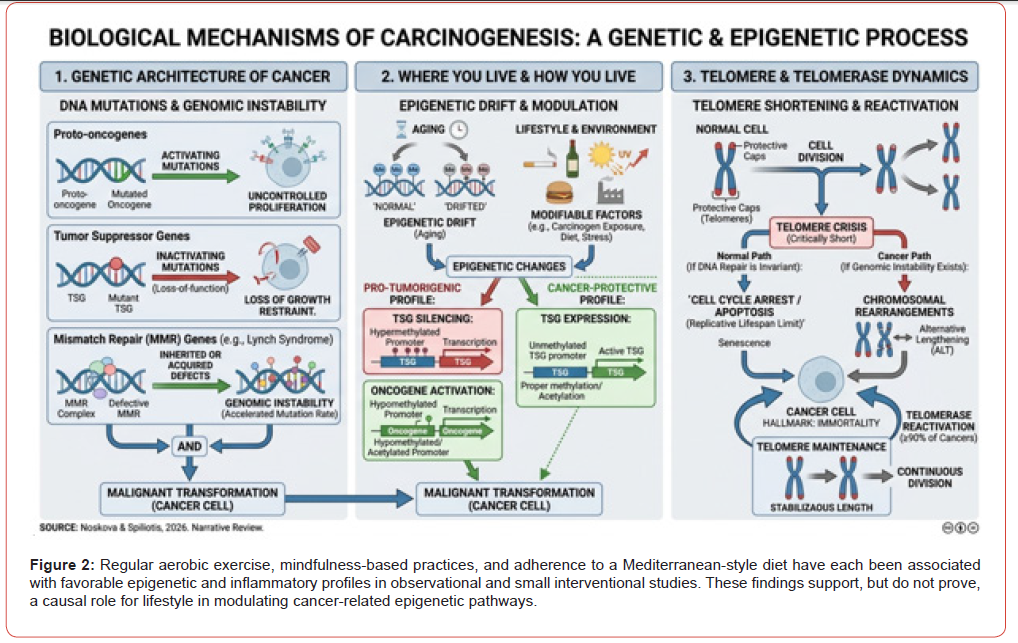
Cancer is fundamentally a disease of the genome. It develops through a multistep process in which mutations accumulate in genes that regulate cell growth, survival, and differentiation [4,7]. Two principal gene categories are involved: proto-oncogenes, which promote cell proliferation when mutated, and tumor suppressor genes, which normally restrain cell division and are inactivated in cancer [4]. DNA repair genes form a third critical category. When repair pathways are impaired-through inherited mutations, epigenetic silencing, or carcinogen exposure-genomic instability accelerates, increasing the likelihood of malignant transformation [4,8]. Lynch syndrome illustrates this mechanism: inherited defects in mismatch-repair genes (MLH1, MSH2, MSH6, PMS2) substantially elevate lifetime risk of colorectal and other cancers [9]. However, mutation alone does not fully explain carcinogenesis. Many normal cells harbor cancer-associated mutations without progressing to malignancy, highlighting the importance of epigenetic regulation-chemical modifications that determine whether genes are expressed or silenced. With aging, epigenetic patterns drift, potentially silencing protective genes and creating a permissive environment for tumor development [10].
Telomeres, Telomerase, and Aging
Telomeres-protective caps at chromosome ends-shorten with each cell division until they trigger cell-cycle arrest or apoptosis, limiting the replicative lifespan of normal cells [11,12]. In the presence of genomic instability, critically short telomeres can promote chromosomal rearrangements rather than simply halting division. Cancer cells often bypass this limit by reactivating telomerase or using alternative lengthening mechanisms (ALT). Telomerase activity is detected in the majority of human cancers, making it both a hallmark of malignant transformation and a potential therapeutic target. Lifestyle factors such as physical activity, diet, and chronic stress have been associated with telomere length and telomerase activity in observational and small interventional studies, suggesting a mechanistic link between behavior, aging, and cancer risk [11]. However, causal pathways and clinical implications remain incompletely defined.
Epigenetic Modulation by Lifestyle
Epigenetic modifications sit at the interface between environment and genome and, unlike permanent mutations, are potentially reversible. This offers a molecular rationale for cancer prevention through diet and lifestyle change [10,13]. Nutrients such as folate and vitamin B12 support one-carbon metabolism and DNA methylation. Severe deficiencies can disrupt methylation patterns, potentially activating oncogenes or silencing tumor suppressor genes, although the relationship is complex and cancer-site specific. Bioactive plant compounds-including sulforaphane, resveratrol, and curcumin-have shown favorable epigenetic effects in preclinical models and, to a lesser extent, in early clinical research (Figure 2).
Where You Live: Environmental Determinants of Cancer Risk
Ionizing and Ultraviolet Radiation
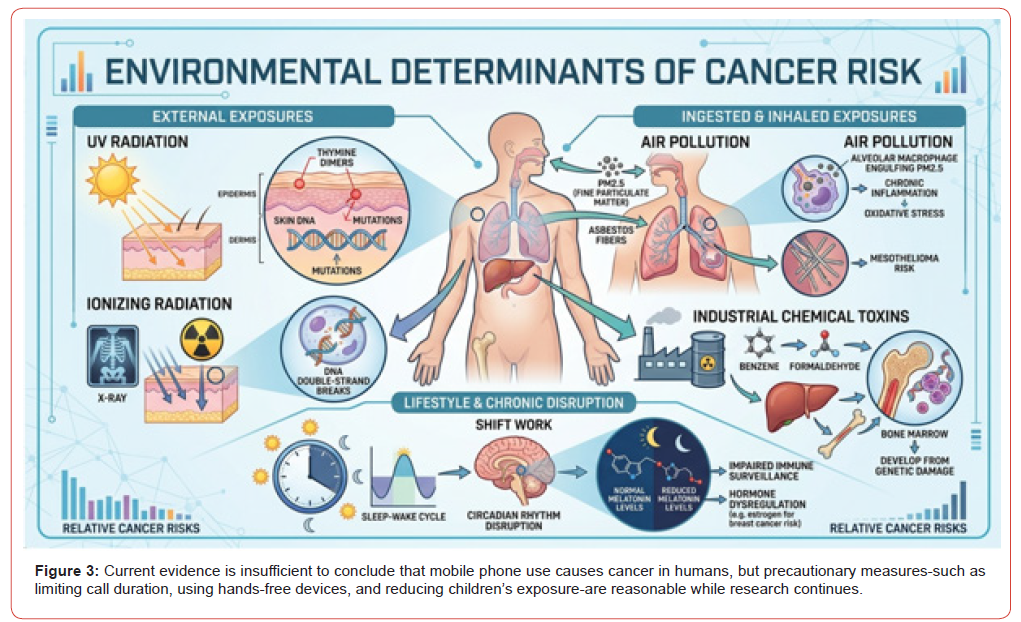
Ionizing radiation is a well-established carcinogen. Long-term follow-up of atomic bomb survivors demonstrated increased risks of solid tumors and hematologic malignancies, with particularly high relative risks for thyroid cancer and leukemia [46]. The Chernobyl disaster provided further evidence, with marked increases in pediatric thyroid cancer in exposed regions [47]. Ultraviolet (UV) radiation is the principal environmental risk factor for skin cancer. UV exposure causes characteristic DNA damage and is strongly linked to melanoma and non-melanoma skin cancers. Incidence rates of melanoma have risen substantially in many populations over recent decades, driven largely by changes in sun exposure behavior, intermittent intense exposure, and increased detection, rather than ozone depletion alone [14].
Chemical Carcinogens in the Environment
The human environment contains numerous chemical carcinogens. Established examples include: Asbestos: A proven cause of mesothelioma and lung cancer, with latency periods often exceeding 30 years [15]. Occupational cohorts with heavy exposure show markedly elevated risks. Air pollution: Fine particulate matter (PM2.5) and other pollutants are classified as carcinogenic, with associations observed for lung cancer and possibly other sites [48,16,17]. Certain industrial chemicals: Including benzene, formaldehyde, and some dioxins, which have been linked to specific cancers in occupational and environmental studies [49]. Other substances, such as triclosan, certain plasticizers, and components of household products, have shown tumor-promoting activity in animal or in vitro models, but robust human epidemiological evidence is lacking. Such findings should be interpreted cautiously and not equated with established human carcinogenicity. Nightshift work, which disrupts circadian rhythms and melatonin secretion, is classified by IARC as probably carcinogenic to humans (Group 2A), with epidemiological links primarily to breast, prostate, and colorectal cancers [18]. The magnitude of risk appears modest at the individual level but may be relevant at the population level given the large number of shift workers.
Electromagnetic Fields and Digital Exposures
The potential carcinogenicity of radiofrequency electromagnetic fields from mobile phones and wireless devices remains uncertain. Large epidemiological studies have not established a clear causal link with brain tumors, although some case–control studies have suggested associations with specific glioma subtypes among heavy, long-term users [50]. Animal studies have reported increased tumor rates under specific exposure conditions, but their relevance to typical human exposure is debated (Figure 3).
How You Live: Lifestyle Determinants of Cancer Risk and Longevity
Diet, Nutrition and the Mediterranean Model
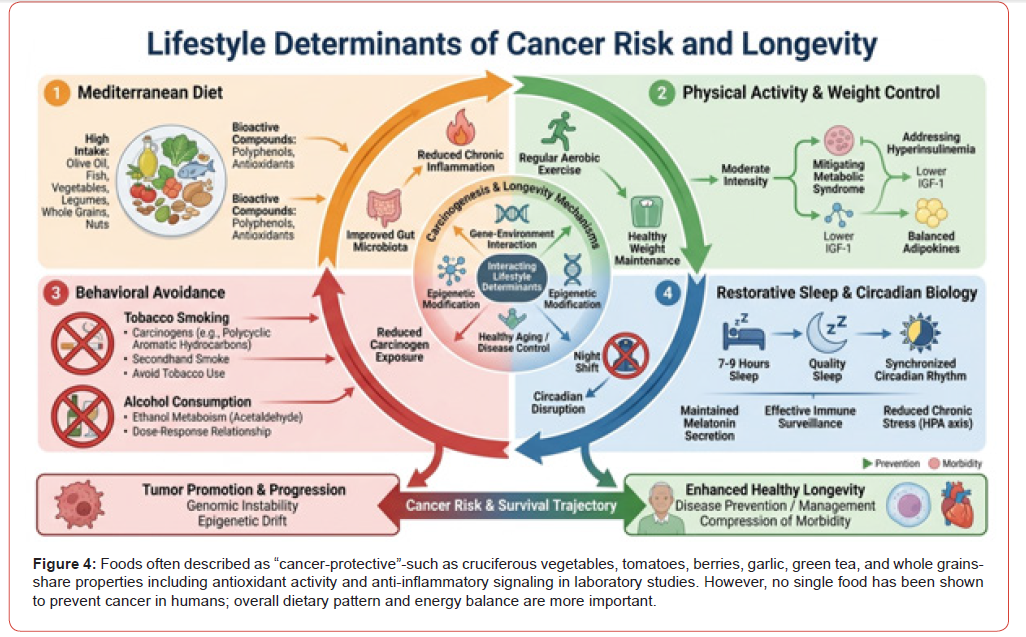
Diet is one of the most extensively studied modifiable cancer risk factors. The Mediterranean-style diet-rich in olive oil, vegetables, legumes, whole grains, nuts, and fish, with moderate wine and low intake of processed meats and refined carbohydrates-has been associated with reduced risk of several cancers and improved overall survival [19]. A 2025 nationwide observational study with mediation and subgroup analyses reported that higher adherence to the Mediterranean diet was associated with reduced overall mortality in cancer survivors, including subgroups with breast, ovarian, prostate, and gastric cancers. Proposed mechanismsincluding anti-inflammatory effects, modulation of insulin and sex hormone pathways, and changes in gut microbiota compositionare biologically plausible but have not been directly tested in this population [19,20]. Meal timing and rapid dietary transitions may also be relevant to cancer risk-for example, shifts toward Western dietary patterns have coincided with rising colorectal cancer rates in some populations-though these associations require dedicated studies and are not addressed by the Mediterranean-diet literature cited above (Figure 4).
Obesity, Metabolic Syndrome and Cancer
Obesity and type 2 diabetes share biological pathways relevant to cancer, including hyperinsulinemia, increased bioavailable insulin-like growth factors, chronic low-grade inflammation, and altered adipokine profiles [21,22]. These conditions create a protumorigenic milieu characterized by oxidative stress, impaired immune surveillance, and activation of proliferative signaling pathways. Individuals with type 2 diabetes have elevated risks of several cancers, including liver, pancreatic, endometrial, colorectal, breast, and bladder cancers, although effect sizes vary by site. A 20- year population-based study in England found that cancer mortality rates among people with type 2 diabetes have risen in older age groups even as all-cause mortality has declined, and the authors suggested that cancer may already be overtaking cardiovascular disease as the leading cause of death in this population in some high-income settings [54].
The parallels between cancer and diabetes as chronic diseases extend beyond analogy. Both require long-term management, lifestyle modification, pharmacological treatment, and regular monitoring. Both are substantially preventable through maintaining healthy weight, adhering to a Mediterranean-style diet, engaging in regular physical activity, and avoiding tobacco and excessive alcohol [21]. If diabetes can be managed as a chronic condition, so too can selected cancers-reinforcing the idea that cancer is chronic for many patients in the modern era.
Tobacco, Alcohol and Behavioral Risk Factors
Tobacco smoking remains the single most preventable cause of cancer-related mortality worldwide, responsible for approximately 19% of cancer deaths globally in 2022 [23]. Its carcinogenic burden extends beyond lung cancer to include cancers of the bladder, kidney, pancreas, cervix, esophagus, oral cavity, and others. The rise of e-cigarettes and vaping raises concerns about a new generation of nicotine-dependent individuals, although long-term cancer risks remain uncertain and are an active area of research. National data from Greece illustrate how smoking patterns have diverged by sex: smoking prevalence among Greek men has plateaued at over 60% across most generations, while prevalence among women rose later and more gradually; smoking-attributable mortality is now peaking among men (approaching 40% of all deaths) and continuing to rise among women, a pattern expected to shape lung cancer trends by sex in the coming decades [55]. Alcohol is a recognized carcinogen with a dose–response relationship for several cancers, including those of the oral cavity, pharynx, esophagus, liver, colorectum, and breast [24]. No threshold of alcohol consumption has been established as completely safe for cancer prevention, and risk increases even at low to moderate intake [24,25].
Physical Activity, Sleep and Circadian Biology
Regular moderate-intensity physical activity reduces the risk of several cancers, including colorectal, breast, endometrial, bladder, and gastric cancers, through mechanisms such as reduced adiposity, improved insulin sensitivity, enhanced immune surveillance, and favorable hormonal and inflammatory profiles [26,27]. Among cancer survivors, higher physical activity is associated with improved treatment tolerance, quality of life, and, for some tumor types, better survival [26]. Sleep quality and circadian rhythm integrity are increasingly recognized as cancer risk determinants. Disruption of circadian biology suppresses melatonin secretion, impairs immune function, and dysregulates hormones including cortisol, growth hormone, and sex steroids. Night-shift workers show modestly elevated risks of breast, prostate, and colorectal cancer, representing one of the few occupational cancer risks affecting large segments of the modern workforce [18].
The Biology of Chronic Stress: Neuroendocrine Pathways to Cancer
The Stress Response and Its Oncogenic Consequences
Psychological stress is an inevitable part of life, but chronic, unresolved stress-arising from adversity, grief, social isolation, occupational burnout, depression, or traumatic events-engages neuroendocrine, immune, inflammatory, and behavioral pathways that may influence tumor progression and treatment-related outcomes; however, evidence that stress independently causes cancer remains inconsistent [28,51]. Acute, time-limited stress can activate protective immune responses, whereas chronic stress tends to dysregulate them. Two principal neuroendocrine systems mediate the chronic stress response: the hypothalamic–pituitary– adrenal (HPA) axis, which drives sustained cortisol secretion, and the sympathetic nervous system, which elevates circulating catecholamines (epinephrine and norepinephrine) [28]. Chronically elevated cortisol can suppress natural killer cell activity, reduce helper T-cell counts, impair antibody production, and promote an inflammatory, immunosuppressive tumor microenvironment [28,51].
Elevated catecholamines can directly stimulate tumor cell proliferation, survival, angiogenesis, invasiveness, and metastatic potential in preclinical models [51]. Emerging work in cancer neuroscience shows that tumors can recruit nerve fibers and engage in bidirectional communication with the nervous system, establishing neural–tumor crosstalk that may influence tumor behavior [44,45]. This field provides a concrete biological basis for the long-suspected link between the nervous system and cancer, although clinical implications are still being defined.
Clinical Evidence Linking Stress to Cancer Outcomes
Observational studies have reported associations between chronic stress, major life events, and cancer incidence or progression, although results are heterogeneous and confounded by behavioral and socioeconomic factors [28,51]. Mechanistic and preclinical work suggests that chronic stress activates neuroendocrine and immune pathways relevant to disease progression in several tumor types, including pancreatic and ovarian cancer, but well-controlled prospective human studies remain limited. Chronic stress has also been associated with increased risk of recurrence and metastasis in some tumor types, potentially via impaired DNA repair, enhanced angiogenesis, and increased lymphatic or hematogenous spread. Moreover, a cancer diagnosis itself generates psychological distress, which, if unaddressed, can contribute to anxiety, depression, and further immune compromise, creating a bidirectional feedback loop between psychological state and disease outcome [28].
Psychosocial Interventions and Biological Outcomes
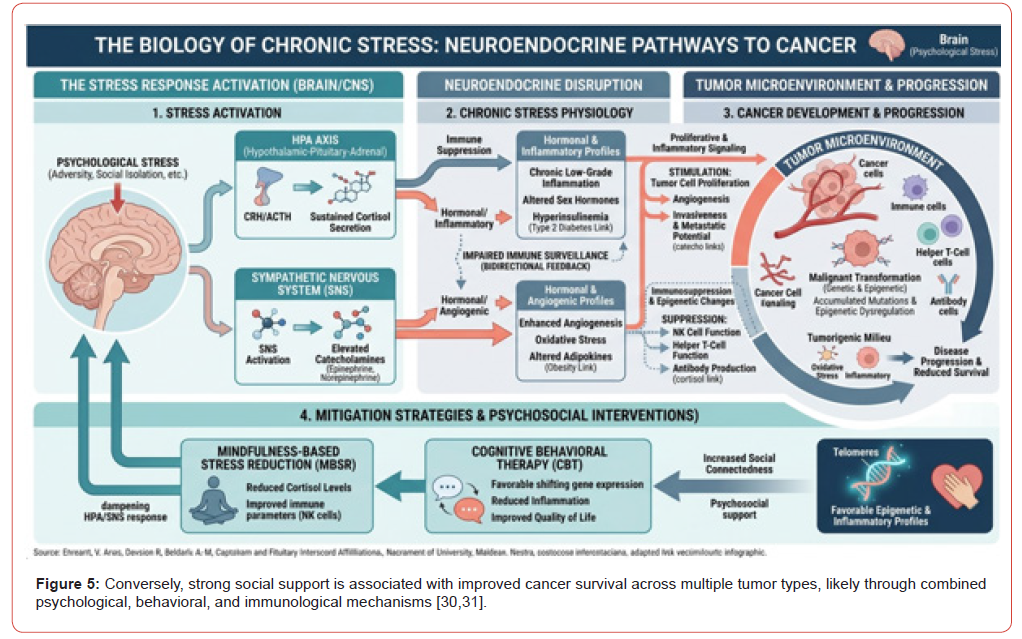
Given the measurable biological effects of chronic stress, there is a strong rationale for integrating psychosocial support into standard oncological care. Cognitive behavioral therapy (CBT), mindfulness-based stress reduction, and structured social support programs have demonstrated physiological benefits in cancer patients, including reduced cortisol levels, improved natural killer cell function, decreased inflammation, and favorable shifts in gene expression in some studies. A 2023 systematic review and metaanalysis of psychosocial interventions in breast cancer patientsbased on eight studies and 366 participants-found significant reductions in salivary and plasma cortisol following structured mindfulness and cognitive-behavioral programs [29]. The review measured cortisol as a biological outcome only; it did not assess immune function or survival, so these findings should not be read as evidence that reducing cortisol improves cancer control. They do, however, support attending to the psychological wellbeing of cancer patients as part of comprehensive care. Social connectedness independently influences cancer risk and survival. Social isolation activates similar biological stress pathways as other chronic stressors, elevating inflammation and suppressing immune function (Figure 5).
Cancer as a Chronic Disease: The Paradigm Shift
The Historical Narrative and Its Transformation
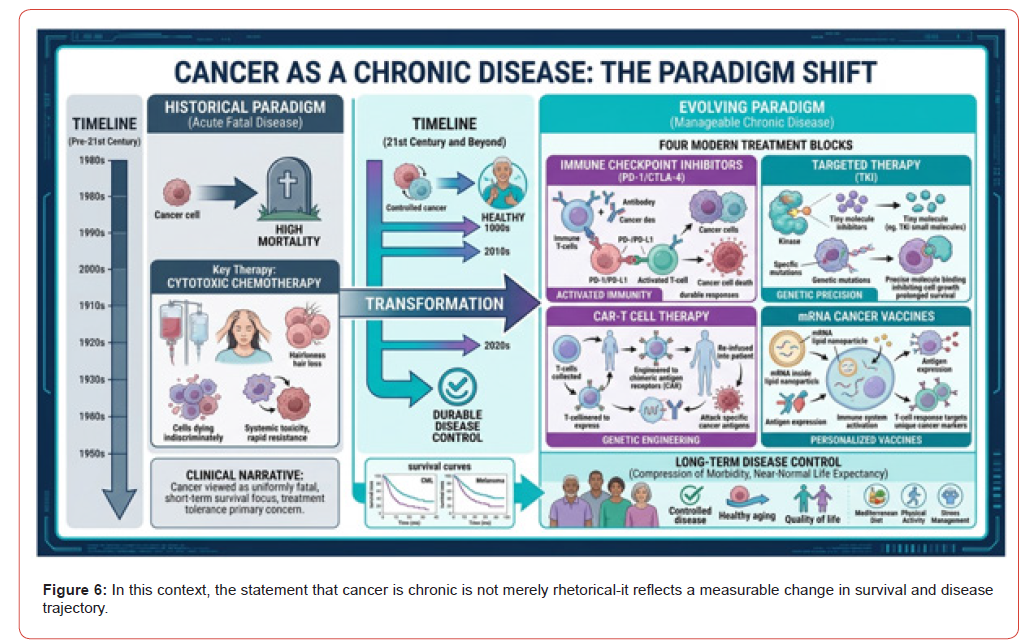
For much of the twentieth century, cancer was experienced and communicated as a death sentence-a disease characterized by relentless progression, treatment toxicity, and inevitable mortality. This narrative, while historically grounded, has been progressively dismantled by decades of investment in molecular oncology, immunology, and clinical pharmacology. The conceptual transformation of cancer from an acutely fatal disease into a chronic, manageable condition parallels earlier shifts in HIV/AIDS and diabetes. Just as patients with type 2 diabetes manage their condition through consistent treatment and lifestyle modification to achieve near-normal life expectancy, an increasing proportion of cancer patients are achieving durable disease control measured in years or decades. The parallels extend to the management framework itself: both conditions require long-term monitoring, adherence to complex treatment regimens, lifestyle optimization, and multidisciplinary care coordination [32]. However, it is crucial to emphasize that this chronic-disease model applies to selected cancers and patient populations, not to cancer as a whole. Many tumors remain rapidly fatal despite modern therapy, and others are curable with finite treatment. Even so, the paradigm that cancer is chronic is reshaping how clinicians, patients, and societies think about the disease.
Immunotherapy and Targeted Therapy: The Evidence Base
Immune checkpoint inhibitors have substantially altered survival outcomes in several advanced cancers. In metastatic melanoma, five-year survival has increased from approximately 10–20% in the pre-immunotherapy era to around 50% or higher with current combination regimens in some cohorts [3]. This transformation is among the most significant improvements ever recorded in oncology. In non-small cell lung cancer, immune checkpoint inhibitors have produced long-term remission in a subset of patients who previously would have survived only months. For specific genetically defined subtypes, targeted therapies and antibody–drug combinations have significantly prolonged progression-free and overall survival [33]. In a separate disease context, sequencing checkpoint immunotherapy before targeted therapy, rather than the reverse, has shown improved overall survival in BRAF-mutant melanoma [52]. Chimeric antigen receptor T-cell (CAR-T) therapy, which reprograms a patient’s own immune cells to target cancer, has produced durable remissions in selected hematologic malignancies; five-year follow-up of one pivotal trial in refractory large B-cell lymphoma supports its curative potential in a subset of patients, though long-term outcomes vary by disease, product, and prior treatment [34].
Chronic myeloid leukemia treated with BCR::ABL1 tyrosine kinase inhibitors has become a paradigmatic example of oncologic chronification: many patients achieve near-normal life expectancy, and some eventually attain treatment-free remission [2]. Personalized neoantigen vaccines, including mRNA-based approaches, have shown encouraging early clinical results in reducing recurrence, but remain investigational and require confirmation in larger phase 3 studies [35]. Artificial intelligence models are being developed to predict immunotherapy response and guide treatment selection, although most remain in early validation stages and are not yet ready for routine clinical use [32,43]. Together, these developments establish cancer, for a growing number of patients and tumor types, as a condition requiring long-term management rather than a single curativeintent intervention. This shift reshapes public communication about cancer, reduces fatalism, and creates new imperatives for health systems to organize around long-term cancer care pathways [32] (Figure 6).
Prevention, Primary Intervention, and Healthy Longevity
Population-Level Prevention Strategies
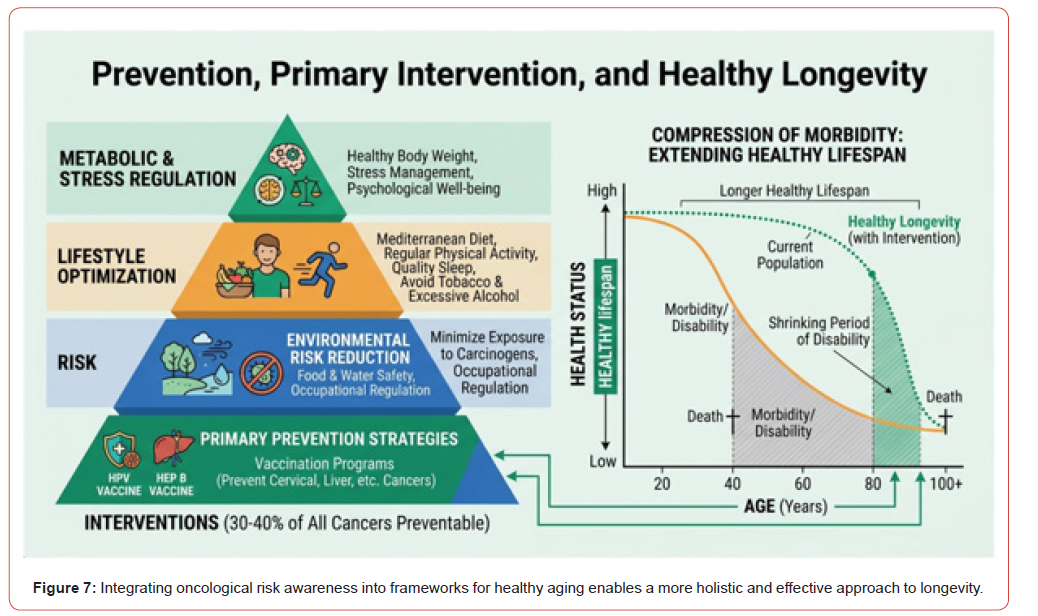
Despite therapeutic advances, prevention remains the highestimpact strategy for reducing cancer burden. Leading organizations estimate that approximately 30–40% of all cancers are preventable through modification of known risk factors [36]. These include obesity (linked to at least 13 cancer types), physical inactivity, tobacco use, alcohol consumption, poor dietary patterns, and exposure to specific carcinogens. Effective prevention requires intervention at multiple levels: individual behavior change, healthcare system promotion of preventive practices, regulation of carcinogen exposure in food, water, cosmetics, and workplaces, and public health campaigns. Countries with strong tobacco control legislation, food safety regulation, and cancer screening programs consistently achieve lower cancer incidence and mortality than those lacking these infrastructures [36]. Vaccination represents a particularly effective cancer prevention strategy. The human papillomavirus (HPV) vaccine prevents the majority of cervical cancer cases and is increasingly recognized as protective against cancers of the oropharynx, anus, vulva, and penis [37,38]. The hepatitis B vaccine prevents hepatocellular carcinoma by eliminating its principal viral cause [39].
The Hallmarks of Healthy Longevity
The science of longevity has converged on a shared set of biological and behavioral determinants that promote healthy aging and reduce the risk of chronic disease, including cancer. These include maintenance of metabolic health (healthy body weight, normal glycemia and lipid profiles), regular moderate physical activity, 7–9 hours of quality sleep, social connectedness and psychological well-being, adherence to a Mediterranean or plantpredominant diet, avoidance of tobacco and excessive alcohol, active management of chronic stress, and minimized exposure to established environmental carcinogens [36]. The concept of “compression of morbidity”-achieving a longer healthy lifespan with a shorter period of disability before death-represents the ultimate goal of longevity medicine [40]. Cancer prevention and management are central to this goal, as cancer and its treatment constitute a major source of morbidity and disability in older populations (Figure 7).
Discussion
The evidence reviewed here supports a unified framework for understanding cancer through the tripartite lens of genetic identity (Who You Are), environmental exposure (Where You Live), and behavioral choices (How You Live). No single dimension operates in isolation: genetic predisposition amplifies environmental vulnerability; environmental exposures produce epigenetic changes that modulate gene expression; and lifestyle choices can either mitigate or amplify both genetic and environmental risk. Chronic stress operates across all three domains-accelerating carcinogenesis in preclinical models, impairing immune surveillance, and undermining the behavioral practices that provide protection [28]. The emerging view of cancer as a chronic, manageable disease for selected patients represents one of the most significant conceptual advances in modern oncology. It acknowledges both genuine therapeutic breakthroughs and the continued requirement for sustained medical management, lifestyle optimization, and psychological support.
The comparison to diabetes is instructive but should not be overgeneralized: both conditions share chronic inflammation and metabolic dysregulation as core mechanisms in some contexts; both are increasingly manageable with modern therapeutics; and both are substantially preventable through lifestyle modification. Yet characterizing cancer as chronic does not minimize the burden it places on patients, families, and health systems. Instead, it reframes expectations and empowers patients to engage actively in their care. Several areas of uncertainty merit acknowledgment. The strength of evidence linking specific environmental factorssuch as low-level dioxin exposure, certain cosmetic ingredients, and electromagnetic fields-to cancer risk varies considerably, with some associations supported by large epidemiological studies and others resting primarily on mechanistic or preclinical data. The relative contribution of genetics versus environment also differs substantially by tumor type, complicating uniform recommendations. And the optimal integration of psychosocial interventions into standard cancer care pathways remains incompletely defined, even as the underlying biological rationale is increasingly recognized.
Looking forward, several developments may further reshape the cancer landscape. Liquid biopsy technologies, which detect circulating tumor DNA in blood samples, are already used clinically for detecting residual disease, monitoring treatment response, and identifying recurrence [41,42]; prospective screening studies in asymptomatic adults suggest that multi-cancer blood tests may also contribute to earlier diagnosis, although their sensitivity for early-stage disease and their effect on outcomes are still being established [53]. Artificial intelligence is demonstrating increasing accuracy in cancer risk prediction, treatment selection, and outcome forecasting, although most tools remain in development [43]. Personalized mRNA cancer vaccines may help prevent recurrence in patients who have achieved remission. And the growing field of cancer neuroscience-elucidating bidirectional communication between the nervous system and the tumor microenvironment is opening new therapeutic avenues targeting this connection [28,32,44,45]. Through all these advances, the paradigm that cancer is chronic continues to gain empirical support.
Conclusion
Cancer is one of the most complex biological phenomena in human experience, arising at the intersection of genetic predisposition, environmental exposure, lifestyle behavior, and psychological state. The tripartite framework-Who You Are, Where You Live, How You Live-provides an accessible yet scientifically grounded model for communicating cancer risk, prevention, and management. Perhaps the most important message of contemporary oncology is this: for selected cancers and patient populations, cancer is chronic. Like diabetes, it may require long-term management, lifestyle integration, pharmacological innovation, and psychological resilience. Modern immunotherapy, targeted therapy, CAR-T cell therapy, and emerging personalized vaccines have transformed the survival landscape for numerous tumor types, enabling patients to live years or decades with controlled disease. The comparison to diabetes is not merely rhetorical-it is a biologically grounded reframing that can reduce stigma, empower patients, and align oncological care with established principles of chronic disease management.
At the same time, it must not obscure the fact that many cancers remain rapidly fatal or that cure remains the goal whenever achievable. Chronic stress represents an underappreciated, modifiable cancer risk factor. Through sustained activation of neuroendocrine stress pathways, it may suppress immune surveillance, promote oncogenic signaling, and remodel the tumor microenvironment in ways that facilitate cancer development and progression. Integrating stress management, social support, and psychological well-being into cancer prevention and care is not ancillary to oncology-it is oncology. Healthy longevity in the cancer era requires a comprehensive, multidimensional approach: genetic awareness and appropriate screening, avoidance of established environmental carcinogens, adherence to Mediterranean dietary patterns, regular physical activity, restorative sleep, robust social connections, and active management of chronic stress. These are not merely lifestyle recommendations-they are biologically grounded cancer prevention strategies supported by a growing evidence base. The aspiration for every individual is not merely a longer life, but a longer life lived with vitality, dignity, and freedom from preventable disease.
Conflict of Interest
The authors declare no conflict of interest.
Funding
This research received no external funding
Acknowledgment
None.
References
- Bray F, Laversanne M, Sung H, Jacques F, Rebecca LS, et al. (2024) Global cancer statistics 2022: GLOBOCAN estimates of incidence and mortality worldwide for 36 cancers in 185 countries. CA Cancer J Clin 74(3): 229-263.
- Hochhaus A, Larson RA, Guilhot F, Jerald PR, Susan B, et al. (2017) Long-term outcomes of imatinib treatment for chronic myeloid leukemia. N Engl J Med 376(10): 917-927.
- Larkin J, Chiarion-Sileni V, Gonzalez R, Jean JG, Piotr R, et al. (2019) Five-year survival with combined nivolumab and ipilimumab in advanced melanoma. N Engl J Med 381(16): 1535-1546.
- Hanahan D, Weinberg RA (2011) Hallmarks of cancer: the next generation. Cell 144(5): 646-674.
- Siegel RL, Giaquinto AN, Jemal A (2024) Cancer statistics, 2024. CA Cancer J Clin 74(1): 12-49.
- Filho AM, Laversanne M, Ferlay J, Murielle C, Marion P, et al. (2025) The GLOBOCAN 2022 cancer estimates: data sources, methods, and a snapshot of the cancer burden worldwide. Int J Cancer 156(7): 1336-1346.
- Hanahan D (2022) Hallmarks of Cancer: New Dimensions. Cancer Discov 12(1): 31-46.
- Jackson SP, Bartek J (2009) The DNA-damage response in human biology and disease. Nature 461(7267): 1071-1078.
- Lynch HT, de la Chapelle A (2003) Hereditary colorectal cancer. N Engl J Med 348(10): 919-932.
- Esteller M (2008) Epigenetics in cancer. N Engl J Med 358(11): 1148-1159.
- Shay JW, Wright WE (2019) Telomeres and telomerase: three decades of progress. Nat Rev Genet 20(5): 299-309.
- Blackburn EH, Epel ES, Lin J (2015) Human telomere biology: a contributory and interactive factor in aging, disease risks, and protection. Science 350(6265): 1193-1198.
- Baylin SB, Jones PA (2016) Epigenetic determinants of cancer. Cold Spring Harb Perspect Biol 8(9): a019505.
- (2012) IARC Monographs on the Evaluation of Carcinogenic Risks to Humans. Radiation. Volume 100D. Lyon, France: International Agency for Research on Cancer.
- Straif K, Benbrahim-Tallaa L, Baan R, Yann G, Béatrice S, et al. (2009) A review of human carcinogens-Part C: metals, arsenic, dusts, and fibres. Lancet Oncol 10(5): 453-454.
- Turner MC, Krewski D, Pope CA, Chen Y, Gapstur SM, et al. (2011) Long-term ambient fine particulate matter air pollution and lung cancer in a large cohort of never-smokers. Am J Respir Crit Care Med 184(12): 1374-1381.
- Coleman NC, Ezzati M, Marshall JD, Robinson AL, Burnett RT, et al. (2021) Fine particulate matter air pollution and mortality risk among US cancer patients and survivors. JNCI Cancer Spectr 5(1): pkab001.
- (2020) IARC Monographs on the Identification of Carcinogenic Hazards to Humans: Night Shift Work. Volume 124. Lyon, France: International Agency for Research on Cancer.
- Zha B, Dou L, Zhang C, He S, Wang G (2025) Adherence to the Mediterranean diet and mortality in cancer survivors: a nationwide study with mediation and subgroup analyses. Front Nutr 12: 1607522.
- Gopalakrishnan V, Helmink BA, Spencer CN, Reuben A, Wargo JA (2018) The influence of the gut microbiome on cancer, immunity, and cancer immunotherapy. Cancer Cell 33(4): 570-580.
- Giovannucci E, Harlan DM, Archer MC, Richard MB, Susan MG, et al. (2010) Diabetes and cancer: a consensus report. Diabetes Care 33(7):1674-85.
- Lauby-Secretan B, Scoccianti C, Loomis D, Grosse Y, Bianchini F, et al. (2016) Body fatness and cancer-viewpoint of the IARC Working Group. N Engl J Med 375(8): 794-798.
- GBD 2019 Tobacco Collaborators (2021) Spatial, temporal, and demographic patterns in prevalence of smoking tobacco use and attributable disease burden in 204 countries and territories, 1990-2019: a systematic analysis from the Global Burden of Disease Study 2019. Lancet 397(10292): 2337-2360.
- (2010) IARC Monographs on the Evaluation of Carcinogenic Risks to Humans. Volume 96: Alcohol Consumption. Lyon: IARC.
- Rumgay H, Shield K, Charvat H, Pietro F, Bundit S, et al. (2021) Global burden of cancer in 2020 attributable to alcohol consumption: a population-based study. Lancet Oncol 22(8): 1071-1080.
- Moore SC, Lee IM, Weiderpass E, Peter TC, Joshua NS, et al. (2016) Association of leisure-time physical activity with risk of 26 types of cancer in 1.44 million adults. JAMA Intern Med 176(6): 816-825.
- Friedenreich CM, Ryder-Burbidge C, McNeil J (2021) Physical activity, obesity and sedentary behavior in cancer etiology: epidemiologic evidence and biologic mechanisms. Mol Oncol 15(3): 790-800.
- Hong H, Ji M, Lai D (2021) Chronic stress effects on tumor: pathway and mechanism. Front Oncol 11: 738252.
- Mészáros Crow E, López-Gigosos R, Mariscal López E, Marina AS, Natalia García C, et al. (2023) Psychosocial interventions reduce cortisol in breast cancer patients: systematic review and meta-analysis. Front Psychol 14: 1148805.
- Pinquart M, Duberstein PR (2010) Associations of social networks with cancer mortality: a meta-analysis. Crit Rev Oncol Hematol 75(2): 122-137.
- Holt-Lunstad J, Smith TB, Baker M, Harris T, Stephenson D (2015) Loneliness and social isolation as risk factors for mortality: a meta-analytic review. Perspect Psychol Sci 10(2): 227-237.
- Scheffler RM (2019) Is cancer becoming a chronic disease? J Natl Cancer Inst Monogr 2019(54): 111-115.
- Wu Y, Yu G, Jin K, Qian J (2024) Advancing non-small cell lung cancer treatment: the power of combination immunotherapies. Front Immunol 15: 1349502.
- Neelapu SS, Jacobson CA, Ghobadi A, David BM, Lazaros JL, et al. (2023) Five-year follow-up of ZUMA-1 supports the curative potential of axicabtagene ciloleucel in refractory large B-cell lymphoma. Blood 141(19): 2307-2315.
- Weber JS, Carlino MS, Khattak A, Tarek M, George A, et al. (2024) Individualised neoantigen therapy mRNA-4157 (V940) plus pembrolizumab versus pembrolizumab monotherapy in resected melanoma (KEYNOTE-942): a randomised, phase 2b study. Lancet 403(10427): 632-644.
- (2018) World Cancer Research Fund/American Institute for Cancer Research. Diet, Nutrition, Physical Activity and Cancer: A Global Perspective. Third Expert Report.
- Bergman H, Henschke N, Arevalo-Rodriguez I, Brian SB, Emma JC, et al. (2025) Human papillomavirus (HPV) vaccination for the prevention of cervical cancer and other HPV-related diseases: a network meta-analysis. Cochrane Database Syst Rev 11(11): CD015364.
- Lei J, Ploner A, Elfström KM, Jiangrong W, Adam R, et al. (2020) HPV vaccination and the risk of invasive cervical cancer. N Engl J Med 383(14): 1340-1348.
- Chang MH, You SL, Chen CJ, Chun JL, Chuan ML, et al. (2009) Decreased incidence of hepatocellular carcinoma in hepatitis B vaccinees: a 20-year follow-up study. J Natl Cancer Inst 101(19): 1348-1355.
- Fries JF (1980) Aging, natural death, and the compression of morbidity. N Engl J Med 303(3): 130-135.
- Wan JCM, Massie C, Garcia-Corbacho J, Florent M, James DB, et al. (2017) Liquid biopsies come of age: towards implementation of circulating tumour DNA. Nat Rev Cancer 17(4): 223-238.
- Elazezy M, Joosse SA (2018) Techniques of using circulating tumor DNA as a liquid biopsy component in cancer management. Comput Struct Biotechnol J 16: 370-378.
- Zhang C, Xu J, Tang R, Yang J, Wang W, et al. (2023) Novel research and future prospects of artificial intelligence in cancer diagnosis and treatment. J Hematol Oncol 16(1): 114.
- Monje M, Borniger JC, Dsilva NJ, Benjamin D, Peter BD, et al. (2020) Roadmap for the emerging field of cancer neuroscience. Cell 181(2): 219-222.
- Hanahan D, Monje M (2023) Cancer hallmarks intersect with neuroscience in the tumor microenvironment. Cancer Cell 41(3): 573-580.
- Grant EJ, Brenner A, Sugiyama H, Ritsu S, Atsuko S, et al. (2017) Solid Cancer Incidence among the Life Span Study of Atomic Bomb Survivors: 1958-2009. Radiat Res 187(5): 513-537.
- Cardis E, Kesminiene A, Ivanov V, Irina M, Yoshisada S, et al. (2005) Risk of thyroid cancer after exposure to 131I in childhood. J Natl Cancer Inst 97(10): 724-732.
- (2016) IARC Monographs on the Evaluation of Carcinogenic Risks to Humans. Outdoor Air Pollution. Volume 109. Lyon, France: International Agency for Research on Cancer.
- (2012) IARC Monographs on the Evaluation of Carcinogenic Risks to Humans. Chemical Agents and Related Occupations. Volume 100F. Lyon, France: International Agency for Research on Cancer.
- (2013) IARC Monographs on the Evaluation of Carcinogenic Risks to Humans. Non-Ionizing Radiation, Part 2: Radiofrequency Electromagnetic Fields. Volume 102. Lyon, France: International Agency for Research on Cancer.
- Antoni MH, Lutgendorf SK, Cole SW, Firdaus SD, Sandra ES, et al. (2006) The influence of bio-behavioural factors on tumour biology: pathways and mechanisms. Nat Rev Cancer 6(3): 240-248.
- Atkins MB, Lee SJ, Chmielowski B, Ahmad AT, Gary IC, et al. (2023) Combination dabrafenib and trametinib versus combination nivolumab and ipilimumab for patients with advanced BRAF-mutant melanoma: The DREAMseq Trial-ECOG-ACRIN EA6134. J Clin Oncol 41(2): 186-197.
- Schrag D, Beer TM, McDonnell CH, Lincoln N, Christina AD, et al. (2023) Blood-based tests for multicancer early detection (PATHFINDER): a prospective cohort study. Lancet 402(10409): 1251-1260.
- Ling S, Zaccardi F, Issa E, Davies MJ, Khunti K, et al. (2023) Inequalities in cancer mortality trends in people with type 2 diabetes: 20-year population-based study in England. Diabetologia 66(4): 657-673.
- Christopoulou R, Mavropoulos G, Voucharas G (2022) The Greek smoking epidemic from a life-course perspective. J Public Health (Oxf) 44(4): e479-e486.
-

This work is licensed under a Creative Commons Attribution-NonCommercial 4.0 International License.