


 Case Report
Hydroxyurea-Induced Bilateral Foot Ulcers and Toe Gangrene in Primary Myelofibrosis: A Rare Case Report
Received Date: May 29, 2026; Published Date: June 04, 2025
Abstract
Hydroxyurea, a cytostatic drug used in the management of myeloproliferative disorders, inhibits ribonucleotide reductase. Hydroxyurea is well tolerated in most patients but can cause severe complications, such as leg ulcers. A 63-year-old male patient with primary myelofibrosis presented with bilateral foot ulcers and gangrene of the toes following 3-4 months of hydroxyurea treatment. The patient had severe pain and resistant ulcers to treatment. Clinical presentation was necrotic changes, gangrene, nail pigmentation, and xerosis. Laboratory presentation was moderate anemia (Hb: 8.7 g/dL), leukopenia (2,700/mm³), and JAK2 V617F mutation. Doppler studies were positive for atherosclerotic calcified wall thickening, and CT angiography was positive for bilateral peripheral arterial disease. Hydroxyurea was withdrawn. Management consisted of antibiotics, antiplatelet therapy, vasodilators, and supportive care. Thalidomide was started for management of the myeloproliferative disorder. This case is an infrequent and severe complication of initial hydroxyurea therapy in the form of damage to microcirculation due to leukocytoclastic vasculitis and cytotoxicity. Quarterly follow-up of dermatology and early intervention are important to avoid complications and manage alternative treatments.
Keywords: Hydroxyurea; myelofibrosis; antibiotics; hematologic; venous
Introduction
Hydroxyurea has been a first-line cytostatic agent in the treatment of chronic myeloproliferative disorders (MPDs) like polycythemia vera, essential thrombocythemia, and chronic myeloid leukemia for the past 40 years [1]. Its primary mechanism of action is the inhibition of the enzyme ribonucleotide reductase, an essential enzyme in the synthesis of deoxyribonucleotides, thereby inhibiting DNA synthesis in proliferating cells [2]. Although hydroxyurea overall is well tolerated, it can nevertheless cause a range of side effects. The hematologic side effects, such as megaloblastic change in red cell production, are commonly seen but are usually mild, reversible, and infrequently requiring withdrawal of the drug. Non-hematologic side effects are less common and can include fatigue, gastrointestinal disturbance, low-grade pyrexia, and headache. On long-term treatment, Cutaneous manifestations typically occur, ranging from xerosis, diffuse hyperpigmentation, and alopecia to more chronic ones such as lichenification, atrophy of the skin, and, less commonly, dermatomyositis-like lesions or cutaneous neoplasms [2,3].
Less commonly seen but clinically significant dermatological complication is the occurrence of painful leg ulcers, particularly in the malleolar area [2]. Lower limb skin ulcers are frequently complicated by vascular insufficiencies, potentially arterial, venous, or secondary to metabolic disturbances such as diabetes mellitus. In MPDs and SCD, however, the disease-related microcirculatory abnormality and vascular alterations can also contribute to ulcer formation and development [4]. The case report emphasizes the importance of increased clinical suspicion of cutaneous toxicities in long-term hydroxyurea-treated patients. Drug-induced ulcers, like those on hydroxyurea, must be maintained in differential diagnoses, particularly if lesions are indolent on optimal wound management [5].
Case Report
This case study explores the clinical manifestations of a 63-yearold male patient, who was non-diabetic and was recently admitted to the hospital due to progressively worsening symptoms, including pain and burning sensations in both limbs. These symptoms developed gradually and intensified. The patient also presented with open foot sores. A follow-up consultation was conducted for this patient, diagnosed with primary myelofibrosis and having a history of coronary artery disease identified after undergoing percutaneous transluminal coronary angioplasty (PTCA) in 2010. Additionally, the patient had a history of hypothyroidism, which led to a mutation in thyroid antiglobulin 2 and presented with bilateral foot ulcers and gangrene. These ulcers were attributed to the administration of hydroxyurea, a medication prescribed for his bone marrow condition since his diagnosis of primary myelofibrosis in 2010. The patient exhibited leg ulcers, nail discoloration, and xerosis that were unresponsive to conventional treatments. Upon examination, the leg ulcers were painful and difficult to treat.
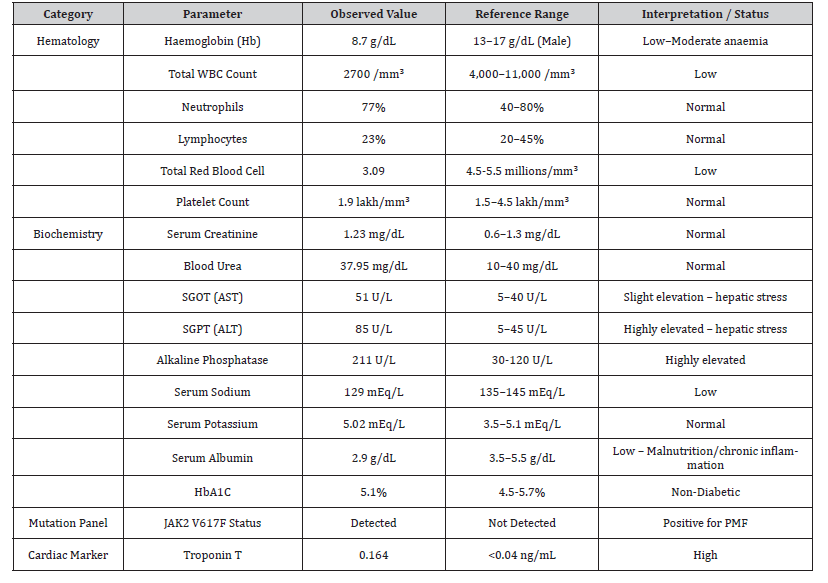
The patient exhibited classic cutaneous side effects of hydroxyurea, including nail discoloration and skin dryness. Hydroxyurea is commonly prescribed for myeloproliferative disease, and the patient had been taking this medication for approximately 3-4 months. The patient developed ulcers on both legs, a rare complication of hydroxyurea. Examination revealed severe necrotic changes in both feet, with gangrene affecting multiple toes. The ulcers demonstrated deep tissue damage and were surrounded by erythema and edema on examination. The gangrenous areas were black and dry, indicating tissue necrosis. The ulcers were tender to palpation, and the patient experienced limited range of motion due to pain. The necessary laboratory tests are listed in Table 1. Additionally, several further tests were conducted, including a bilateral lower limb arterial and venous Doppler study where arterial doppler test revealed atherosclerotic calcified wall thickening in all the arteries of both the lower limbs.
Moreover, in the common femoral, superficial femoral, popliteal, and posterior tibial arteries located on the left side, a biphasic flow was observed, whereas monophasic flow was observed in the anterior tibial and dorsalis pedis arteries situated on the left side. And also, multiple enlarged lymph nodes were observed in both inguinal regions. Venous doppler suggest no sign of DVT. However, CT angiography revealed features suggestive of atherosclerotic infrapopliteal peripheral arterial disease bilaterally. Pharmacological therapy includes INJ. MONOCEF 1 gm IV BD, INJ. PANTOP 40 mg IV OD, INJ. EMSET 4 mg IV TDS, INJ. NS 60ml/hr IV, INJ. DYNAPAR 1 AMP IV, INJ. CLINDAMYCIN 600 mg IV TDS, TAB. AMOXYCLAV 625 mg TDS, INJ. PIPTAZ 4.5 gm IV TDS, TAB. PENTOXYPHYLLIN 400 mg BD P/O, TAB. THYROXIN 25 mg OD P/O, TAB. ASPIRIN 75 mg OD P/O, TAB. CLOPIDOGREL OD P/O, TAB. ATORVASTATIN 20 mg OD P/O, TAB. THALIDOMIDE 50 mg OD P/O, TAB. MYELOSTAT 500 mg BD P/O was initiated on the first day and then discontinued.
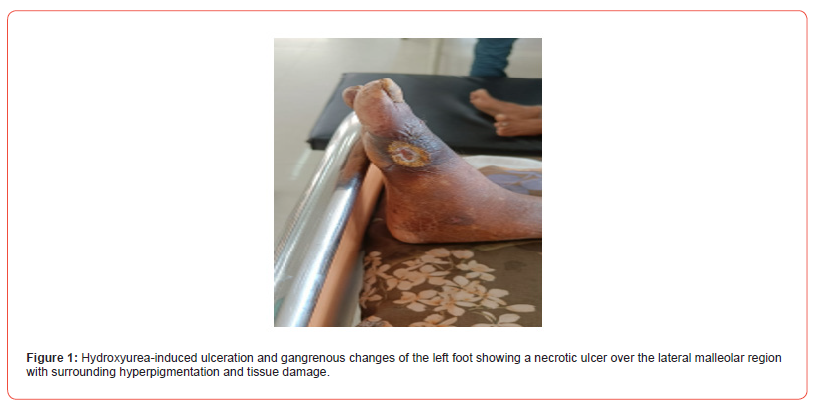
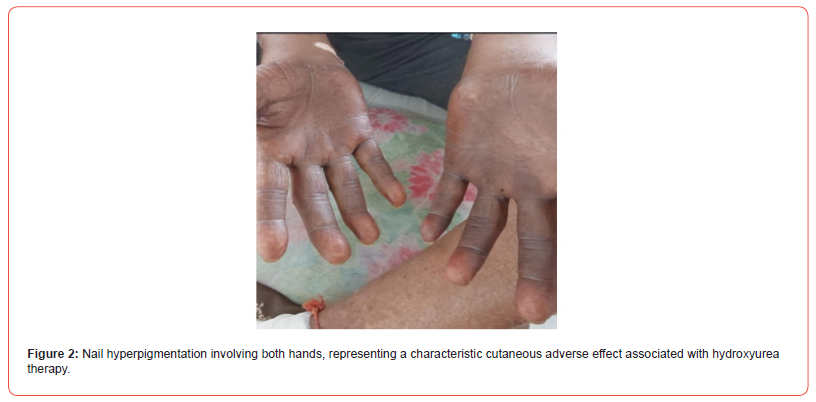
Table 1: Laboratory test.
Discussion
This case report documents a rare occurrence of foot ulceration and toe gangrene as adverse effects of hydroxyurea. Hydroxyurea (HU) is a non-alkylating, hydroxylated urea compound with antineoplastic properties, commonly prescribed for the treatment of myeloid leukemia and myeloproliferative disorders [6]. It inhibits ribonucleotide reductase during cellular replication, thereby preventing the conversion of ribonucleotides to deoxynucleotides. There is an ongoing debate regarding whether cutaneous ulcers are attributable to the underlying disease or the treatment itself, given that myeloproliferative disorders can compromise cutaneous circulation. This observation implies that hyperviscosity may not be a significant factor in ulcer development [2]. Cutaneous manifestations have also been documented. PJ et al. reported that hydroxyurea induces cytological damage, resulting in ulcerative skin lesions, by inhibiting the synthesis of keratinocytes and collagen fibers [7]. Symptoms of gangrene are infrequent and are associated with prolonged use of hydroxyurea.
The etiopathogenesis of hydroxyurea-induced gangrene remains idiopathic and is characterized by vascular damage. A 74-year-old male developed toe gangrene four months after the initiation of hydroxyurea therapy [8]. Peripheral angiopathy, diabetes mellitus, and thrombocythemia were excluded as potential causes because of normal platelet counts, thereby confirming the diagnosis of a hydroxyurea-induced bilateral foot ulcer [9]. As noted by Fioramonti et al., the pathogenesis of hydroxyurea-induced ulceration involves disruption of microcirculation through leukocytoclastic vasculitis or arterial microthrombi inhibition of DNA synthesis leading to toxicity and mechanical injury in areas susceptible to trauma [10]. The literature documents adverse cutaneous effects, including skin atrophy, poikiloderma, hyperpigmentation, alopecia, and nail changes. Leg ulcers are observed in 9% of patients undergoing long-term high-dose hydroxyurea therapy.
These ulcers are painful and are typically localized to the malleolar region, characterized by erythema and atrophie blanche. Histopathological examination revealed epidermal atrophy, dermal fibrosis, and scar tissue in the absence of vascular lesions. Ulcers predominantly developed in middle-aged or elderly patients (median age, 67 years) with chronic myeloproliferative disorders receiving hydroxyurea treatment [11].
Conclusion
In this case, the critical role of thorough dermatological surveillance for patients receiving prolonged hydroxyurea therapy is emphasized. Timely detection and rapid intervention are vital to avert the serious complications that can arise from this condition. Healthcare practitioners should carry out skin assessments on a quarterly basis, initiate patient education programs, and implement multidisciplinary care models. Future research endeavors should concentrate on identifying risk factors, developing predictive biomarkers, and enhancing treatment strategies to mitigate skin toxicity while ensuring the continued effectiveness of therapies for myeloproliferative disorders. This is a rare yet important complication emphasizes the critical need for more robust surveillance protocols and alternative therapeutic approaches for patients who are at elevated risk.
Conflict of Interest
Authors have no conflicts of interest to declare
Ethics Approval and Consent to Participate
Not Applicable
Consent for Publication
Not Applicable
Competing Interests
Not applicable
Funding
Not applicable
Acknowledgement
I extend my heartiest gratitude towards my parents, a special thanks to our guide and all other co-authors for immense support throughout the article.
Authors’ Contribution
All authors made equal contributions to the preparation of this case report. Writing the manuscript and figure preparation was done by Ms. Sagnika Bhattacharjee, Ms. Supta Chakraborty, and Mr. Mohit Nair. Case data collection, literature search, and critical review of the manuscript was done by Ms. Ayushi Agarwal, Ms. Huda Khan, and Mr. Mukesh Choudhary. Overall project coordination and specialized expertise regarding the therapeutic aspects of the case was done by Dr. Jaya Sharma.
References
- Sirieix ME, Debure C, Baudot N, Dubertret L, Roux ME, et al. (1999) Leg ulcers and hydroxyurea: forty-one cases. Arch Dermatol 135(7): 818-820.
- Hwang SW, Hong SK, Kim SH, Seo JK, Lee D, et al. (2009) A Hydroxyurea-induced Leg Ulcer. Ann Dermatol 21(1): 39-41.
- Weinlich G, Schuler G, Greil R, Kofler H, Fritsch P (1998) Leg ulcers associated with long-term hydroxyurea therapy. J Am Acad Dermatol 39: 372-374.
- Bader U, Banyai M, R Böni, Burg G, Hafner J (2000) Leg ulcers in patients with myeloproliferative disorders: disease or treatment-related? Dermatology 200(1): 45-48.
- Dissemond J (2011) Medications. A rare cause for leg ulcers. Hautarzt 62(7): 516-523.
- Iancu GM, Ocneanu A, Rotaru M (2020) Hydroxyurea-induced superinfected ulcerations: Two case reports and review of the literature. Exp Ther Med 20(6): 191.
- Charache S, Terrin ML, Moore RD, Dover GJ, Barton FB, et al. (1995) Effect of hydroxyurea on the frequency of painful crises in sickle cell anemia. Investigators of the Multicenter Study of Hydroxyurea in Sickle Cell Anemia. N Engl J Med 332(20): 1317-1322.
- Leo E, Krämer A, Hochhaus A, Krasniqi F, Hehlmann R, et al. (2002) Gangrene of the toes in a patient with chronic myelogenous leukemia after long-term hydroxyurea therapy. Ann Hematol 81(8): 467-469.
- Demirçay Z, Cömert A, Adıgüzel C (2002) Leg ulcers and hydroxyurea: report of three cases with essential thrombocythemia. Int J Dermatol 41(12): 872-874.
- Simeonovski V, Breshkovska H, Duma S, Dohcheva-Karajovanov I, Damevska K, et al. (2018) Hydroxyurea associated cutaneous lesions: a case report. Open access Maced J Med sci 6(8): 1458-1461.
- Hofmann AG, Deinsberger J, Oszwald A, Weber B (2024) The histopathology of leg ulcers. Dermatopathology 11(1): 62-78.
-

This work is licensed under a Creative Commons Attribution-NonCommercial 4.0 International License.