


 Case Report
Changes in Eye’s Choroidal Circulation in a Patient with Aortic Valve Stenosis. Case Report
Received Date: June 13, 2025; Published Date: June 17, 2025
Abstract
Aortic stenosis is now one of the most common valvular heart diseases. Early recognition and management of aortic stenosis are of paramount importance because untreated symptomatic severe disease is universally fatal. An estimated 4.2 to 5.6 million adults in the United States have some form of clinically important valve disease. Because the common forms of valve diseases are linked to aging, the demographic shift will increase the number of patients with AS. The natural history of AS is characterized by a relatively benign course in patients with asymptomatic disease but a rapid downhill course with the onset of symptoms. Three classic physical examination findings, when present, support the diagnosis of advanced AS: mid to late systolic murmur intensity, low volume and rate of increase of carotid upstroke (pulsus parvus et trades), and reduced intensity of the second heart sound. The only effective treatment for severe AS is AVR. Although helpful in ameliorating symptoms in the short term, medical therapy and balloon valvuloplasty by themselves do not change the poor prognosis and natural history of severe AS. In this work, we are reporting significant alterations in the choroidal circulation of the eye, secondary to carotid stenosis, and the positive changes that occur in it, with our treatment based on the unsuspected ability of human cells to oxygenate themselves.
Keywords: Aortic stenosis; eye’s choroidal layer; hydrogen; oxygen; water dissociation
Introduction
The cardinal symptoms of severe AS are exertion-related angina, congestive heart failure (reduced exercise tolerance), presyncope, or syncope. Dyspnea is either caused by either increased left ventricular filling pressure or inability to increase cardiac output with exercise. In most patients, symptoms appear with normal LVEF; however, in some patients there is a reduction in systolic myocardial function and inability of the left ventricle to develop pressure and shorten against a load (afterload. Associated arterial hypertension results in serially increased afterload and is associated with higher rates of mortality and ischemic cardiovascular events. Patients with asymptomatic AS have low rates of sudden death (<1% annually) [1] and therefore require only periodic monitoring for progression of disease or development of symptoms, which is inevitable in these patients. Severe aortic stenosis (AS) is the most common indication for valve replacement in United States and Europe with aging of population.
Eye Alterations in Aortic Stenosis
In literature, there is no mention of significant ophthalmologic changes or that characteristic of aortic stenosis. Patients also do not report any specific eye discomfort that would make us suspect aortic stenosis.
The ischemic involvement of the choroidal ocular circulation, which we found significantly affected in this patient, was very demonstrative of the severity of the process as well as the improvement in the underlying problem, resulting in our therapeutic approach, based on our finding that human cells do not take oxygen from the air, but oxygenate themselves. Generating the oxygen (and hydrogen) necessary for their metabolism, dissociating the water they contain inside, as happens in plants [2]. The unexpected chemical reaction we identified during an observational, descriptive study of the possible correlation between the three leading causes of blindness in the world (age-related macular degeneration, diabetic retinopathy, and glaucoma) and the morphology of tiny optic nerve vessels. This study began in 1990 and ended in 2002 and included ophthalmological studies of 6000 patients [3]. The dissociation of water that occurs inside each cell, in the perinuclear space; it can be written as follows:

The part of the process highlighted in green occurs strictly inside the melanosomes, which are mainly located in the perinuclear space. The chemical reaction part, highlighted in blue, occurs both inside and outside of them. The identification of such a process, within each cell, constitutes a before and after in the study of cell biology, since the current dogma, which has prevailed since the eighteenth century, establishes that our body takes oxygen from the atmosphere that surrounds us, which is not possible given the physicochemical characteristics of this element. In addition, the metabolic needs of the cell could not be covered with the relatively scarce atmospheric oxygen, since, in proportion, the oxygen needs of the cells are almost 5 times more. The process of water dissociation that takes place inside melanosomes is very exact, it is amazingly accurate, and it has not changed since the beginning of time, since it can be considered the fundamental reaction of the origin of life.
As long as this process of generating oxygen (and hydrogen) is in accordance with the metabolic balance of the cell, the body will function well because it is very well done. But today’s lifestyle, with its polluted water, polluted air, and polluted food, conditions such an amazingly accurate process to become unbalanced too often, and if the most fundamental process of life, perhaps the most important of all, is wrong, then the body will be worse off. Since as long as intracellular oxygen is in balance, the body will function well, then we have diseases that always start at this level. This demolishes the need to name the signs and symptoms of each patient, because, on the one hand, the body does not pay attention to these names, and on the other, we now know that any disease begins in the same way, that is: when the dissociation of water molecules does not happen with the turnover rate that each cell requires or needs. Therefore, it is not surprising that the improvement in the signs and symptoms of this patient with aortic stenosis was not only at the level of the choroidal circulation of the eye, but also at the systemic level.
Case Report
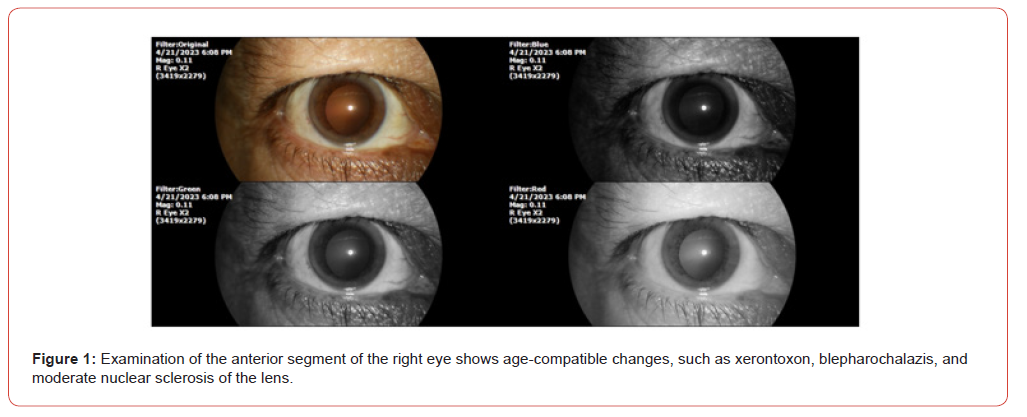
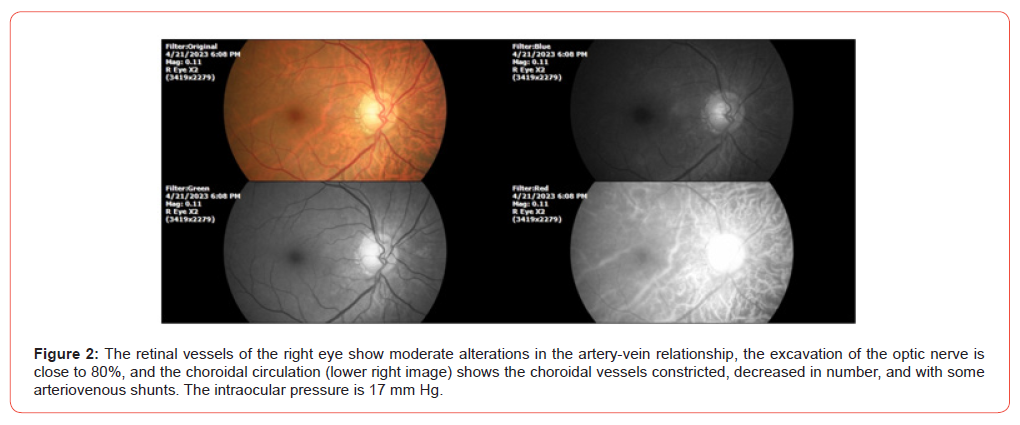
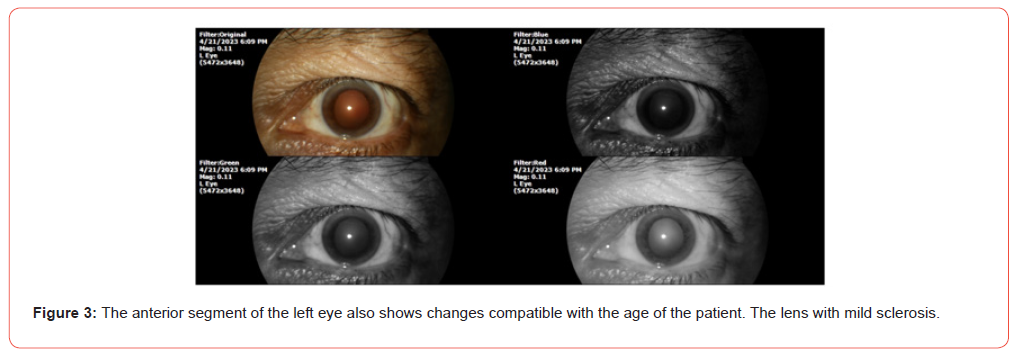
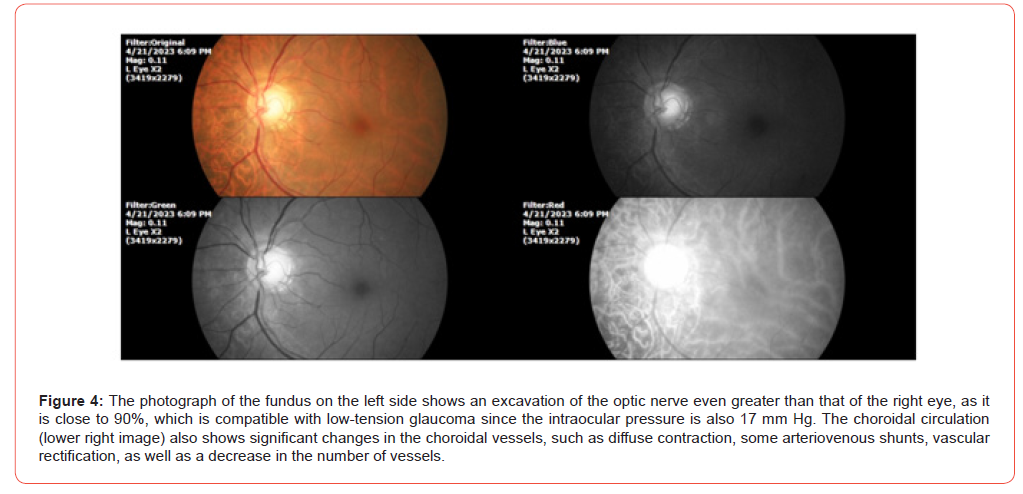
PATIENT NAME: J. V. C. DATE OF BIRTH: 23/11/55 TODAY’S DATE: 21/04/23 GENDER: Male. ADDRESS: Michoacán, México. Phototype V (Fitzpatrick). The patient had been complaining of systemic arterial hypertension since 2010. He has an aorta problem, and since 2019 he has been monitored by a cardiologist. She also refers to intestinal diverticulosis, which causes rectal bleeding, she currently has 8 days of bleeding. The cardiologist’s diagnosis was Aortic valve stenosis. He has dyspnea on medium exertion. The usual studies have been carried out such as Holter, tomography, EKG, etc. His cardiologist saw him every month, he takes Losartan half a tablet every 24 hours. It also refers to stomach pain, severe, like reflux, even vomited. Diarrhoea that was controlled. To the general exploration we have: SpO2 %: 92 %, heart rate of 85 X ' . The ophthalmological examination (4/21/2023) shows the following (Figures 1-4). Once the theoretical basis of our therapeutic approach was explained to the patient and their families, and after the informed consent was signed, treatment was started with QIAPI 1™, sublingual drops, at the dose of three drops every hour, as long as the patient is awake. Given the distance of the patient’s residence from our centre for the study of Human™ Photosynthesis, he was scheduled for a check-up in six months.
Second consultation (05/14/24)
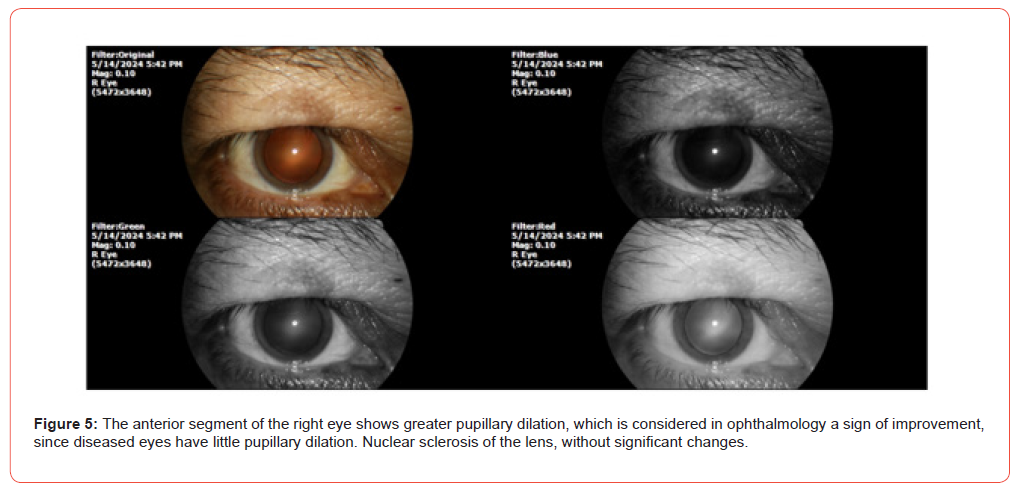
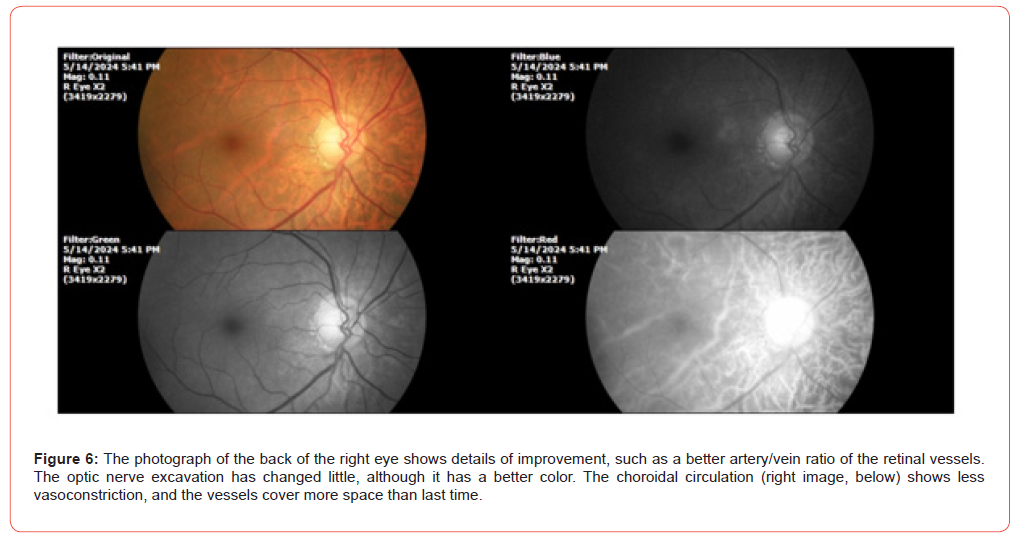
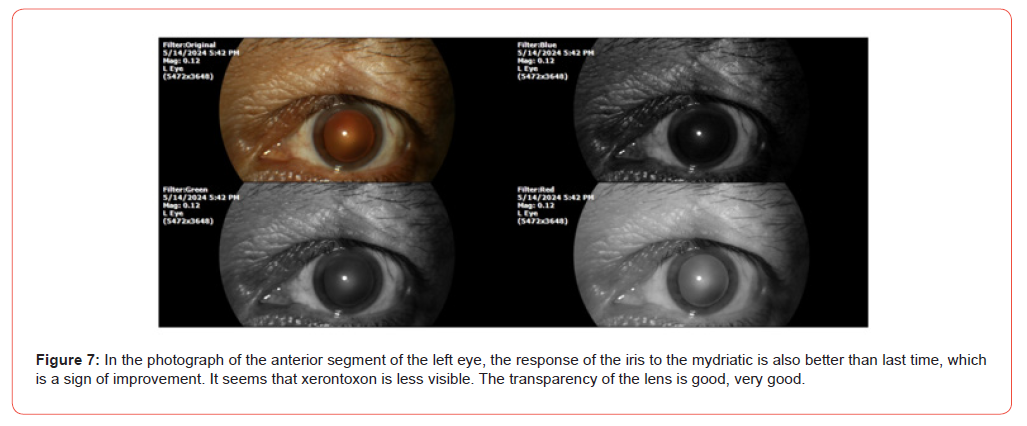
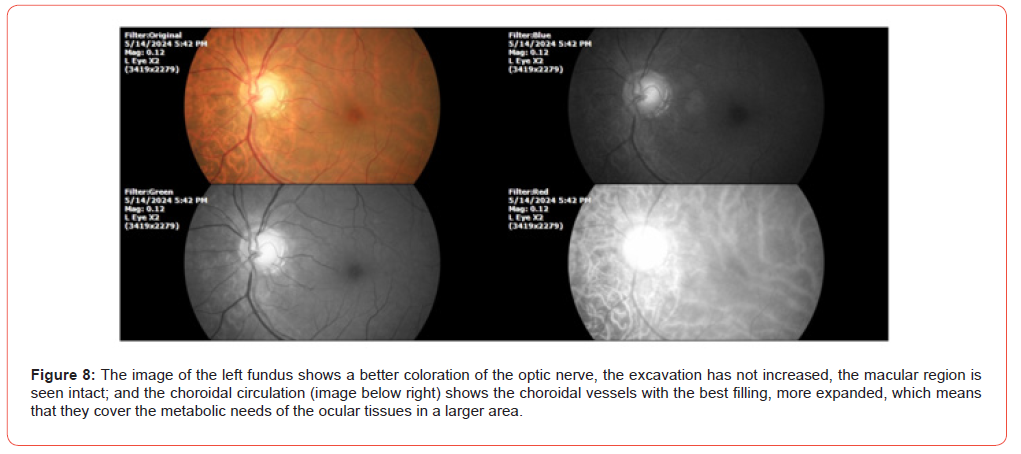
The patient reports that at night his mouth dries out in this hot season. Occasionally his left thumb and left index finger get stuck. As well as the ankle. Breathing is better, now only dyspnea is occasional. He reports occasional, very occasional vertigo. His cardiologist no longer sees him every month, because he tells him that he is better. SpO2%: 91%, and heart rate was 68 x. The following photographs show the ophthalmological findings during the second examination (Figures 5-8). It was indicated to continue with the same treatment, since the systemic symptoms (dyspnea) have improved significantly, as well as the findings of choroidal circulation.
Third review
October 31,2024
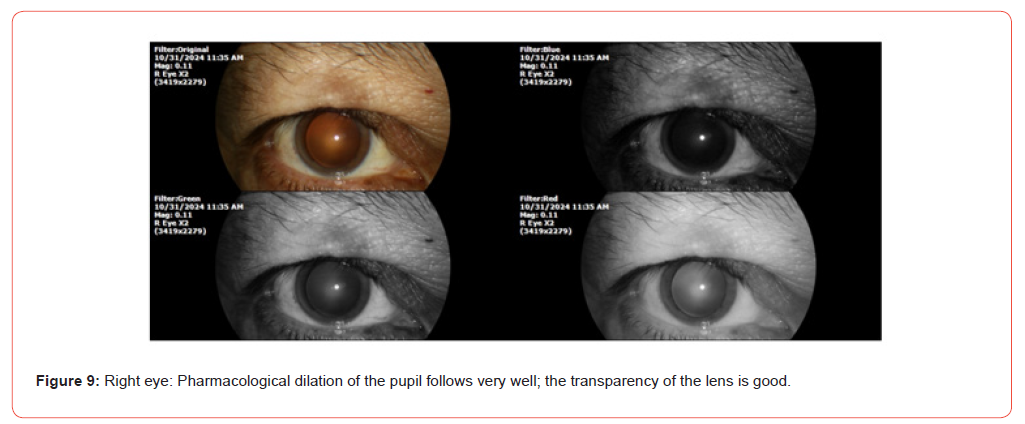
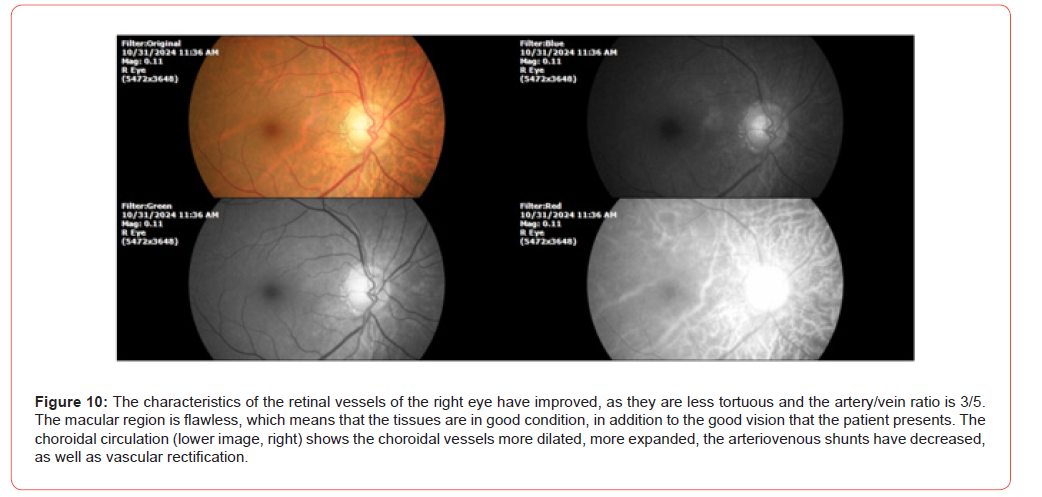
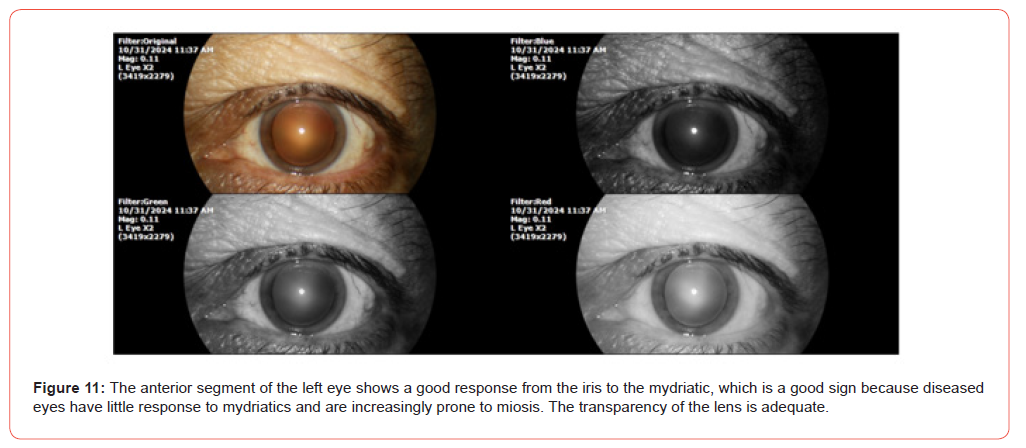
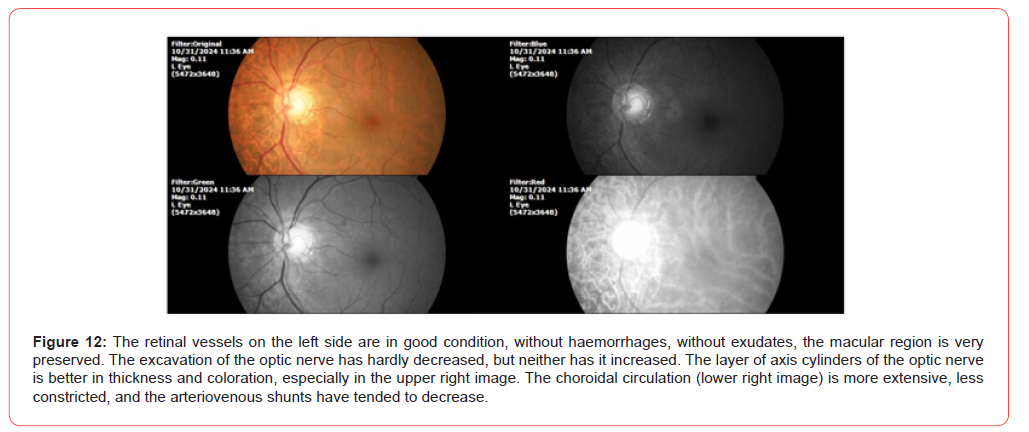
He feels good, like every 15 days, some tachycardia, at night. The cardiologist of the hospital, summon him every six months, before it was every month. The private cardiologist told him that he did not need catheterization or surgery. The CT scans, EKG, good, stable. Episodes of dyspnea and tachycardia are very sporadic and are attributable to a lot of work. The aorta thinned, but it has not become thinner. On general examination, SpO2% was 90%, and heart rate was 58x ́. The findings of the eye exam are shown in the following photographs (Figures 9-12).
June 10, 2025
He had a cough since January 6, 2025, and until recently he got better. Occasional right-hand tremor. At the IMSS they tell him that he is not yet a candidate for aortic surgery, because they do not have the right clinical characteristics. The private cardiologist tells him that he is no longer a candidate for surgery. He drove 7 hours from his place of residence to the clinic. When he came the first time, he was months away from surgery. He is currently told that he is no longer a candidate for surgery, because he is stable.
The General Exploration
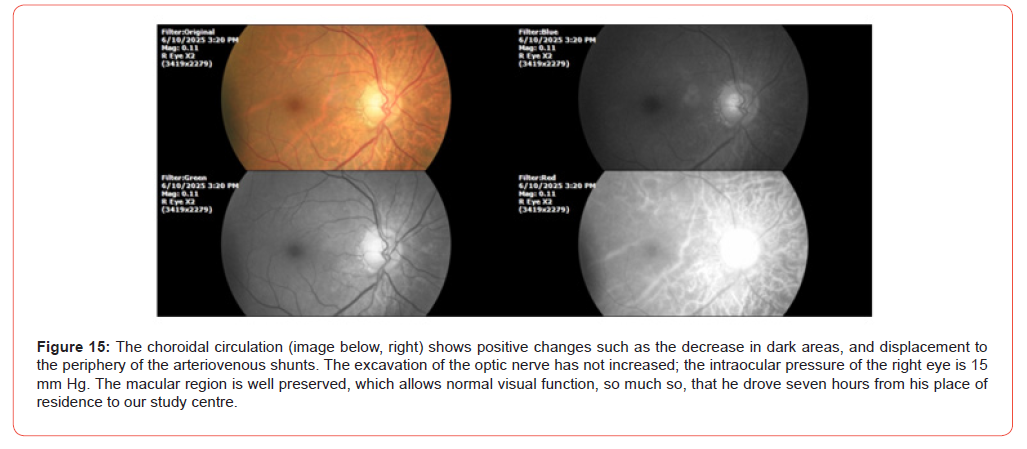
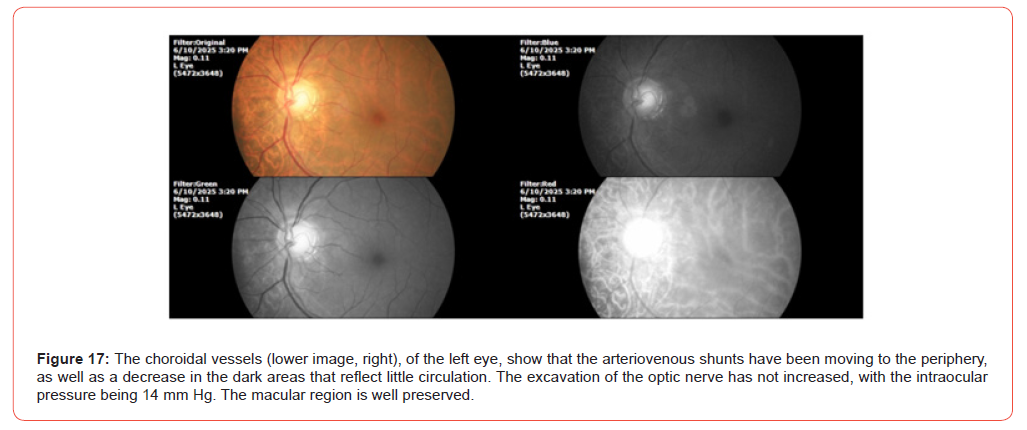
SpO2% of 93 %, the heart rate is 53 X ' . The SpO2 % and heart rate per minute values throughout the period in which we have checked the patient are as follows (Table 1). Reduced heart rate in severe aortic stenosis provides benefits; since by increasing the preload the myocardial fibre stretches more, improving contractility and ejection fraction, obtaining a greater stroke volume (SV). This explains the significant clinical improvement of the patient. It should be noted that the patient was not taking, and is not current ly taking, medication to slow the heart rate, only minimal doses of antihypertensive (Losartan), eventually anticoagulants in minimal doses, since the cardiologists who treat him cannot believe the improvement they are seeing (Figure 13). Ophthalmologic examination showed the following (Figures 14-17).
Table 1: The heart rate dropped by just over a third over two years, mostly from 04/21/2023 to 05/14/2024, as there were travel restrictions due to the pandemic. It should be noted that in the last consultation, the patient drove seven hours each way, which tells us about a good level of health.




Comment
Aortic stenosis is the most common valve disease in Europe, the USA, and Japan, and is the main indication for valve surgery. To date, there is no drug that reduces morbidity and mortality, and only surgical or percutaneous replacement reduces it, but 33% of patients and 50% of octogenarians in general oppose the intervention or are rejected by medical indication. Therefore, we consider it important to report on this case, as the improvement is significant. Choroidal circulation assessment has resulted in a new clinical parameter that allows us to evaluate the improvement not only of local circulation but also reflects systemic changes. The changes observed in choroidal problems, such as generalized vasoconstriction, vascular rectification, formation of arteriovenous shunts, and reduction of the vascular network, so far, were progressive changes that could not be reversed with any pharmacological or surgical treatment and tended to advance inexorably.
When we restore the balance between the oxygen that is generated inside each cell of our body, and its metabolic needs (with the administration of QIAPI 1™), the tissues of the body tend to repair themselves, as they always have, millions of years, millions of times, every day. Therefore, the systemic improvement of the patient is not surprising, since now the cardiologist reviews him every six months, and before our treatment it was every month. And another cardiologist, in particular practice, told him that he did not require either surgery nor catheterization.
Conclusion
The remarkable response of the human body to the administration of a pharmacological agent, whose only action is to restore the balance of oxygen that is generated inside the cell, through the dissociation of water, as in plants; allows us to support our proposal that such a reaction is central, fundamental to both life and health. And since all or almost all diseases begin in the same way (with the imbalance of oxygen at the intracellular level), probably the names that are assigned somewhat arbitrarily to diseases tend to diminish or disappear, because the body does not pay attention to names.
Acknowledgement
This work was possible thanks to the unrestricted support of the Centre for the Study of Human™ Photosynthesis, Aguascalientes 20000, Mexico.
Conflict of Interest
The discovery of the unsuspected ability of human cells to oxygenate themselves, as well as the development of the drug, was made in our centre for the study of human™ photosynthesis.
References
- Olivia Domanski, Marjorie Richardson, Augustin Coisne, Anne-Sophie Polge, Stephanie Mouton, et al. (2017) Cardiopulmonary exercise testing is a better outcome predictor than exercise echocardiography in asymptomatic aortic stenosis. Int J Cardiol 227: 908-914.
- Arturo Herrera, María Esparza (2025) The unsuspected ability of the human cell to oxygenate itself. Applications in cell biology. Medical Research Archives 13(3).
- Arturo S Herrera, Maria Del CA Esparza, Ghulam Ashraf, Andrey A Zamyatnin, Gjumrakch Aliev (2015) Beyond mitochondria, what would be the energy source of the cell?. Cent Nerv Syst Agents Med Chem 15(1): 32-41.
-

This work is licensed under a Creative Commons Attribution-NonCommercial 4.0 International License.